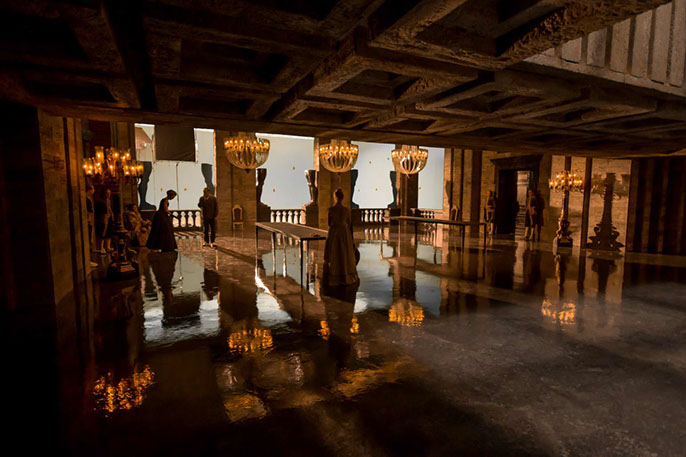
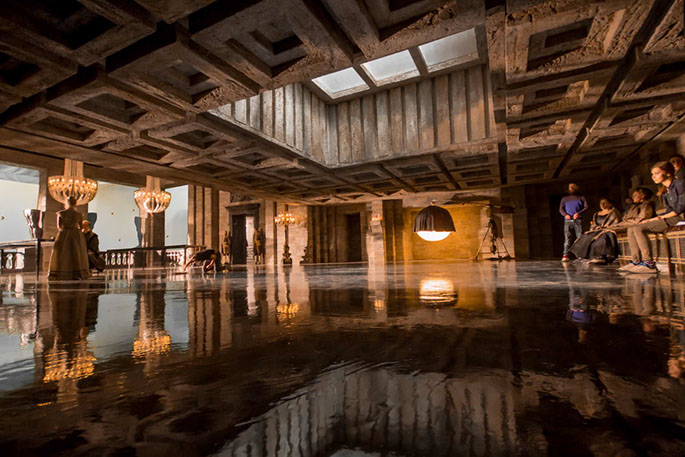
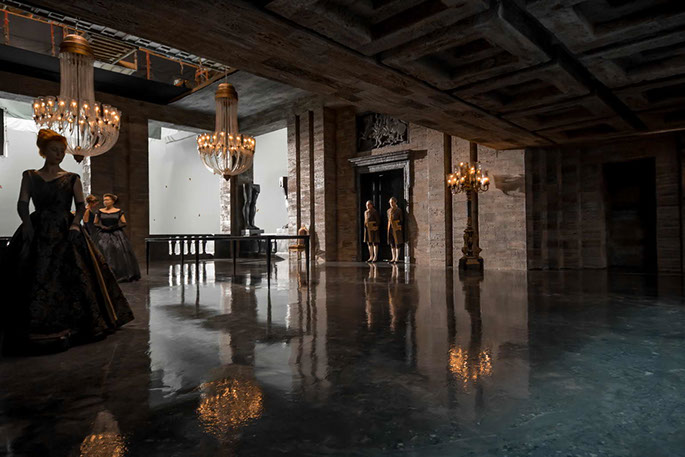
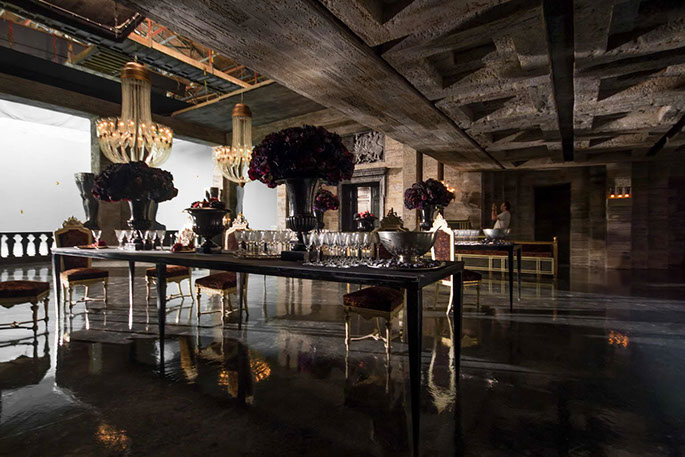
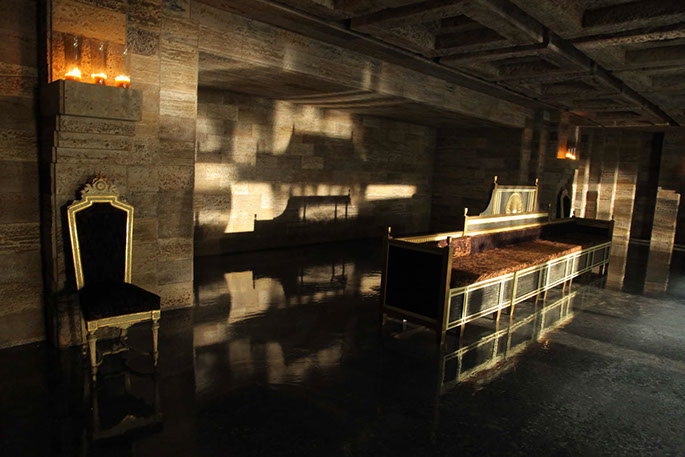
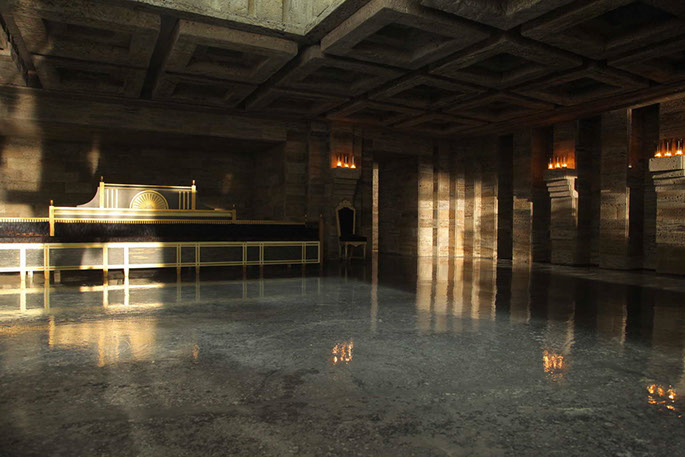
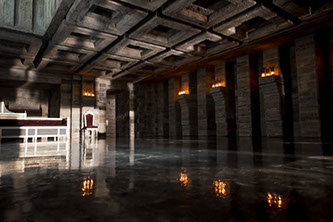
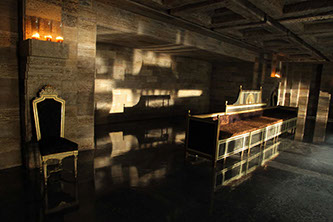
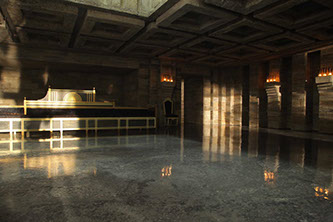
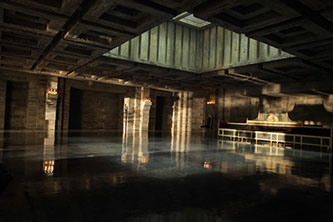
Our movie starts with guns. The very first scene presents Yakovlev dueling. Because dueling was illegal at the time in Russia, these events took place in secret, for example, as in this case, in an abandoned old mansion. It was neglected and empty with neither furniture nor lights. We didn't want to restore the building according to images from the 19th century, although detailed watercolors depicting how it looked then remain. We pretended that the construction had not been completed for some reason and had been abandoned. My general artistic vision brought me to add dominant color to the pale hall. In addition to furniture, we added unfinished murals in the six niches. For these, I used several unfinished frescos by Michelangelo as well as the image from the Sistine Chapel. They looked as if they had been started but then discarded. The color palette that we used for the film was very limited in range. We relied on strong contrasts with black predominating, accented by earthy, ochrey, foggy tones. There was always one leading color, in this case, red. This was a murder scene and therefore the blood on the floor was our color reference. Gold flickering in the dark and the splashes of crimson blood created the mood.

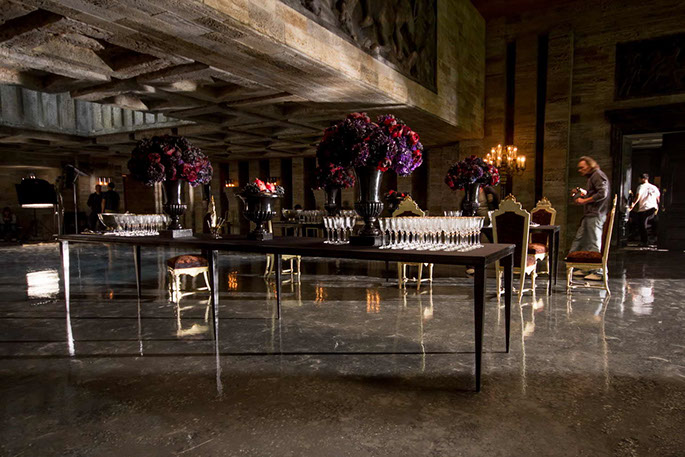
Beklemishev's mansion, the stronghold of the main antagonist, had to be the biggest set in the movie. We needed the sense of pure strength as well as rancor in his environment, something that didn't exist in St.Petersburg. We finally hit upon the idea to construct it. Life depicted in the movie was somewhat more technologically advanced than was actually the case in Russia at that time. We included vehicles, architecture, and weapons that existed in Europe then, but not in Russia. We even used a more modern colloquialism in the Russian tongue, once again creating that surprising contrast that was intended to allow the modern audience to relate more directly to the events. The classicism of the 1820s and 30s seemed to be excessively decorative for us, and in our search for simplified or minimalist classicism, we discovered Nazi neoclassicism. It seems to be the same as classicism, with columns and arches, but with minimal decor and different proportions. All this made the style cleaner, strict, and very expressive.
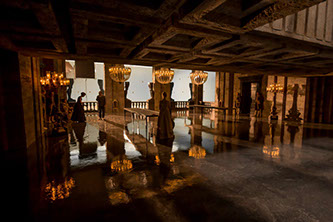
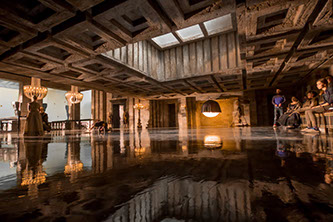
Unfortunately, the cost of building the set for Beklemishev’s mansion was found to be too high after calculation, so the respective scenes were shot in the Noble Assembly. The Noble Assembly consequently inherited the ideas and architectural concepts developed for the mansion. Alexey had a reference photo of a crowd standing in a big hall with an extremely low ceiling. That oppressive disproportion, combined with nazi neoclassicism we found matched Beklemishev’s character.
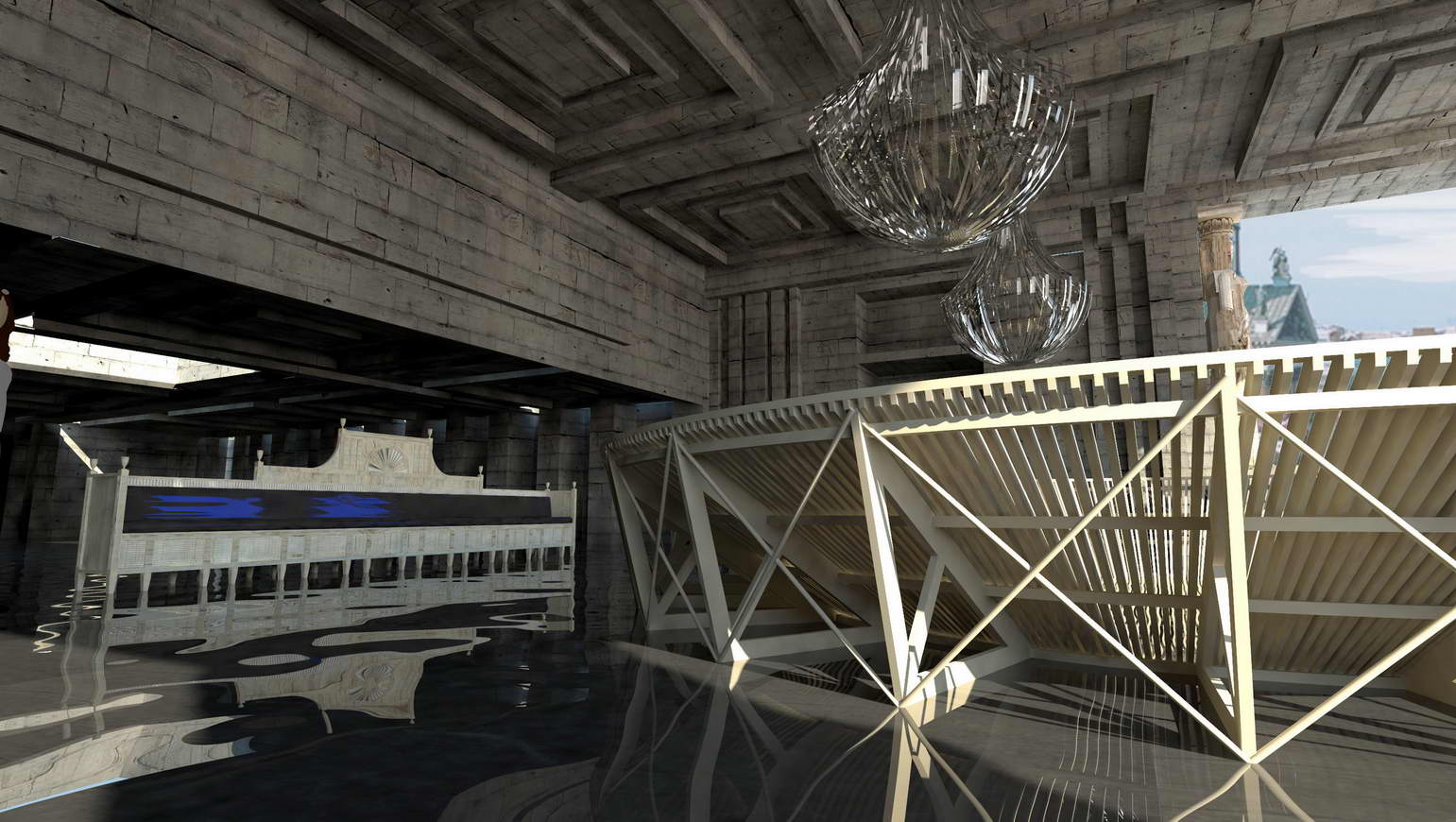

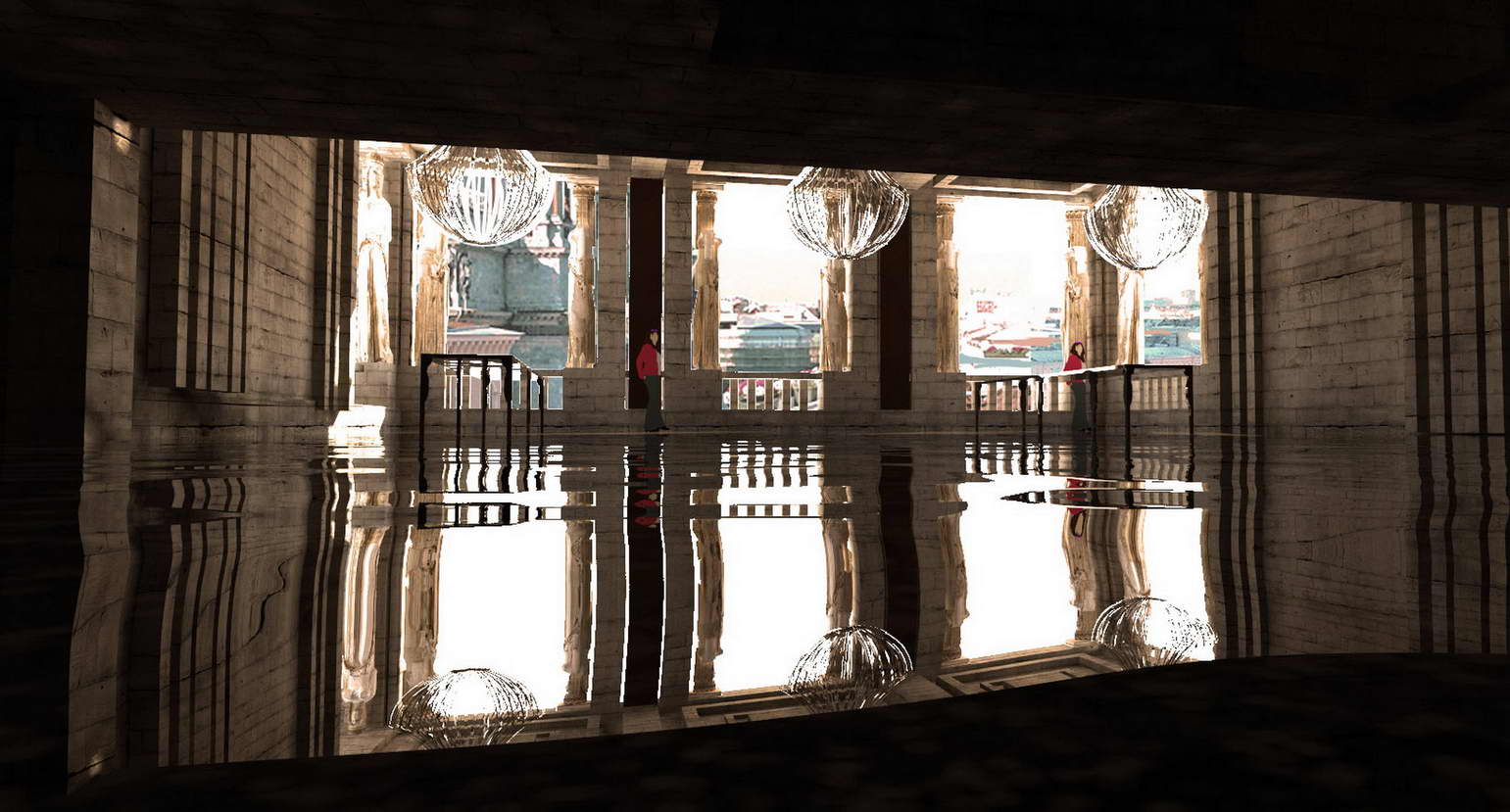


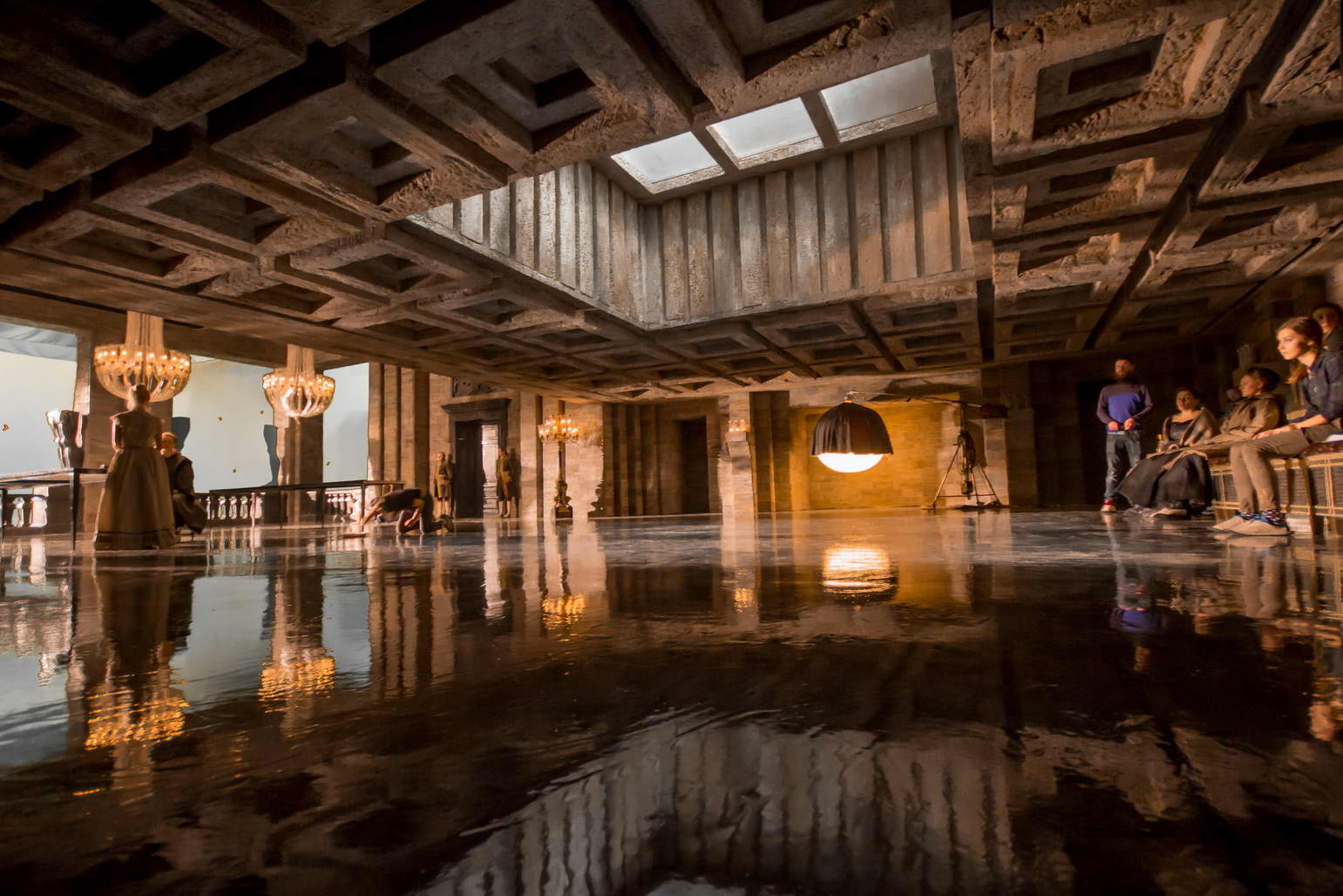


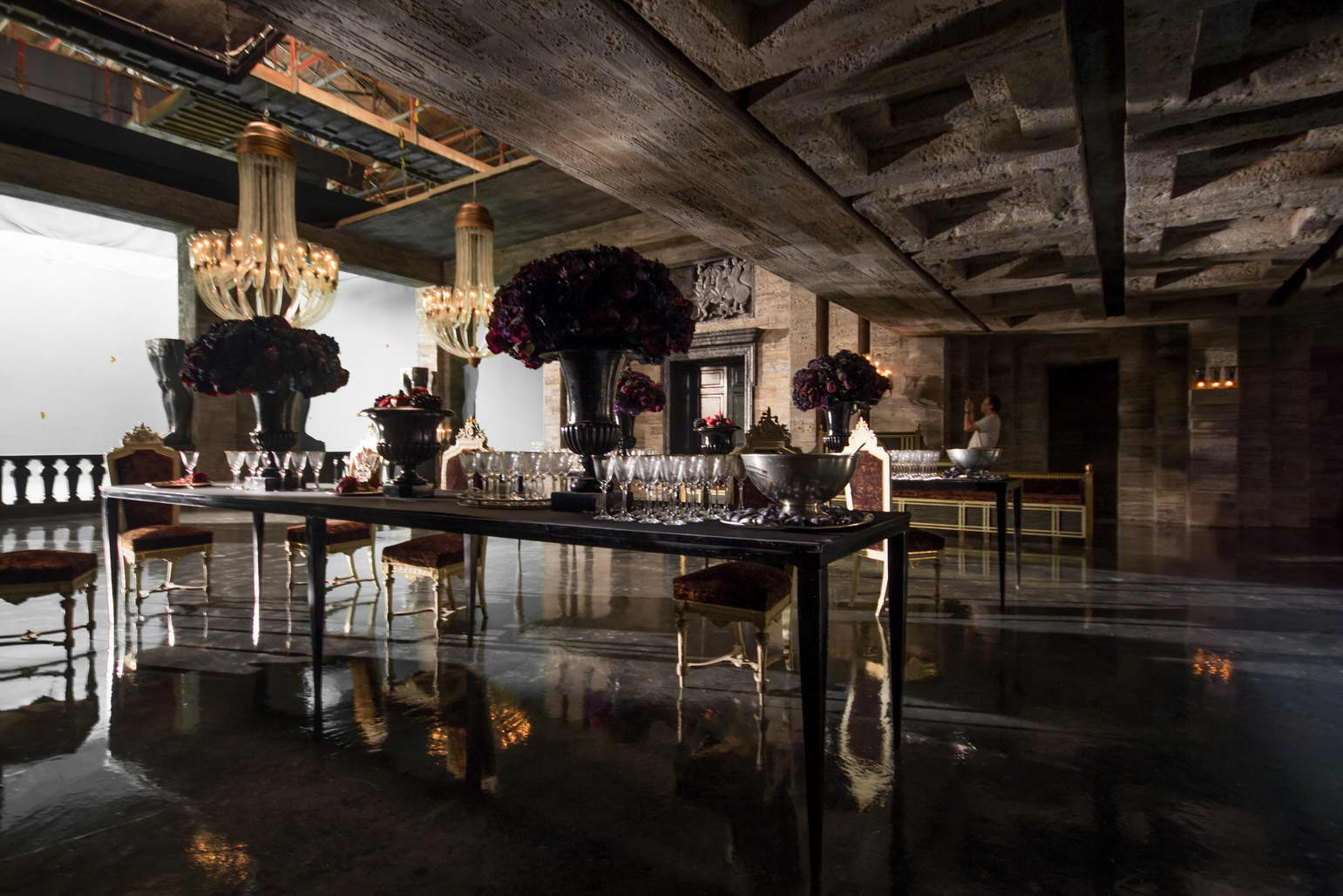


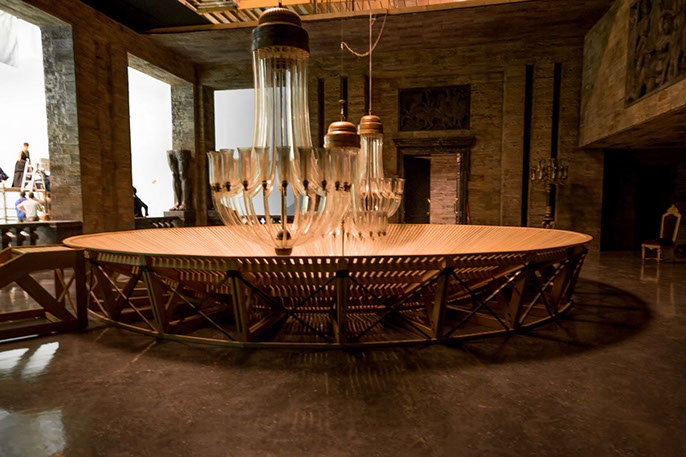
To attract attention to himself and make a splash in society, our hero introduces high society to the latest invention, the bicycle. The temporary circle set for the performance was constructed within the Assembly set. The arena, which was the model for the set, was also found among reference photos, but these were from the first two decades of the 20th century. We liked it because of its symmetry and the center point that organizes the space around it. Such a scene would never have actually occurred in the time and place, and here is another example of how contrast was used to create surprise and interest.
In reality, it would have been a harsher and more solid design, but we wanted to make something transparent, and complicated, like some kind of Eiffel Towel miracle. Alexey's idea was that creating such a theatrical scene within the shot would make the surrounding action more real in comparison.
In search of inspiration, we assiduously studied the design and engineering evolution that was underway worldwide at the time. We collected samples of things that were suitable for the story, from the experimental bicycle in England to the advanced models of weapons that appear in the film.
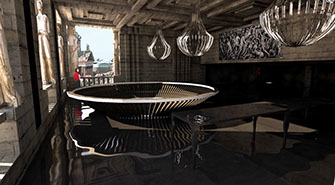
In one old picture we found a huge crystal chandelier that had been assembled somewhere in Chicago, but for some reason had been hung in a barn with cows. Probably in order to allow the builders to do work on the chandelier, it had been suspended less than half a meter above head height, but in a huge, high-ceilinged building. The contrast created by this surprising arrangement evoked a fantastic feeling. We found ourselves asking "Why wouldn't the owner hang a similar chandelier out of personal ambition?" which is why we decided to use this feature in the shot. And on top of that we needed a real candle light in the shot, without a doubt this set was supposed to construct in the studio.
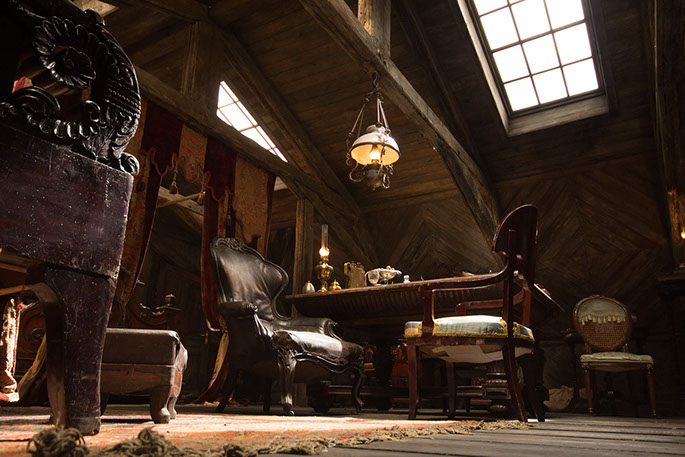
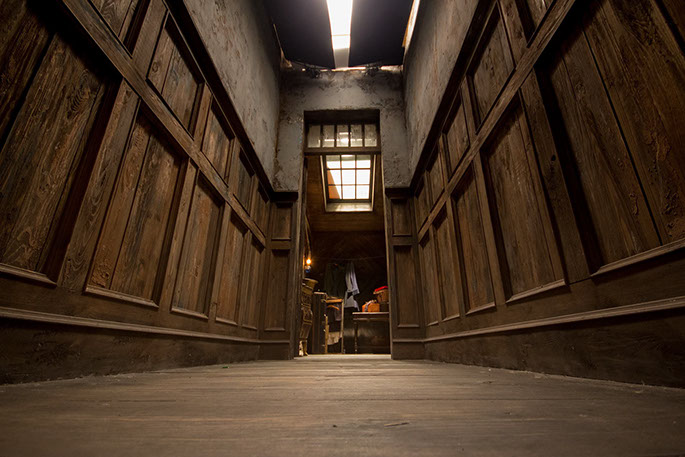
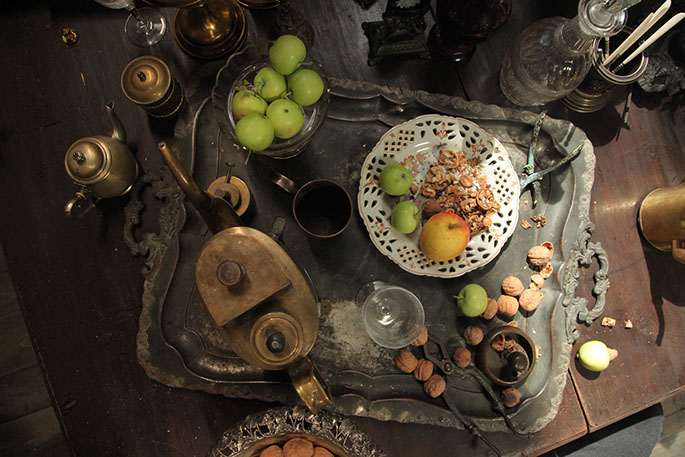
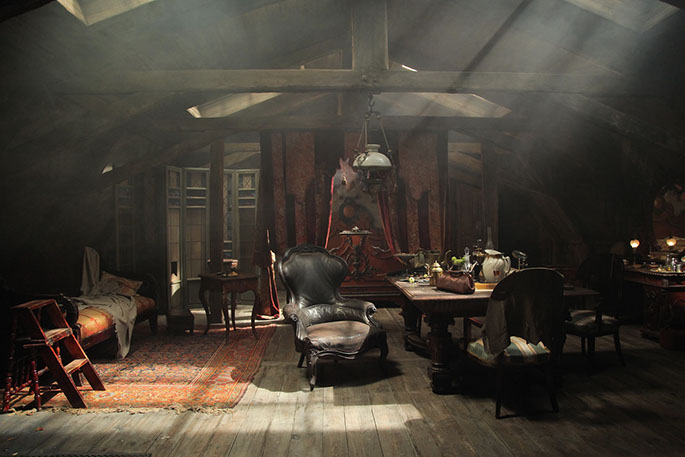
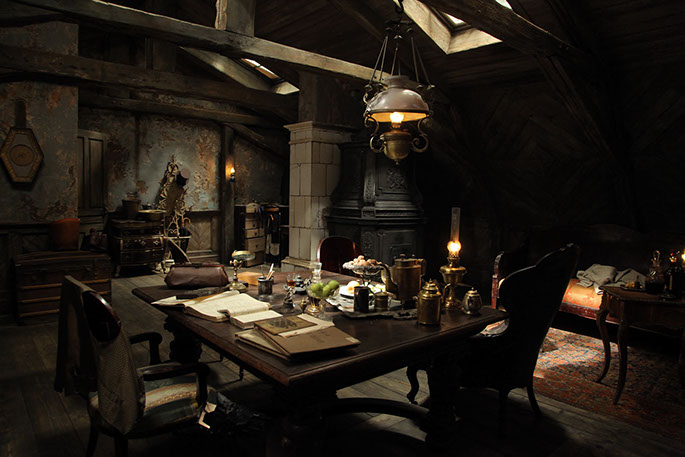
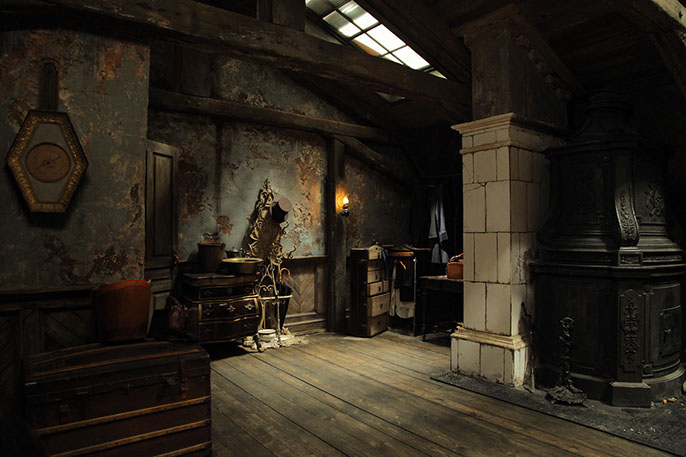
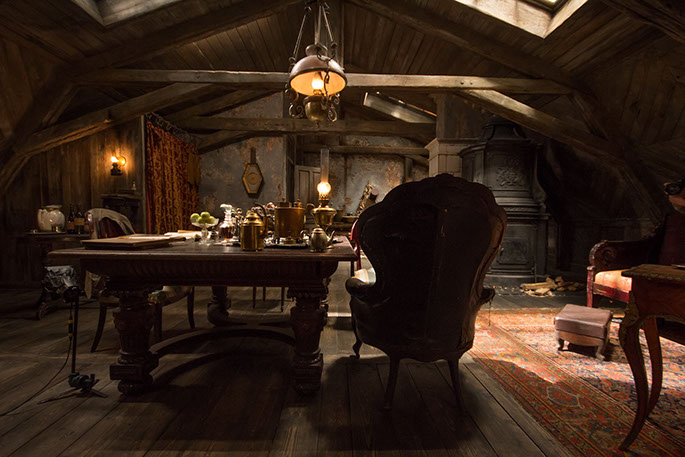
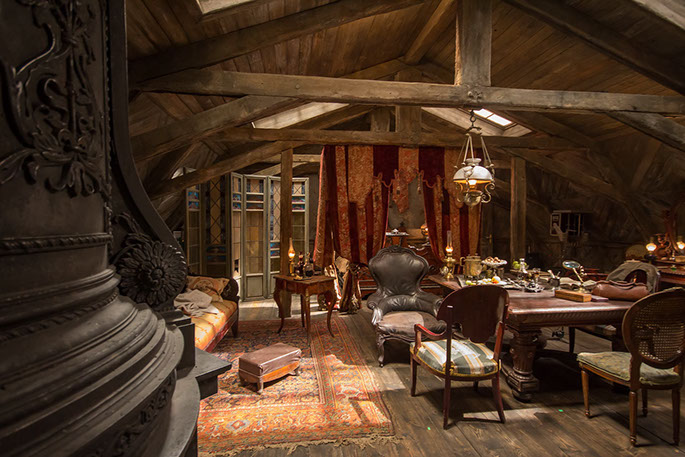
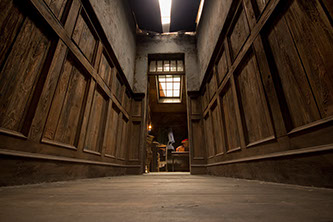
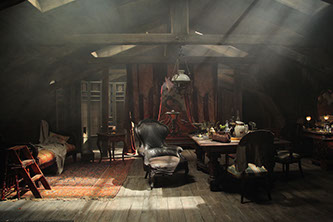
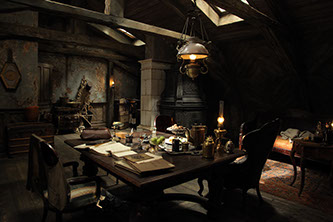
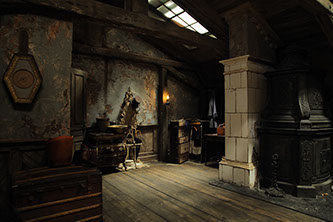
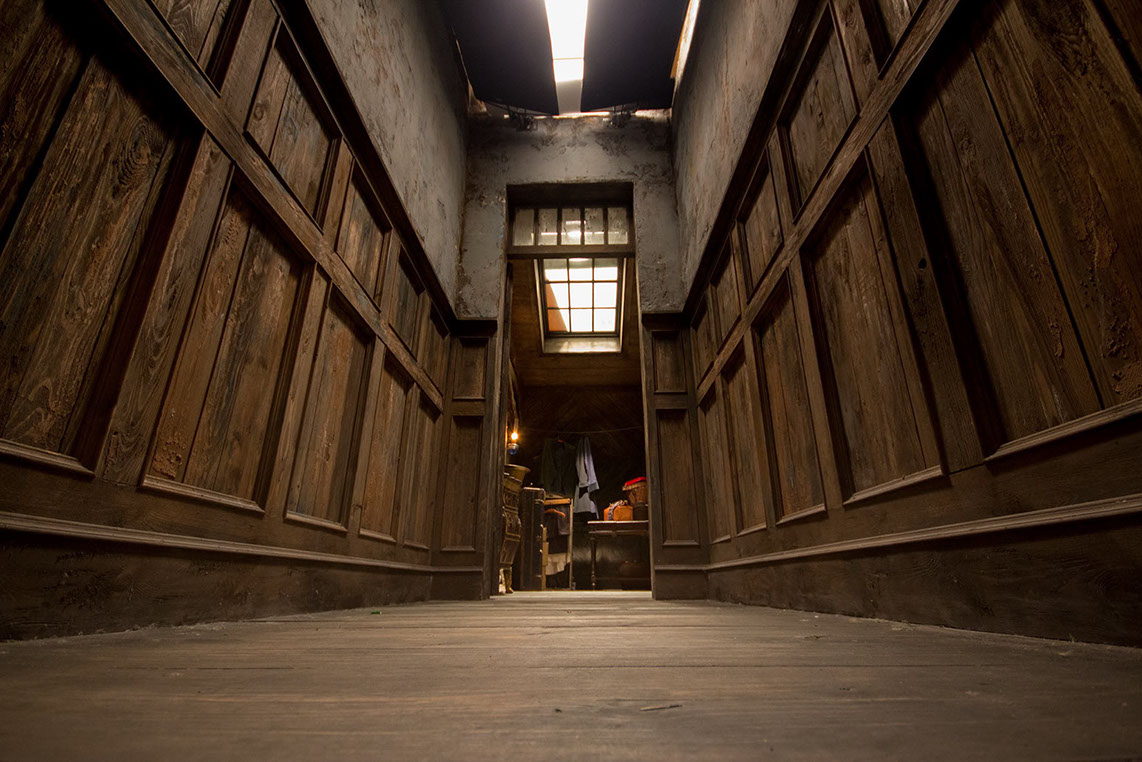
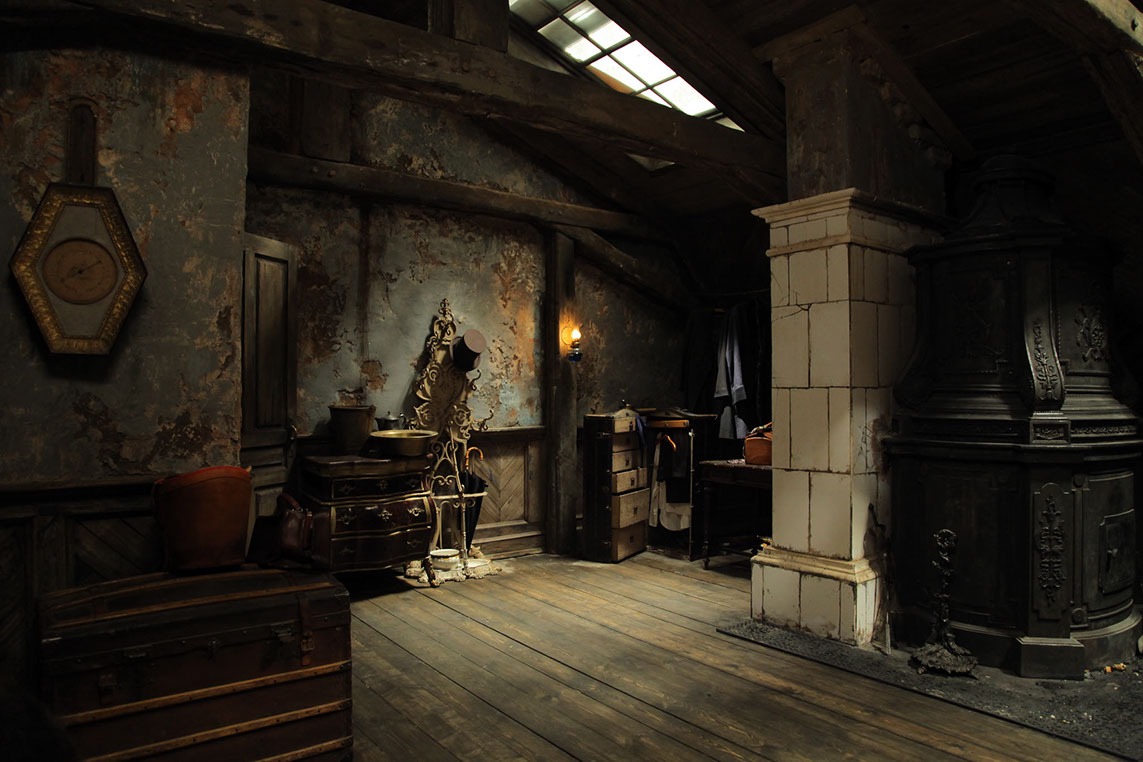
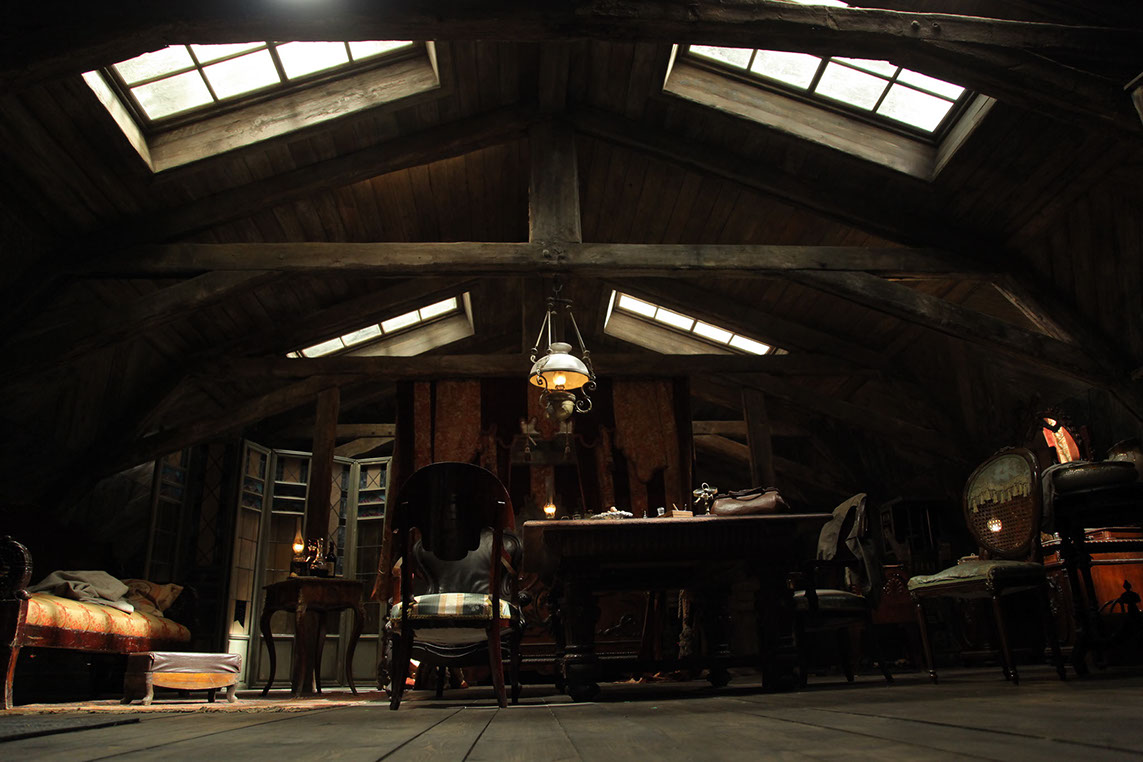
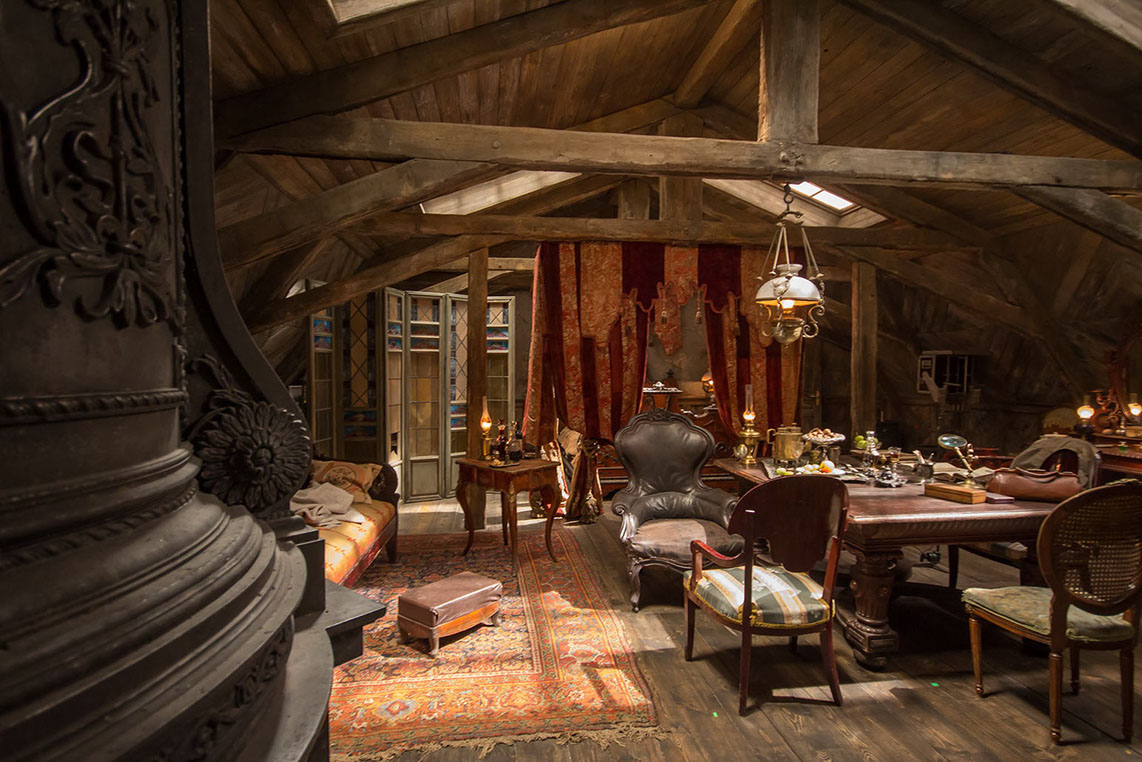
Baron, played by Martin Wuttke, was supplying customers for Yakovlev, as a crook, his inhabitance occupied a tight place under the roof. All covered with wood, together with the narrow corridor it created the feeling of being in an animal burrow. The set, totally relying on bespoke carpentry was done in the studio.

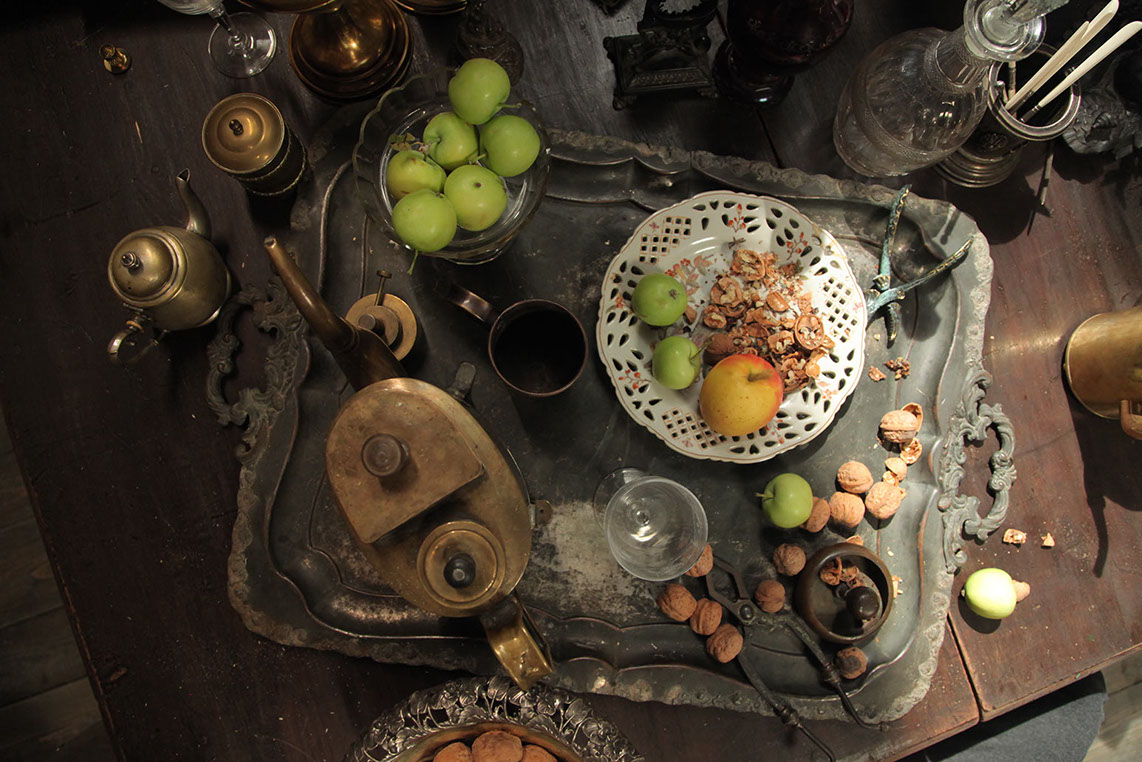



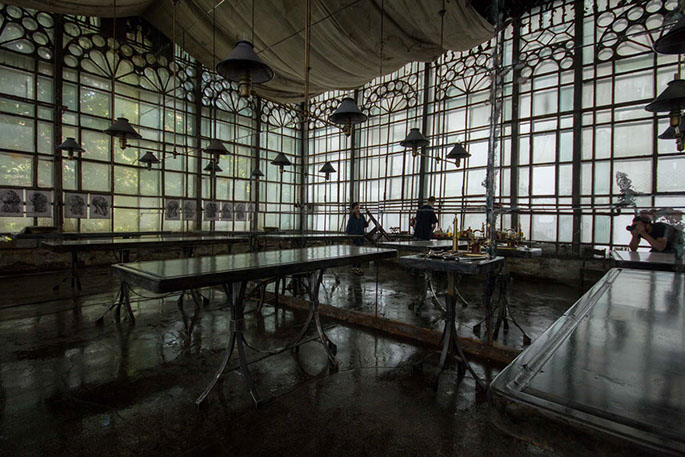
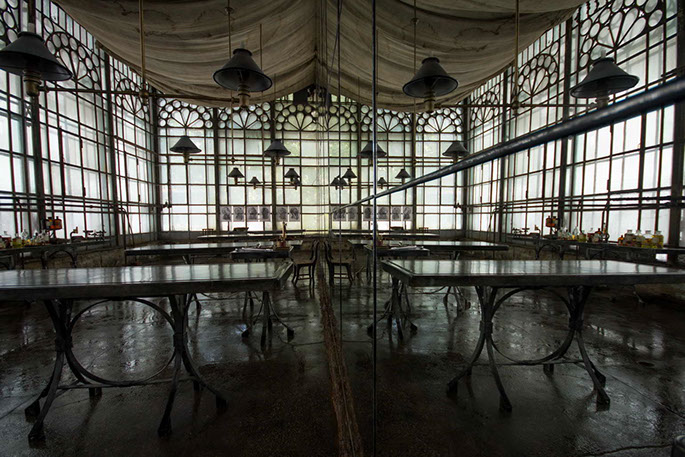
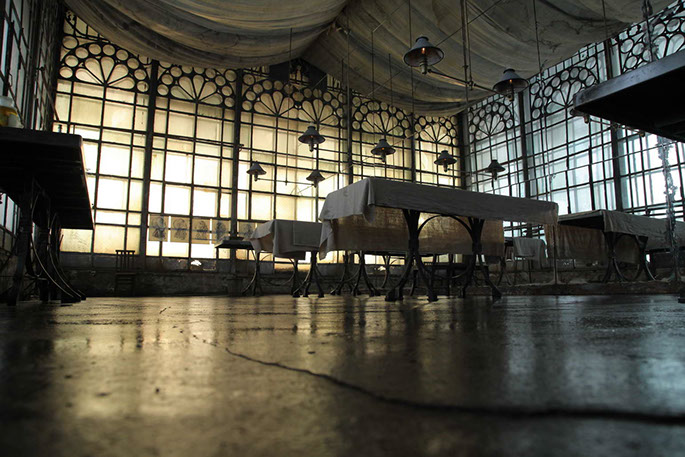
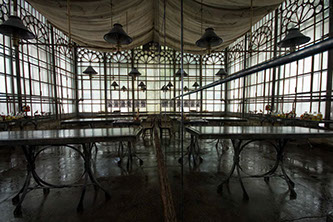
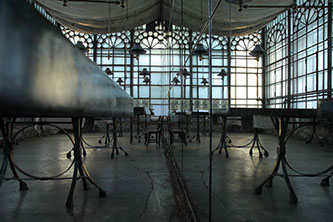
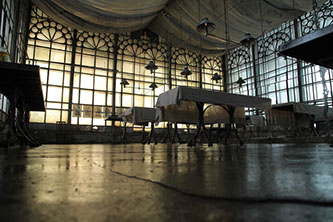
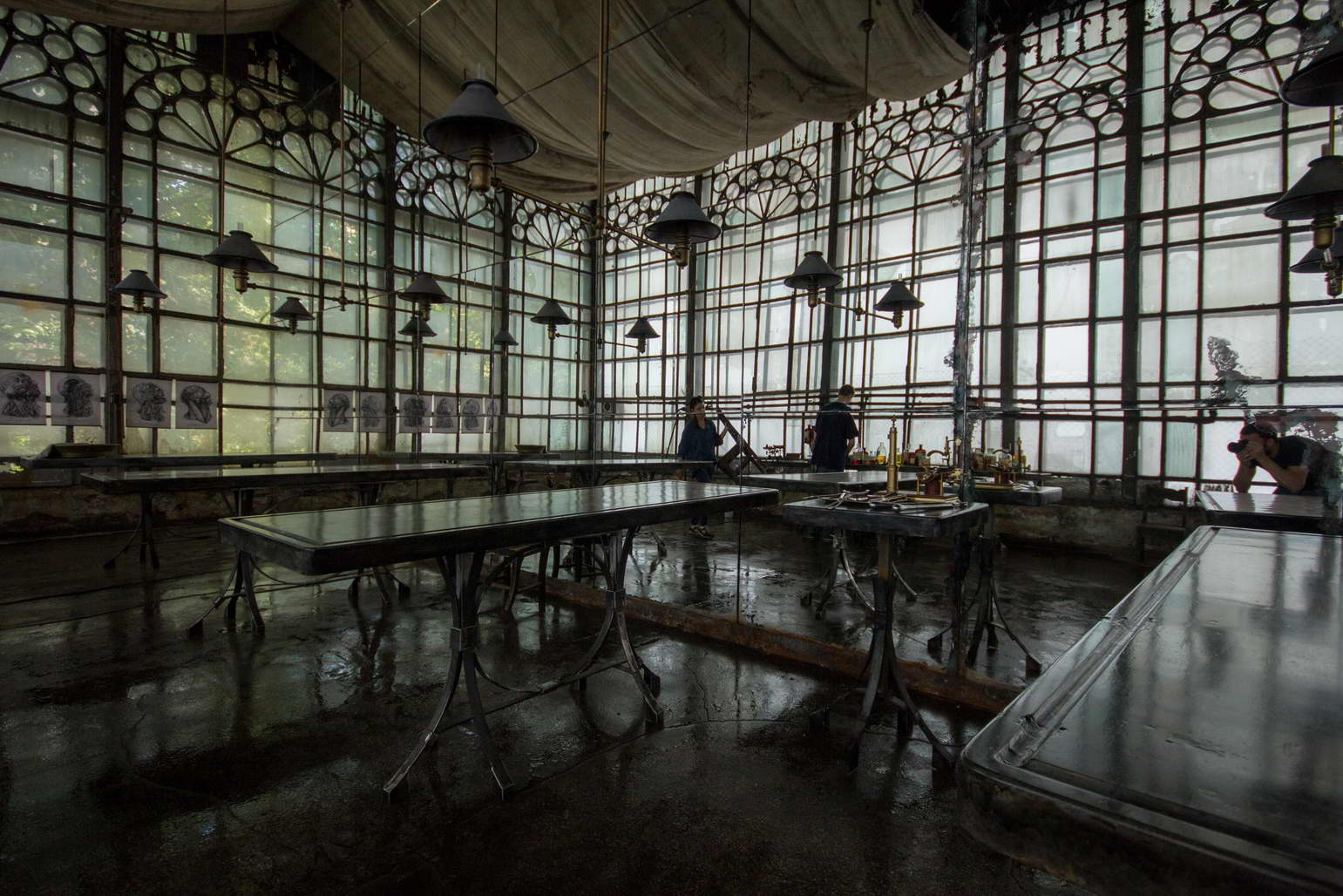
Another set that combined incongruous elements was the morgue, arranged in Brusnitsyn’s greenhouse. Alexey had sent me a photo of how the morgue should look. A French photo in Alexey's collection provided the model for the type of tables we used as well as the symmetry which characterized the space. The greenhouse consisted of three walls constructed from panes of muddied glass, covered with mud, with the other wall built of plain unadorned mortar. We decided to place a mirror over the wall, which created a unique feeling of being in a shiny, symmetrical cage. The combination of decay, light passing through everything, and absolute symmetry was very suitable for a place of death.


Here I have only described the main sets, there were many more of them. The project in its totality was the most ambitious I have ever been involved in. We had a really wonderful team, without which it would have been impossible to achieve all that. Although some 200 people worked on the film, I think it is worth mentioning the engagement and efforts of a few people in the artistic department, including Ruslan Romanukin, Nikolay Ryabtsev, Olga Tinakova, and Maria Slavina. Of course, the energy that drove us was that of the director Alexey Mizgireg, the director and the scriptwriter, whose vision electrified the whole team.
Director Alexey Mizgirev
DOP Maxim Osadchy
Production Designer Andrey Ponkratov
Set Decorator Maria Slavina
Props Olga Tinakova
Weapons Mikhail Orel
Set Builder Nikolay Ryabtsev
Text edited by Robert Kursten