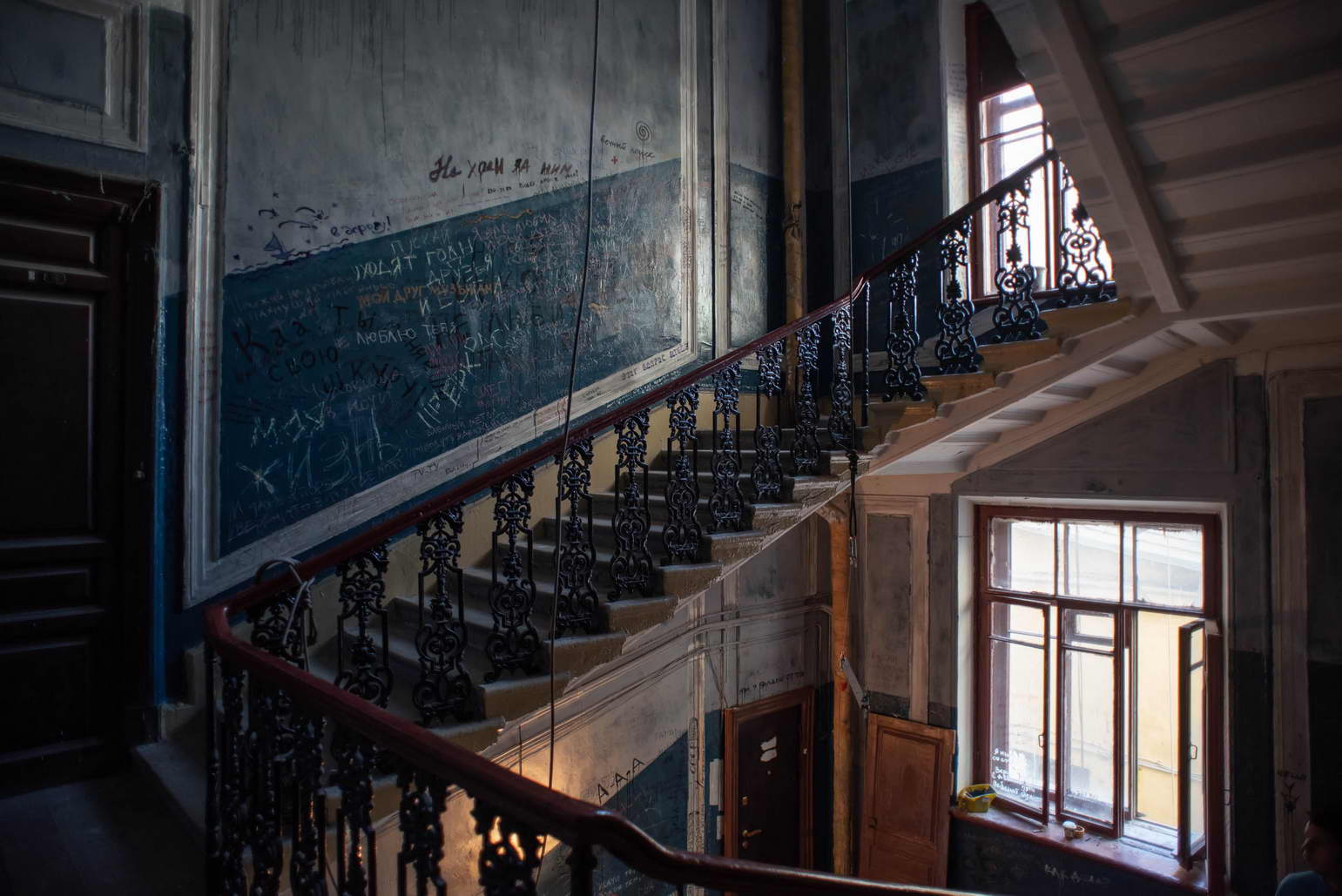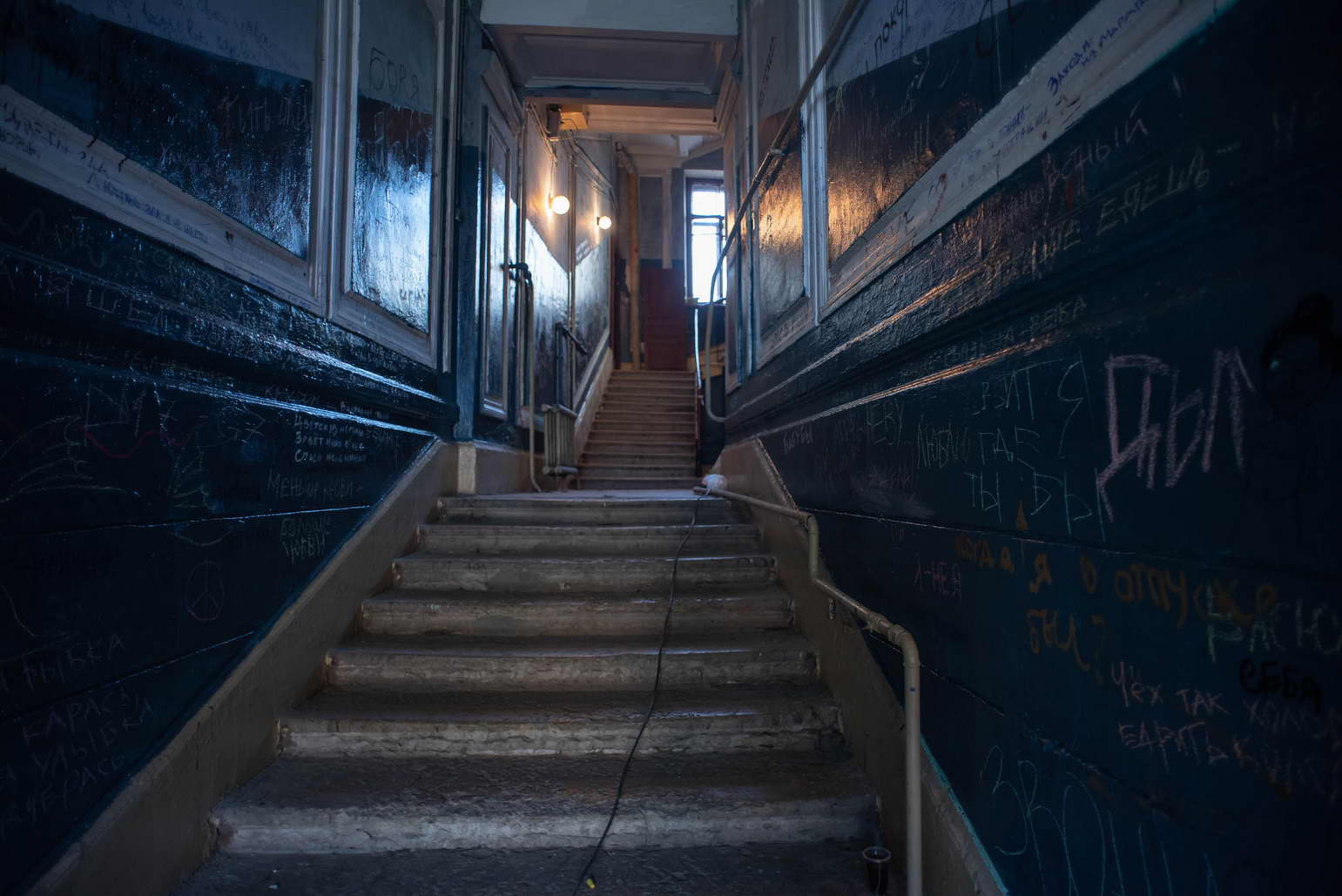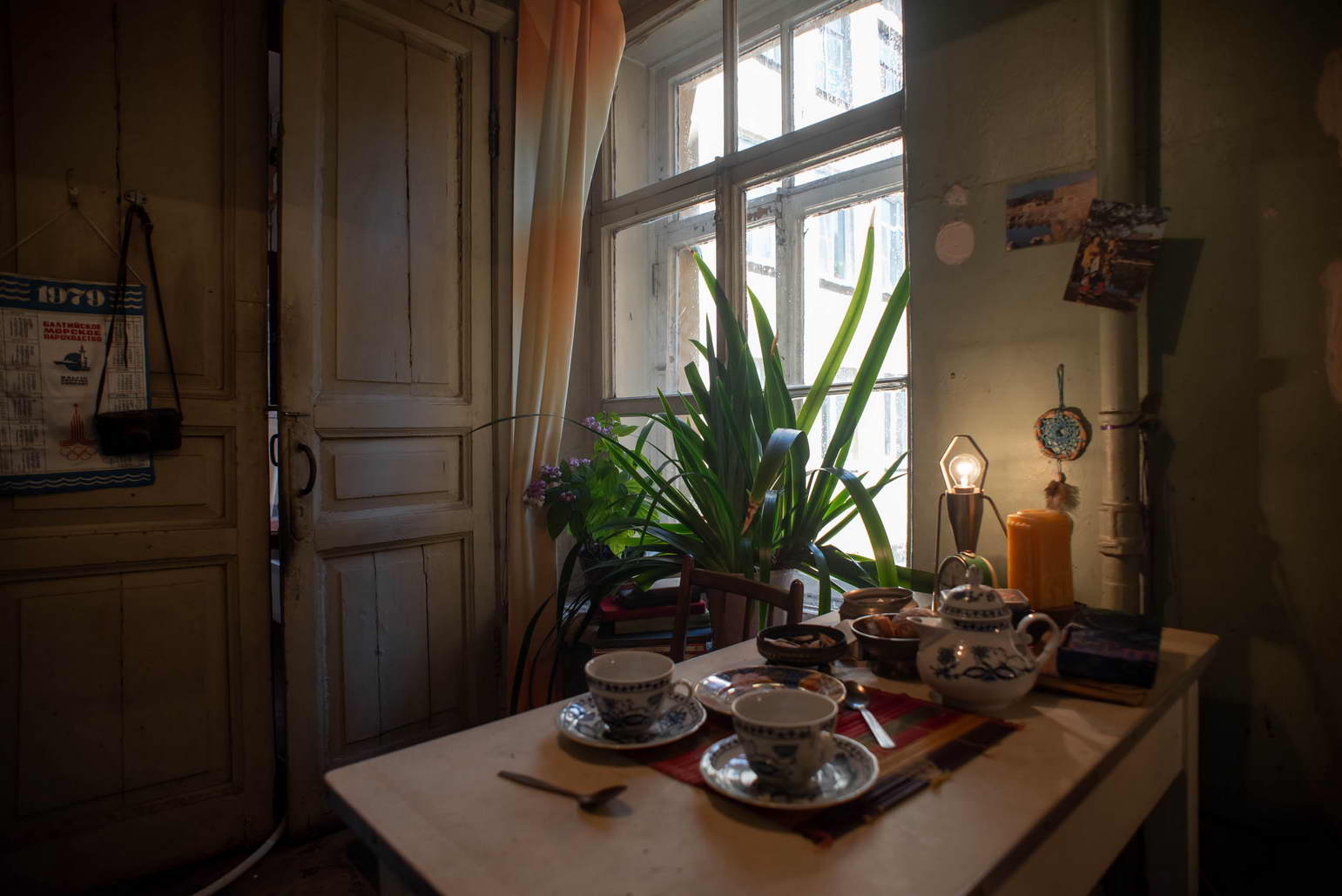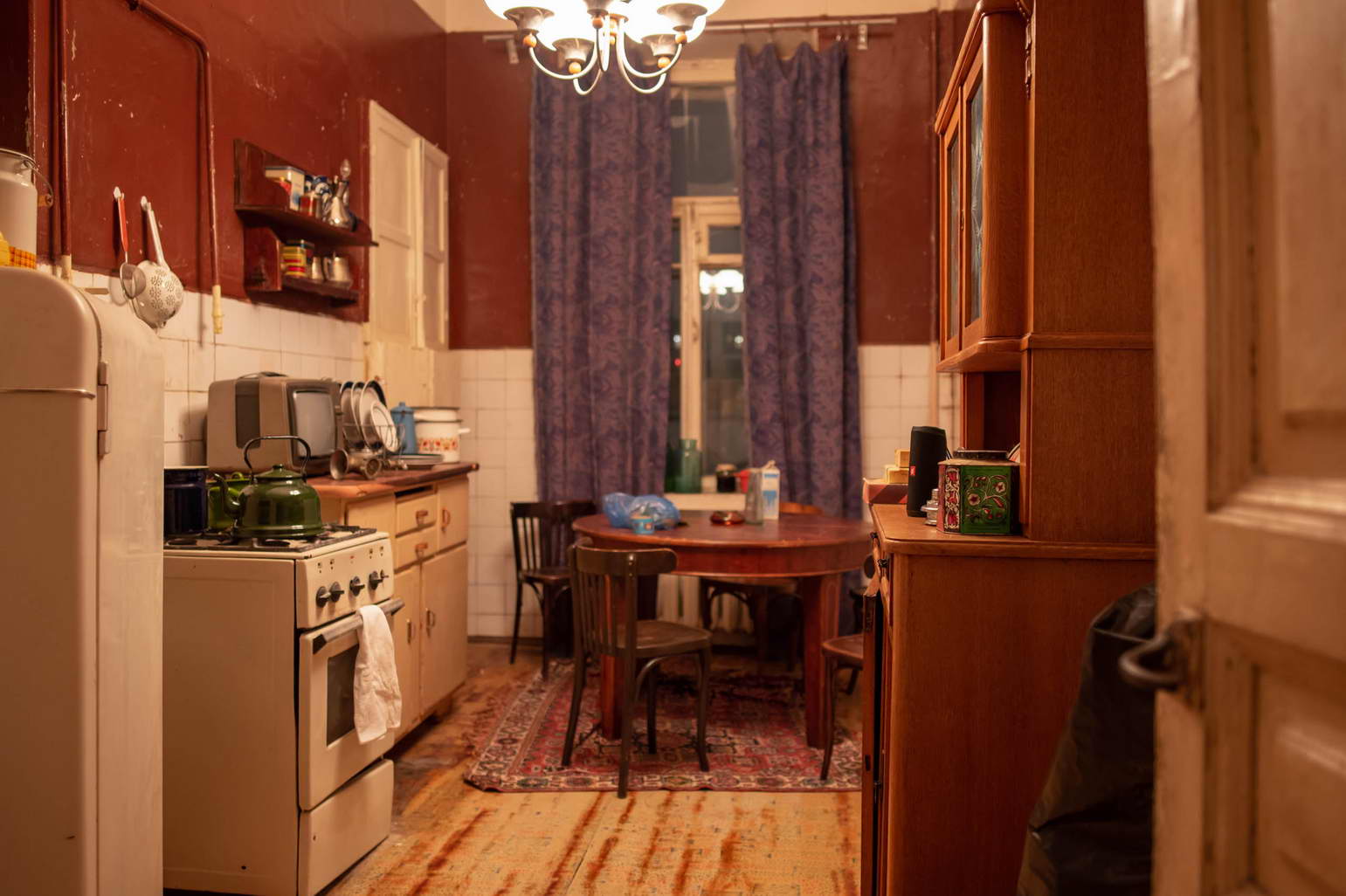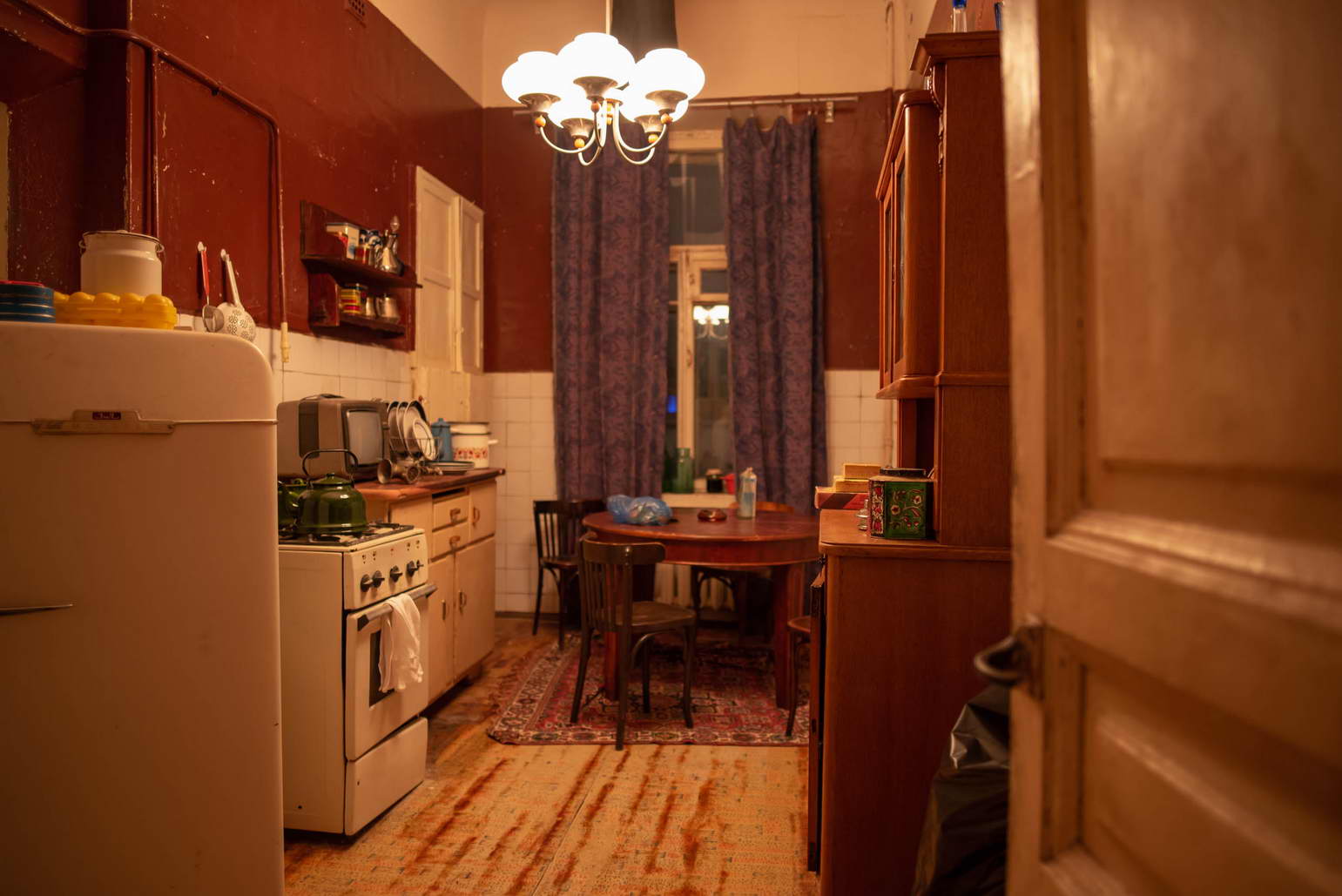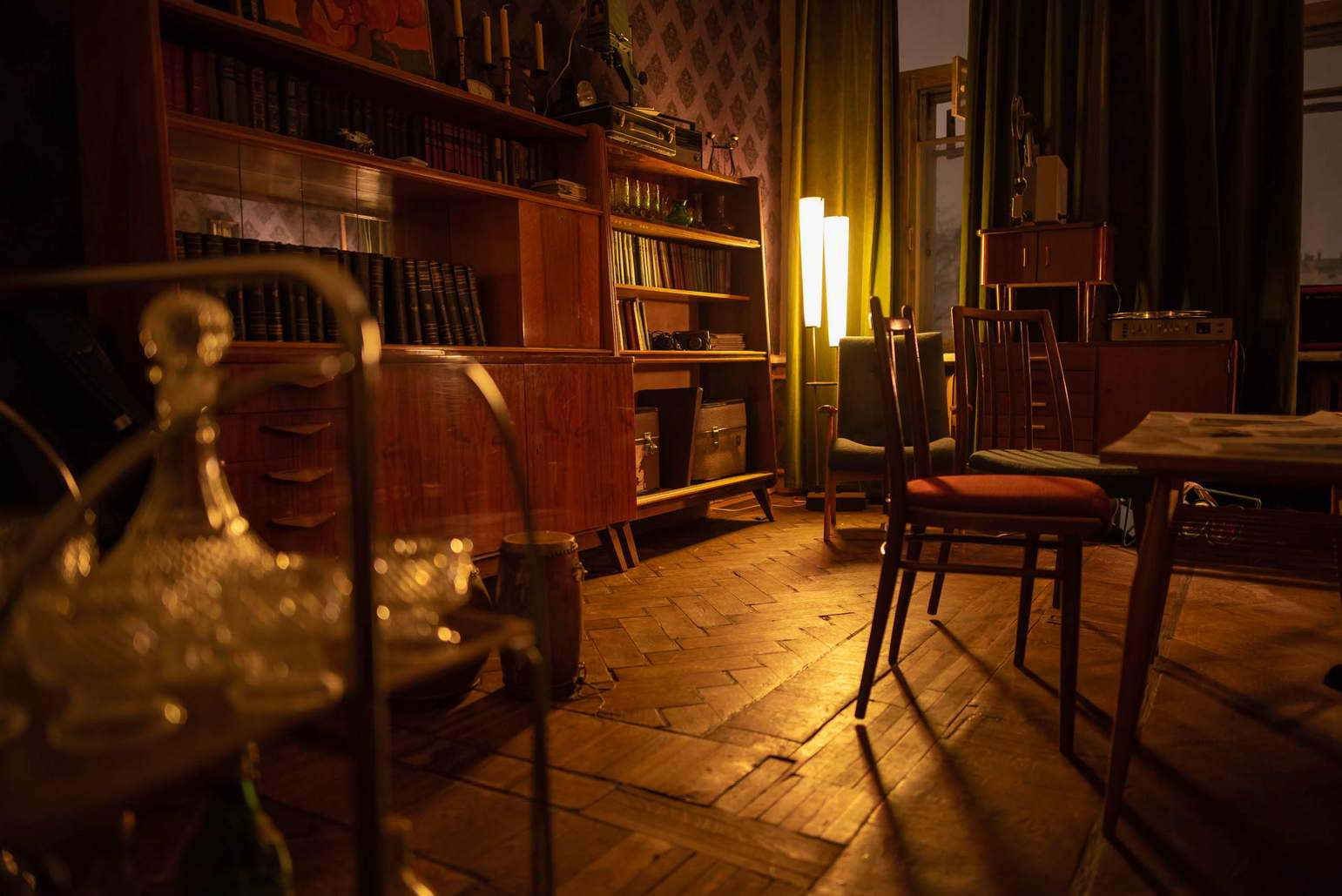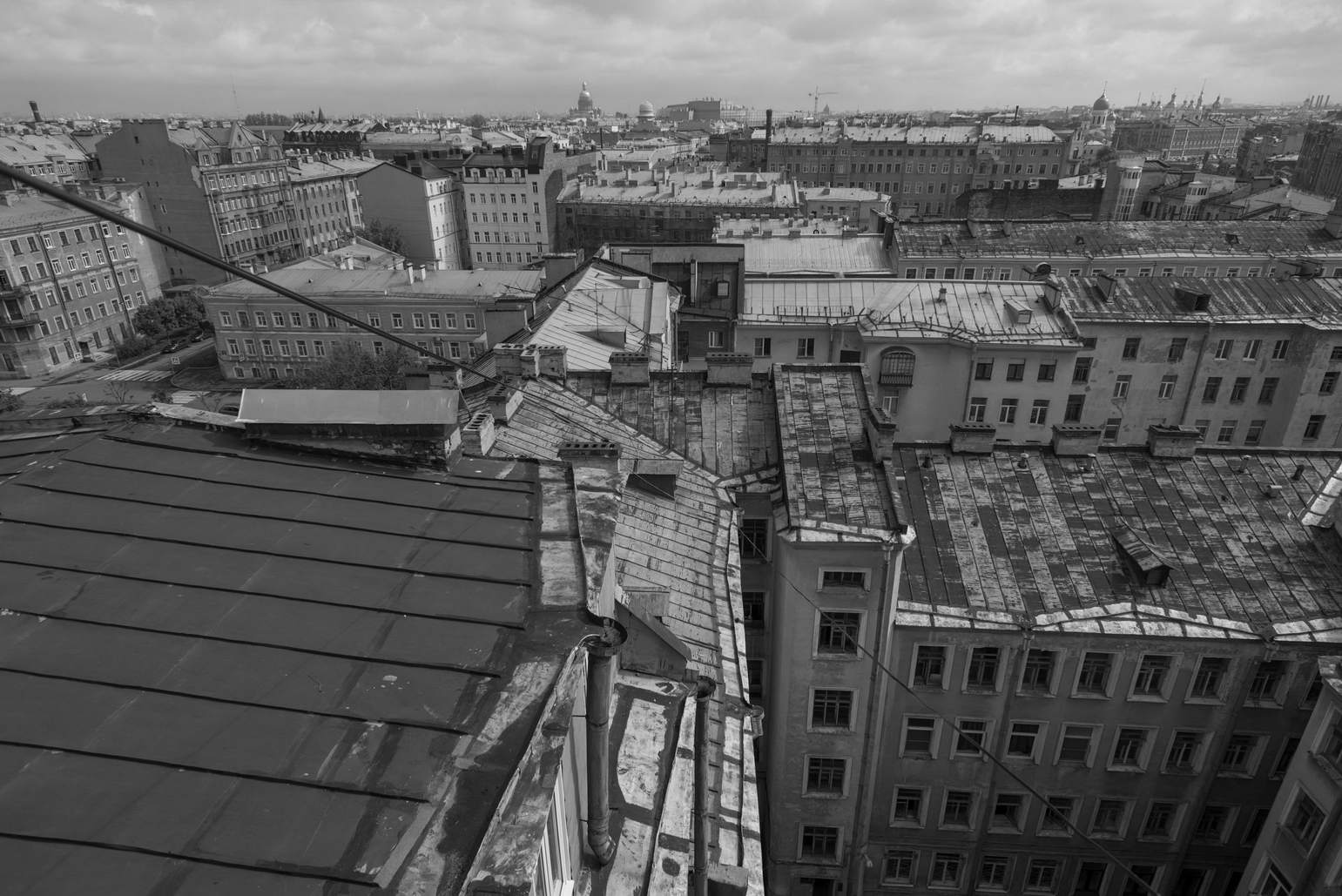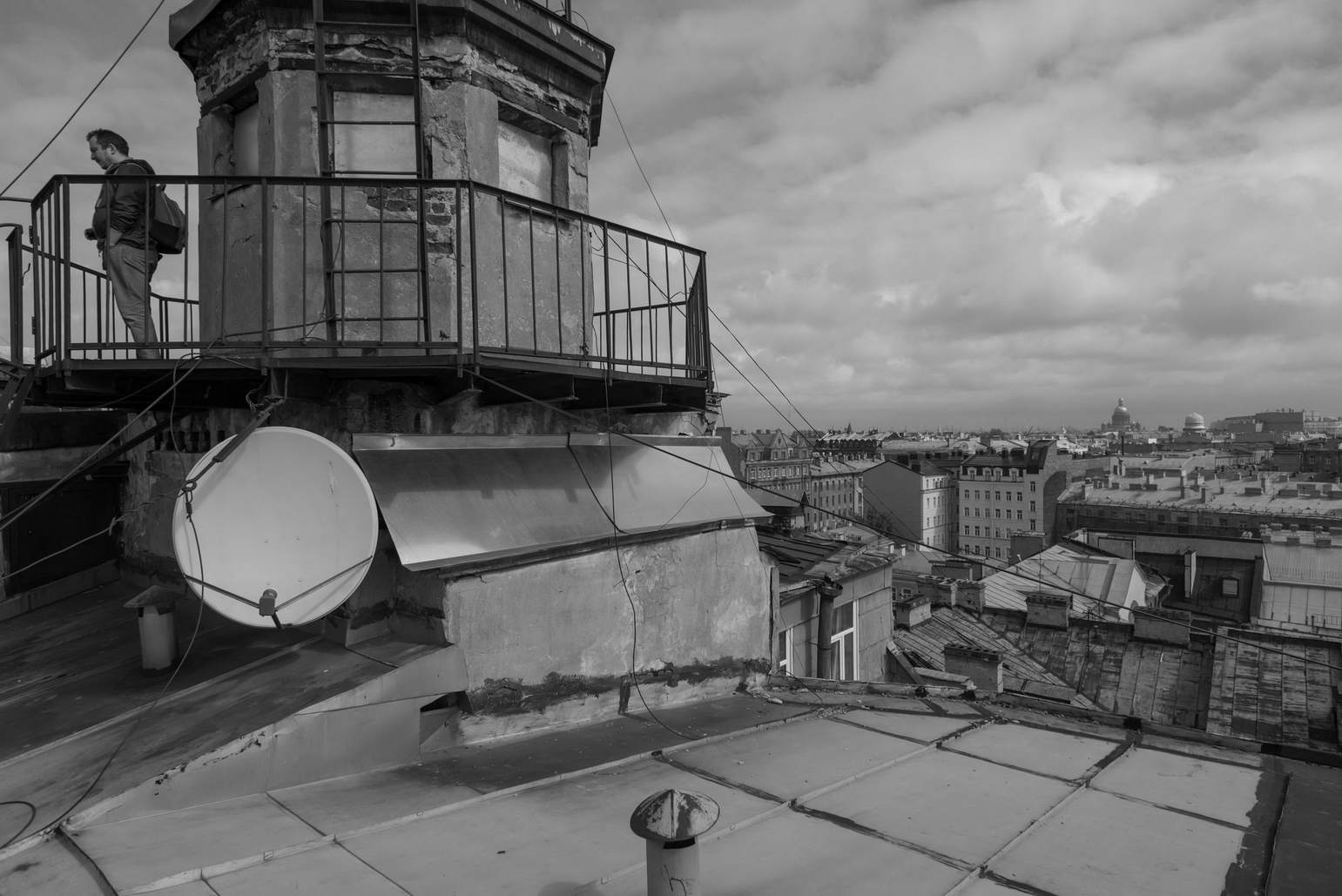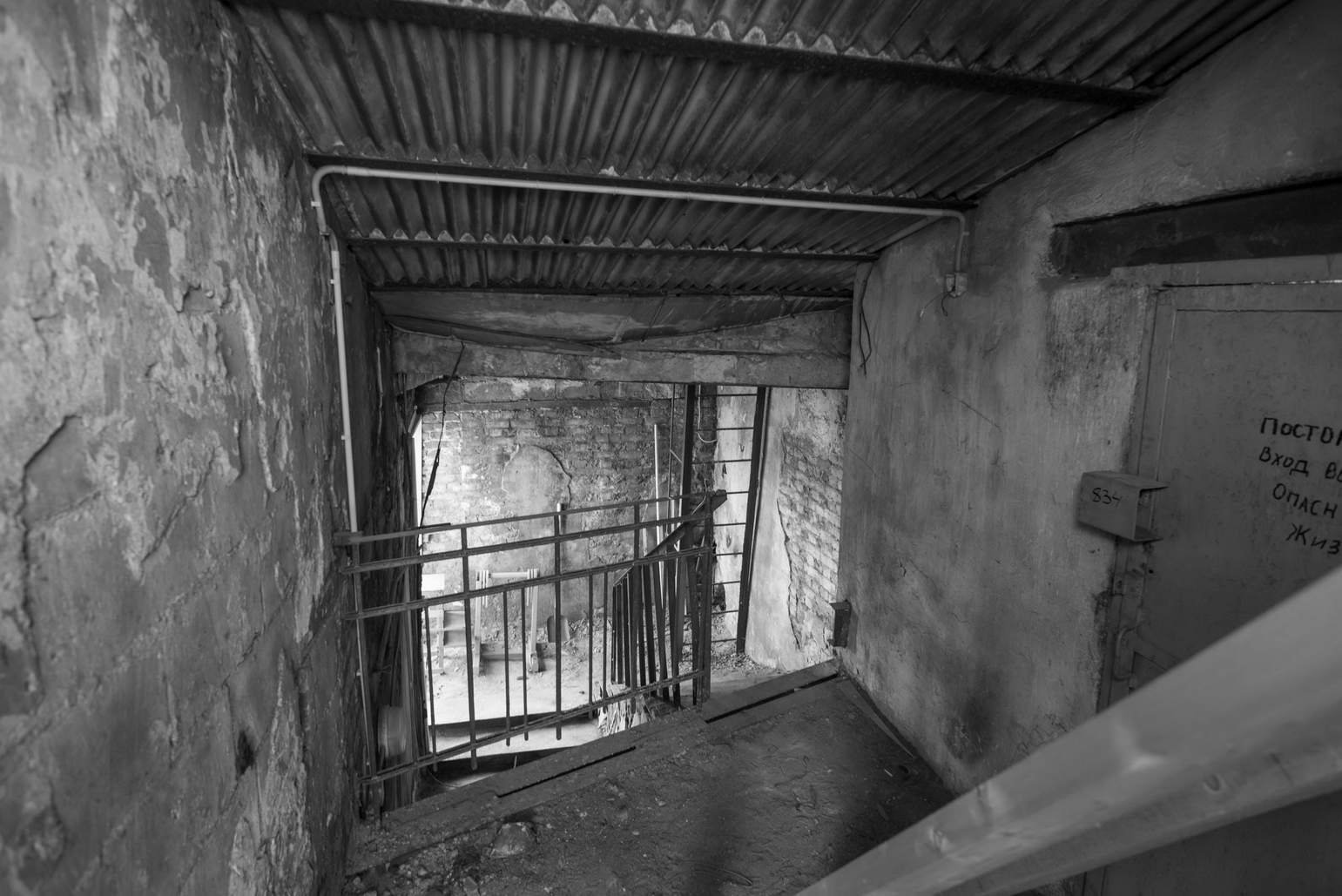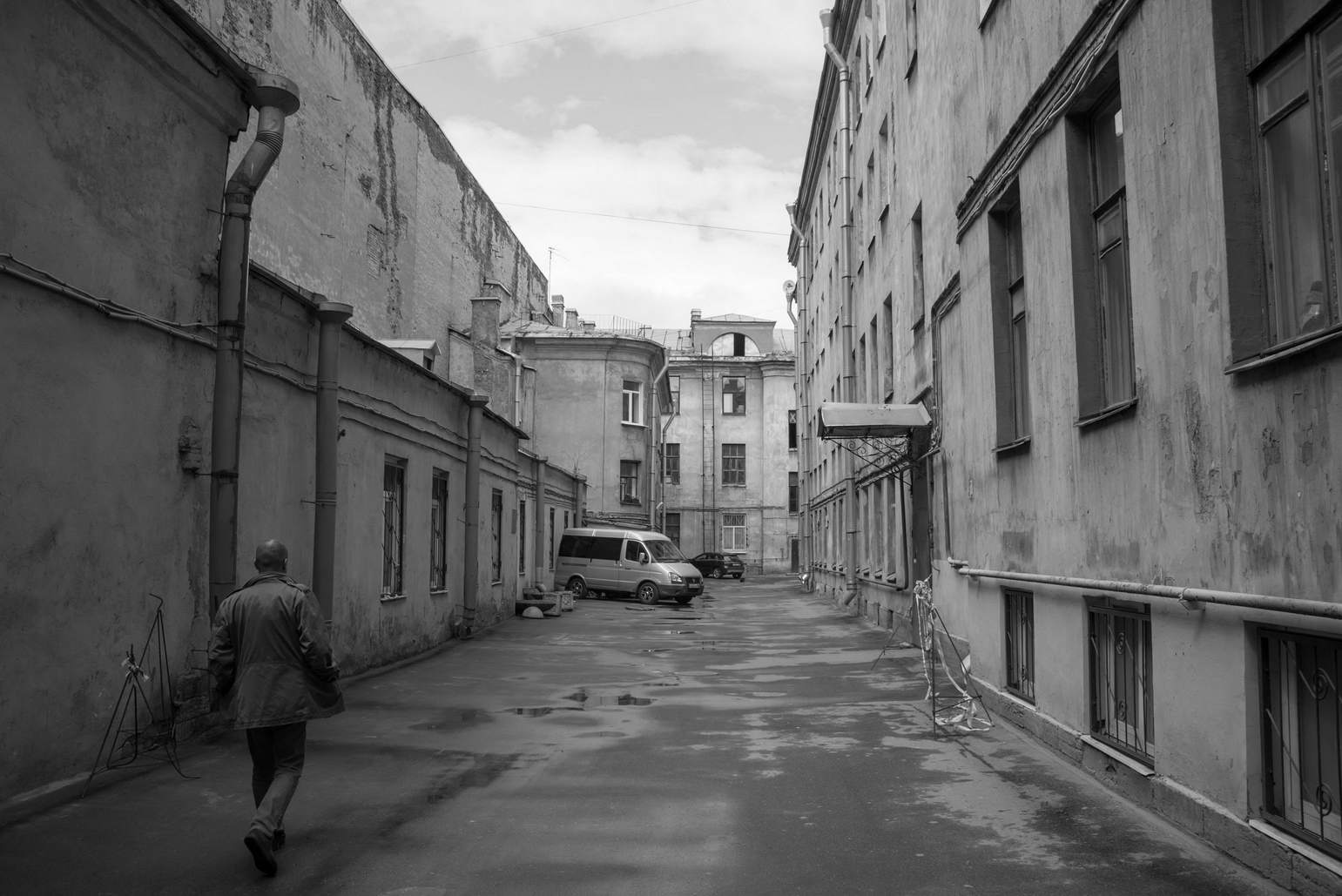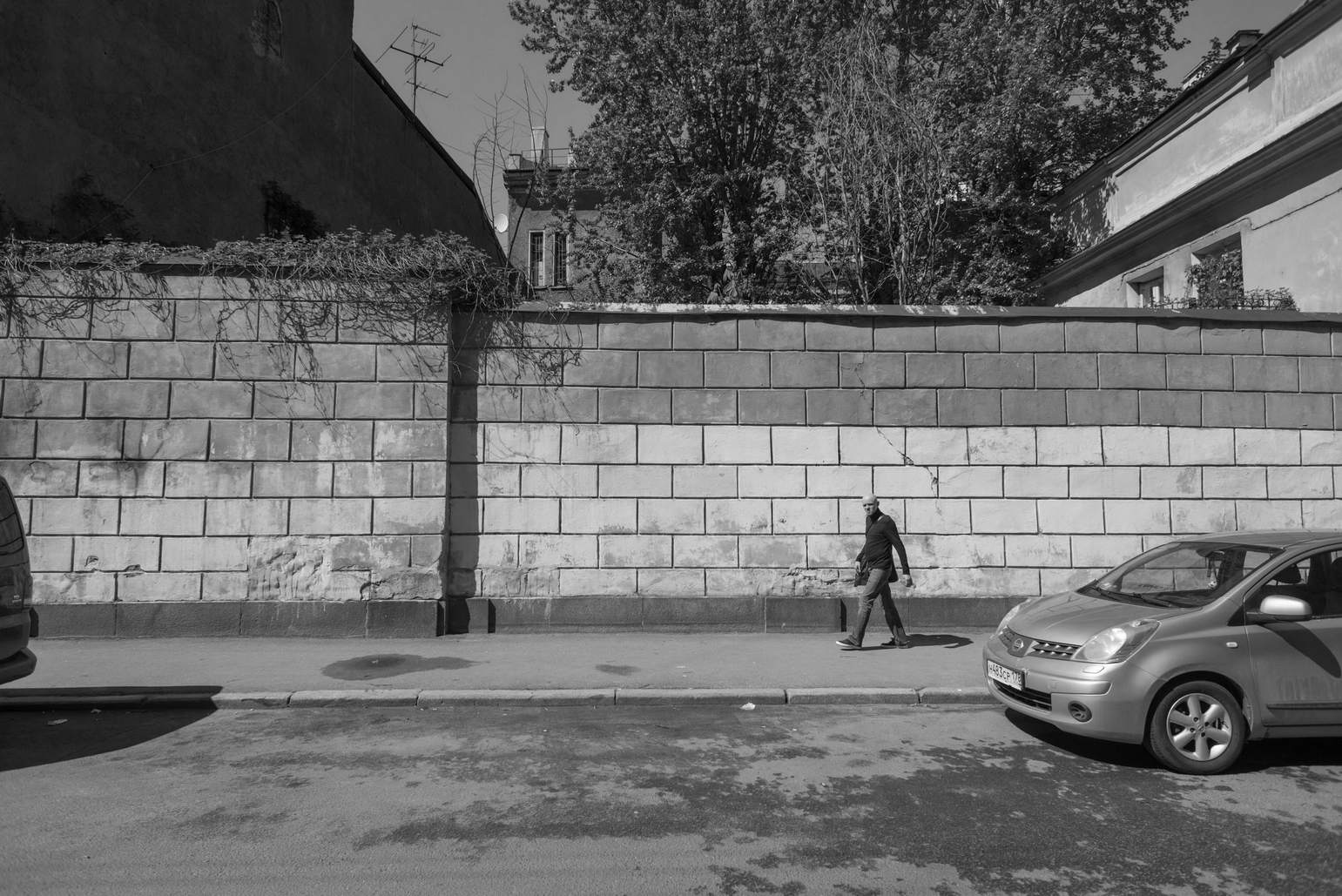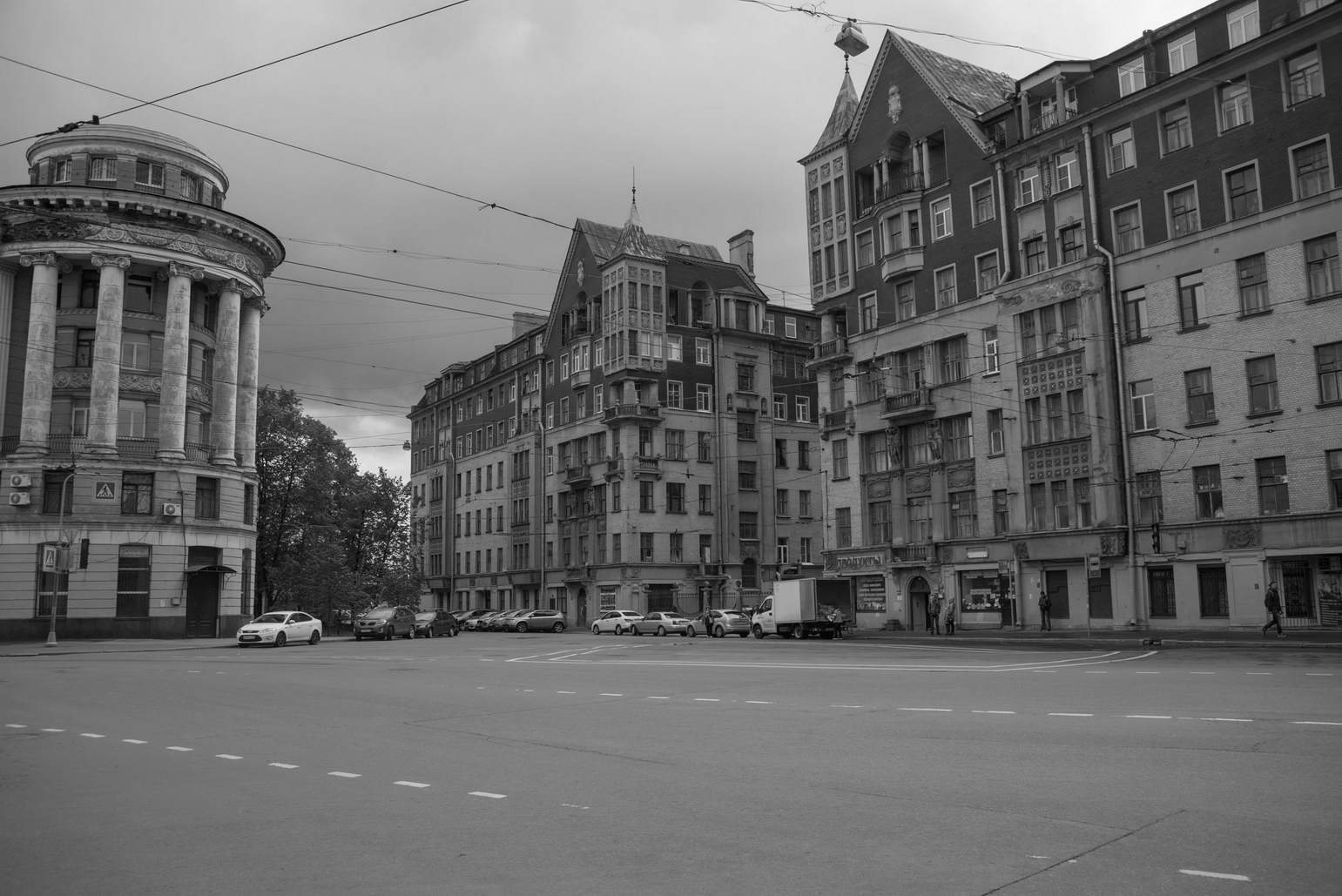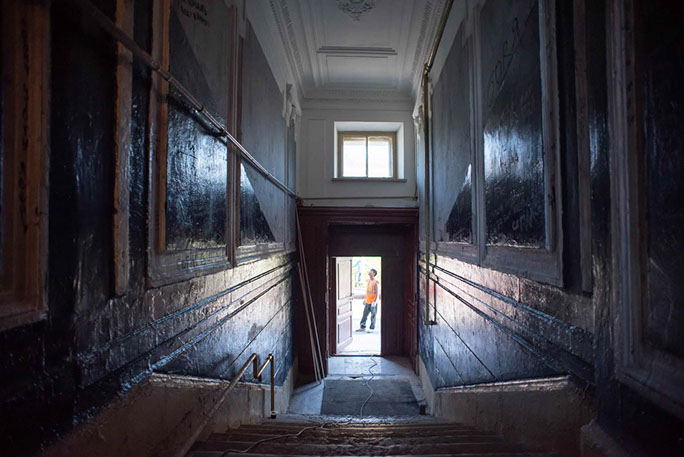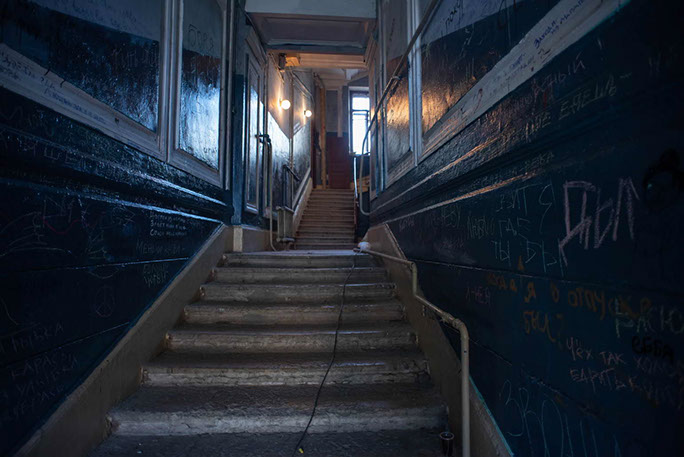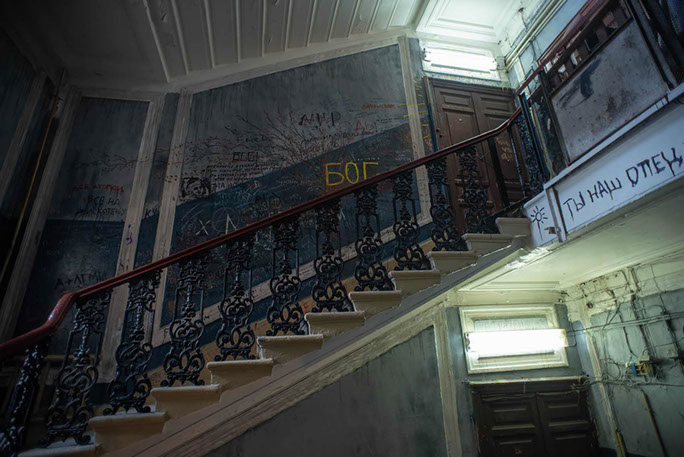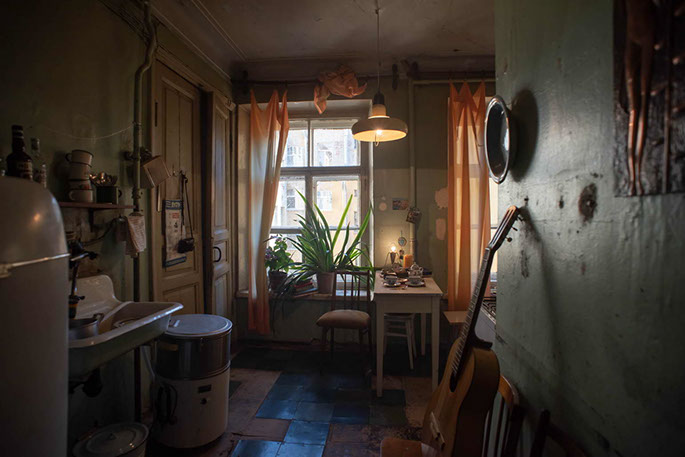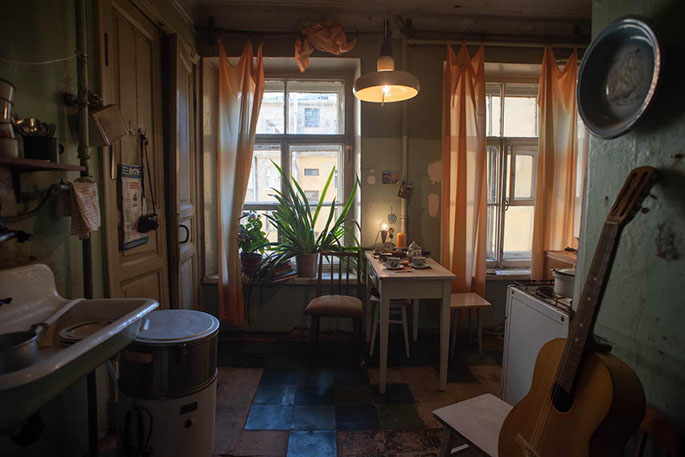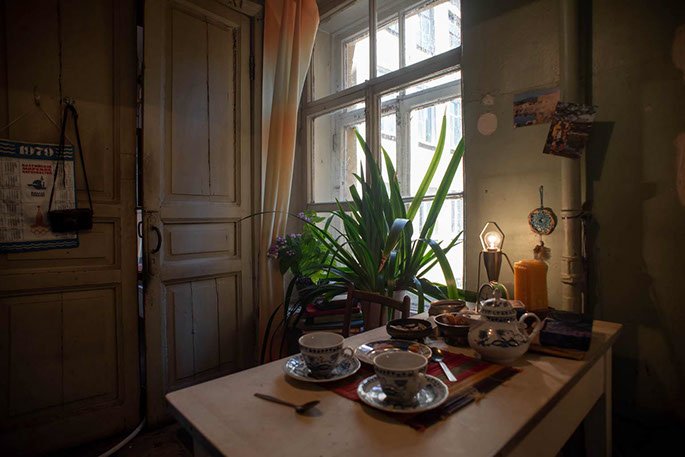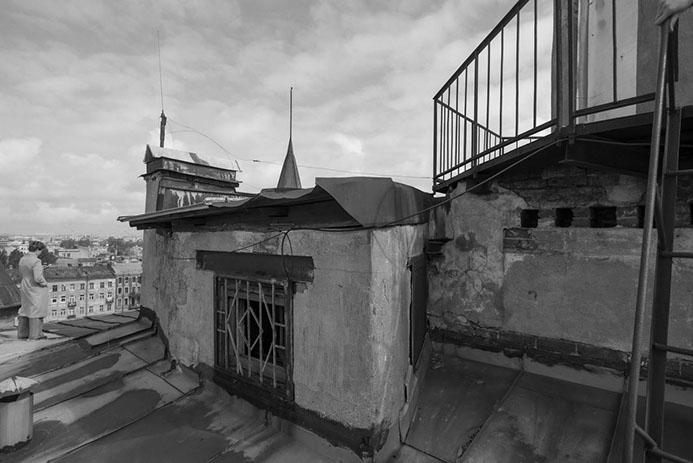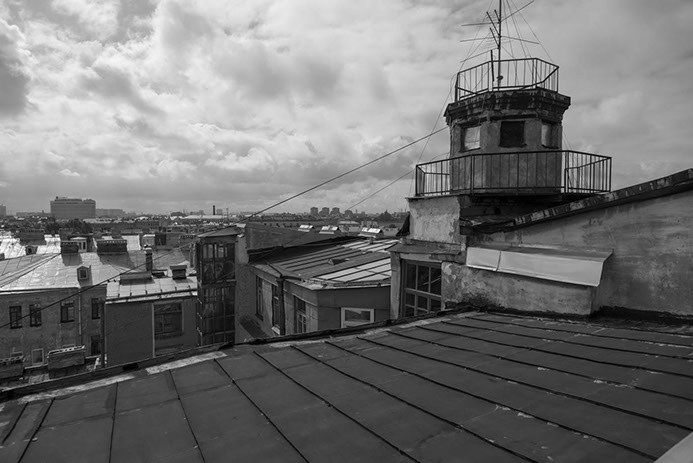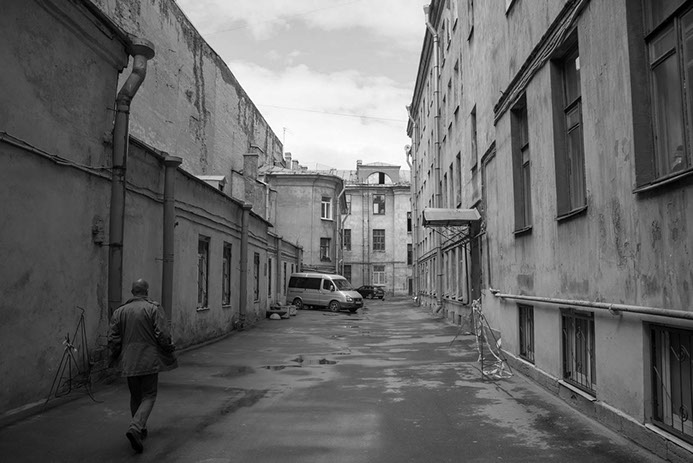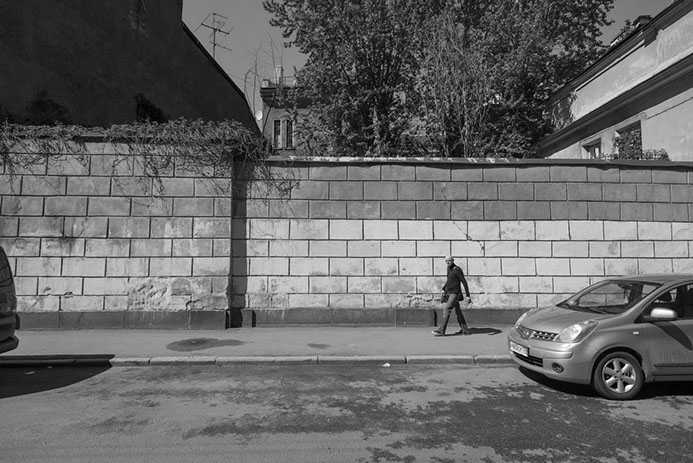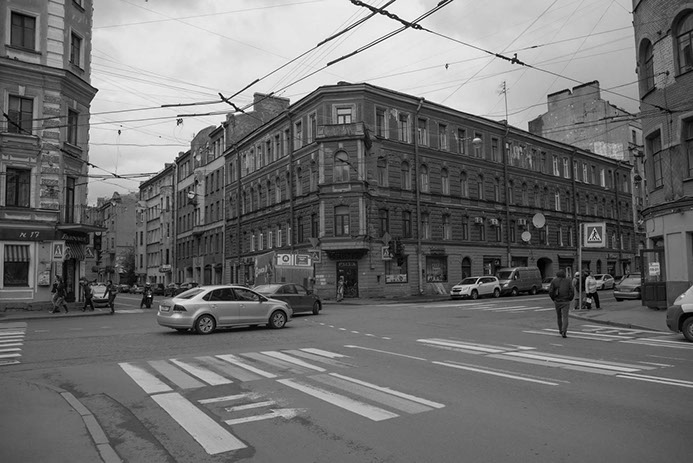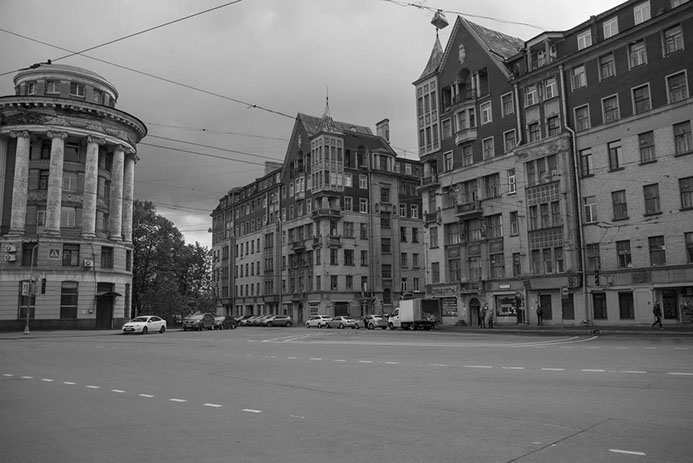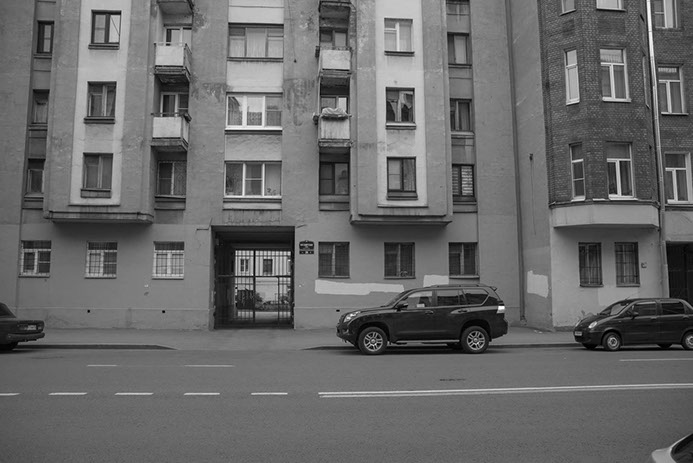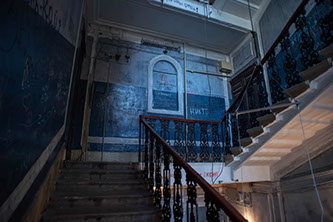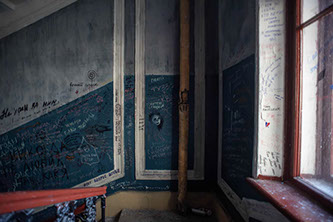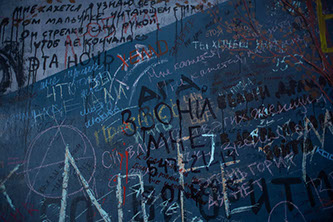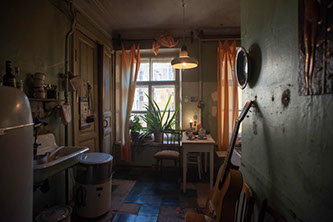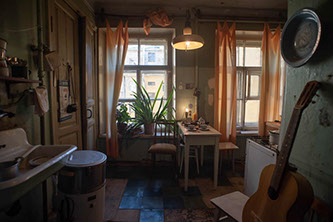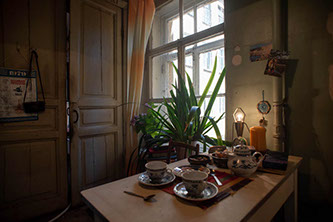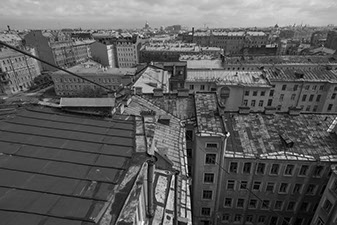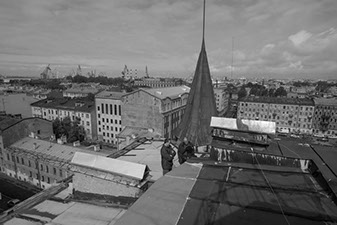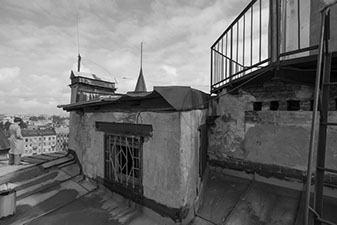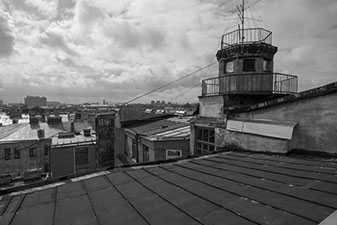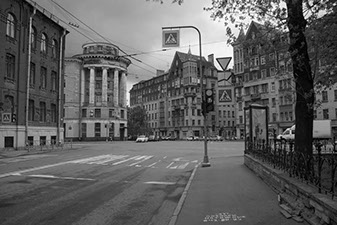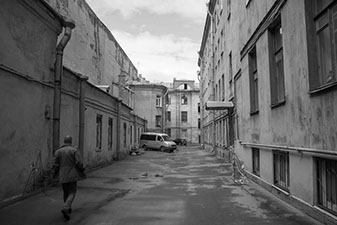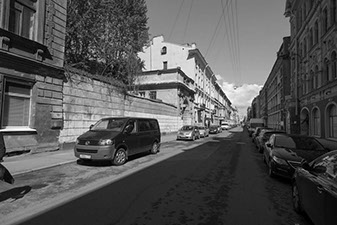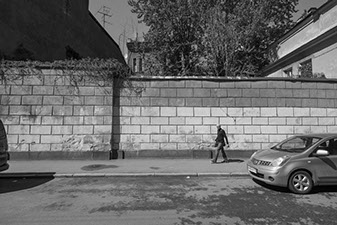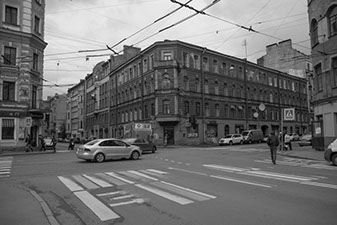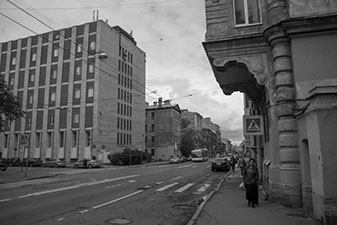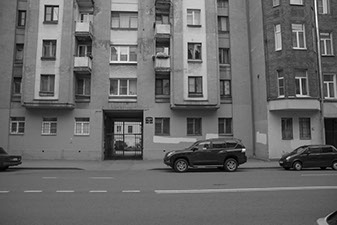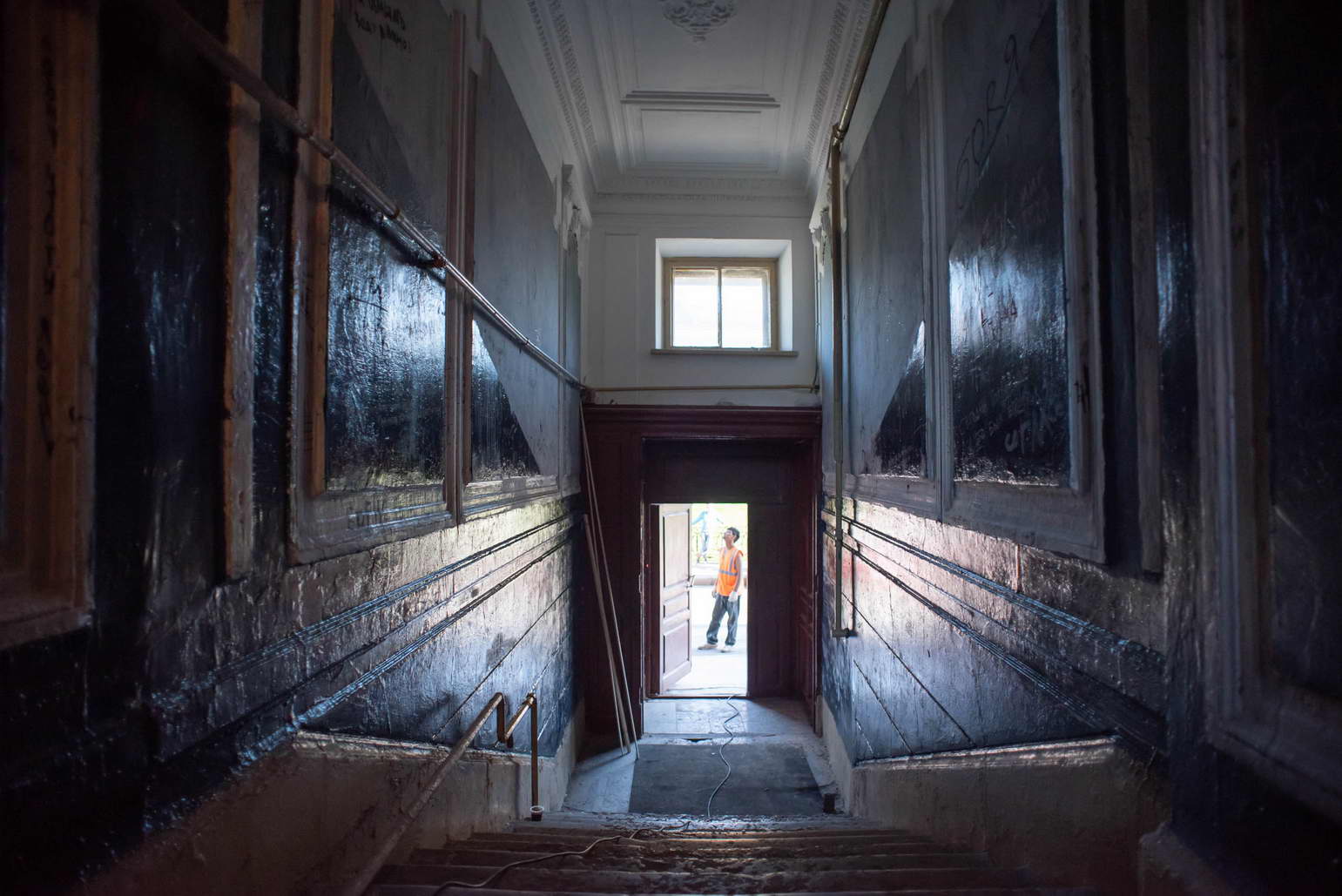
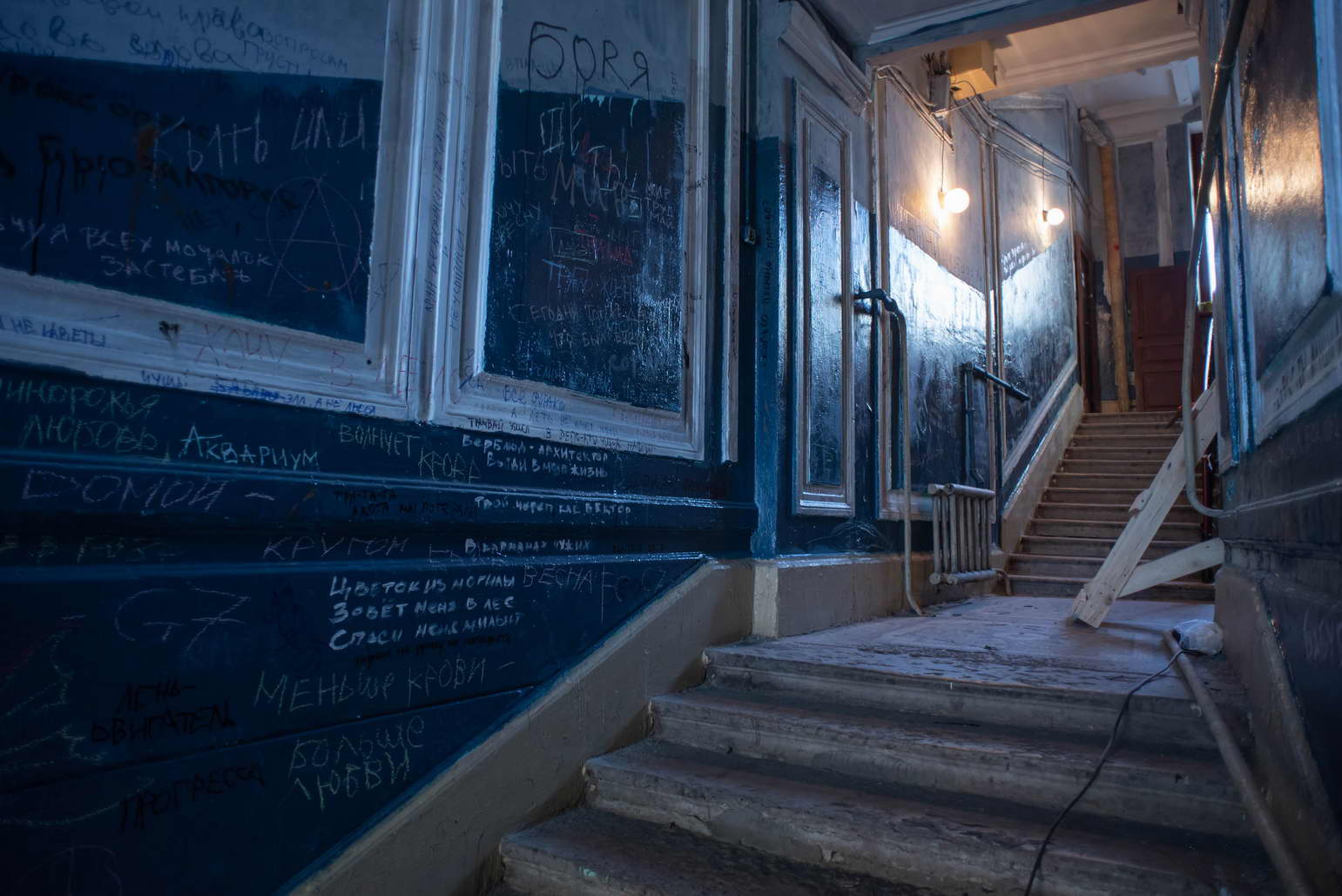
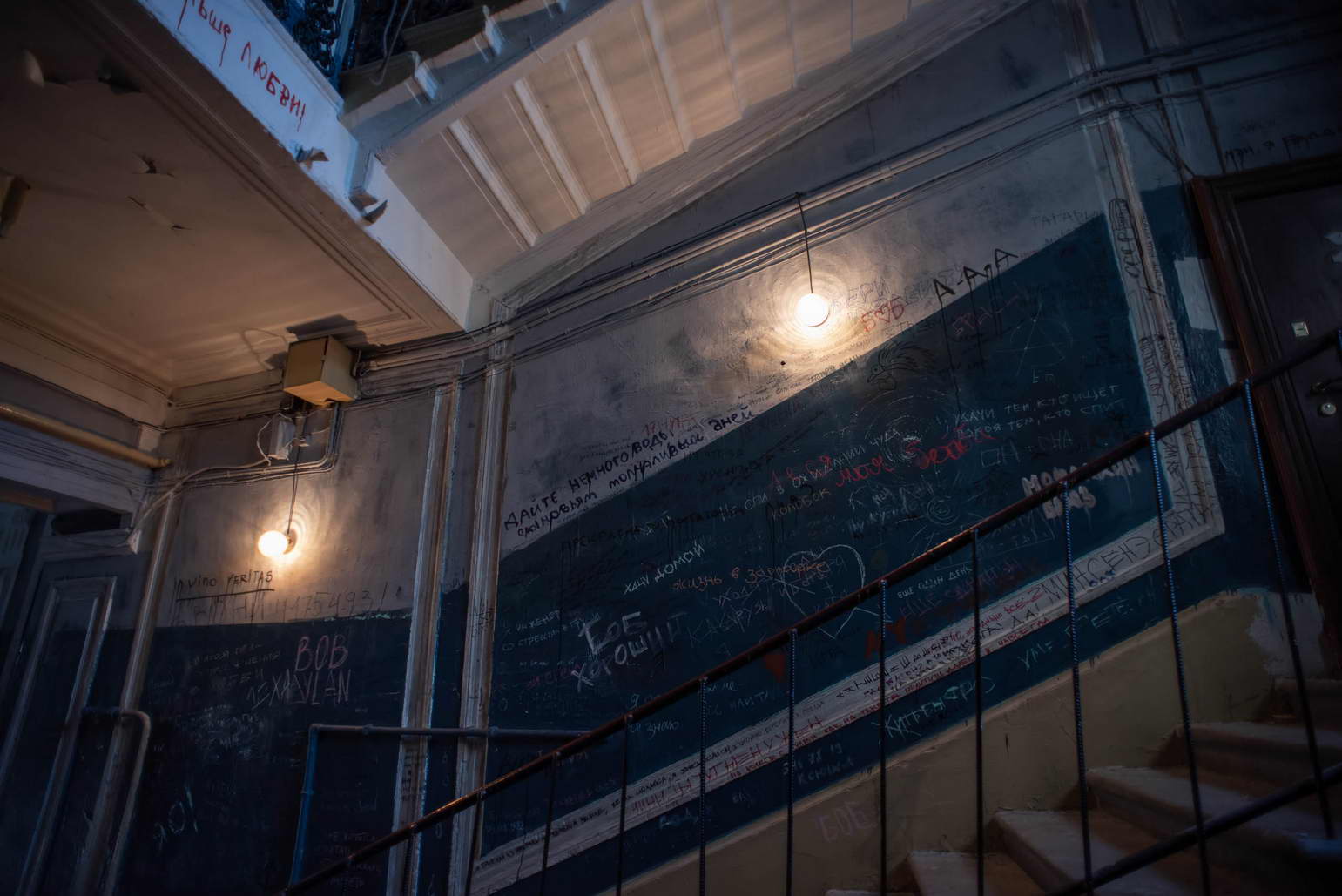
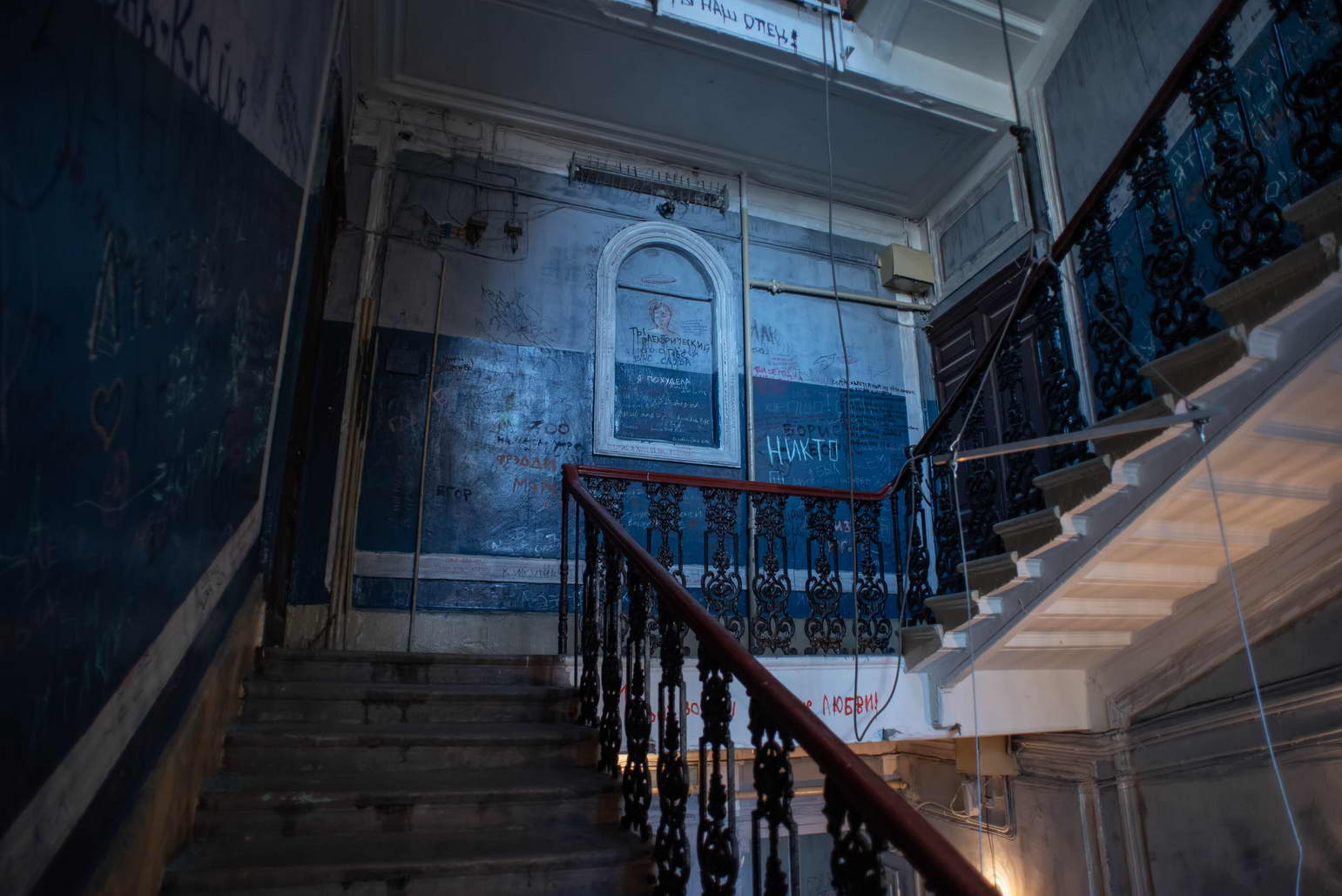
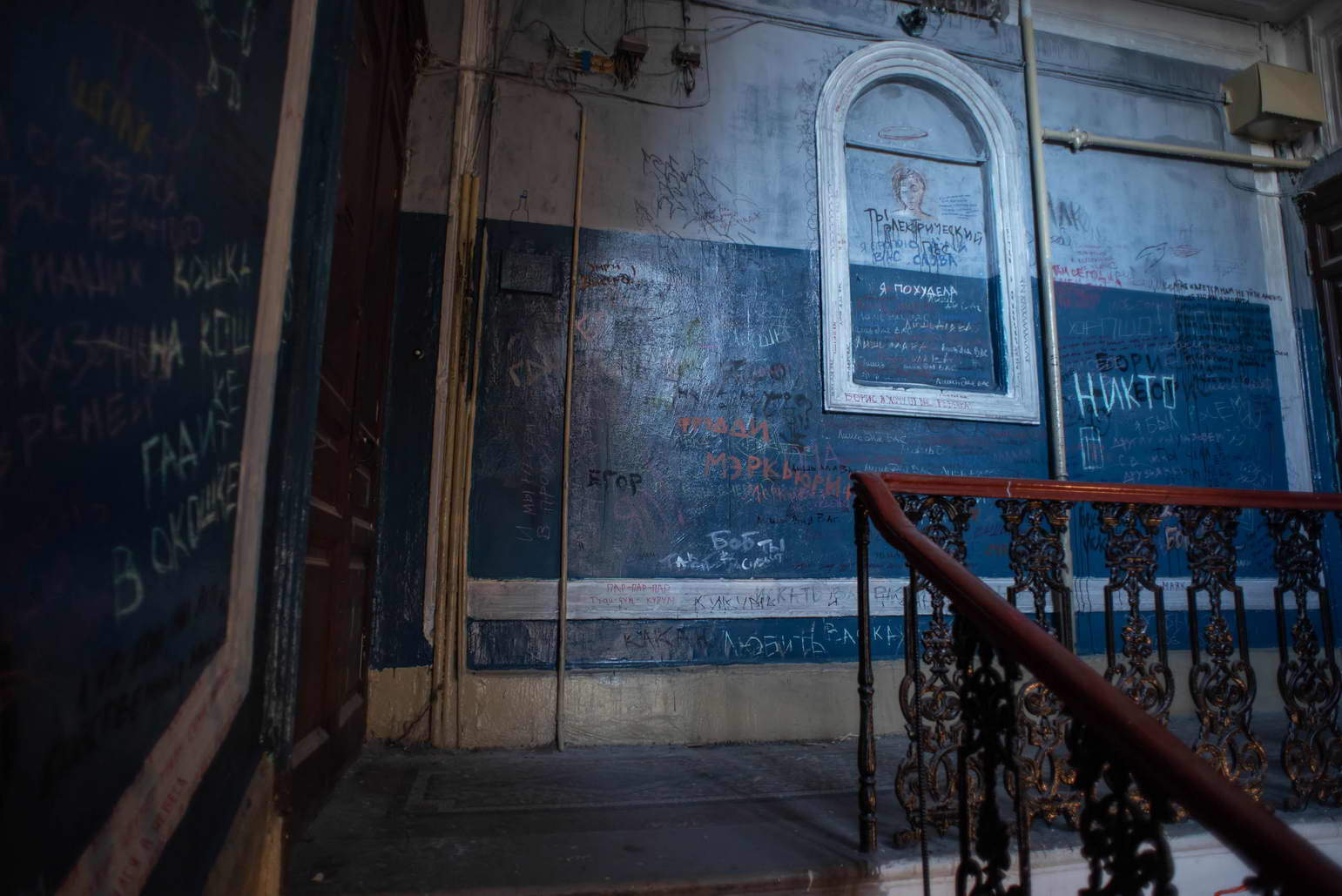
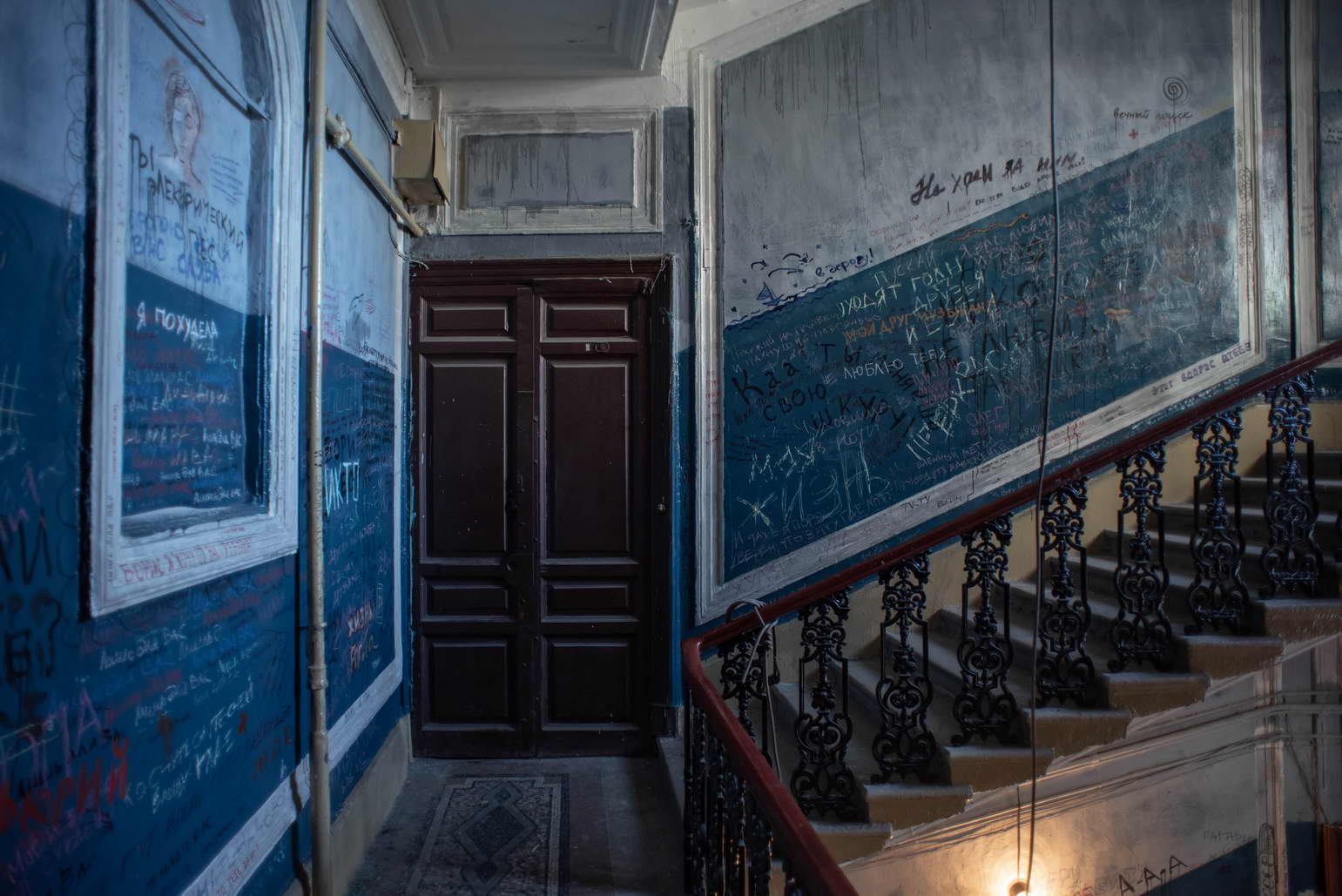
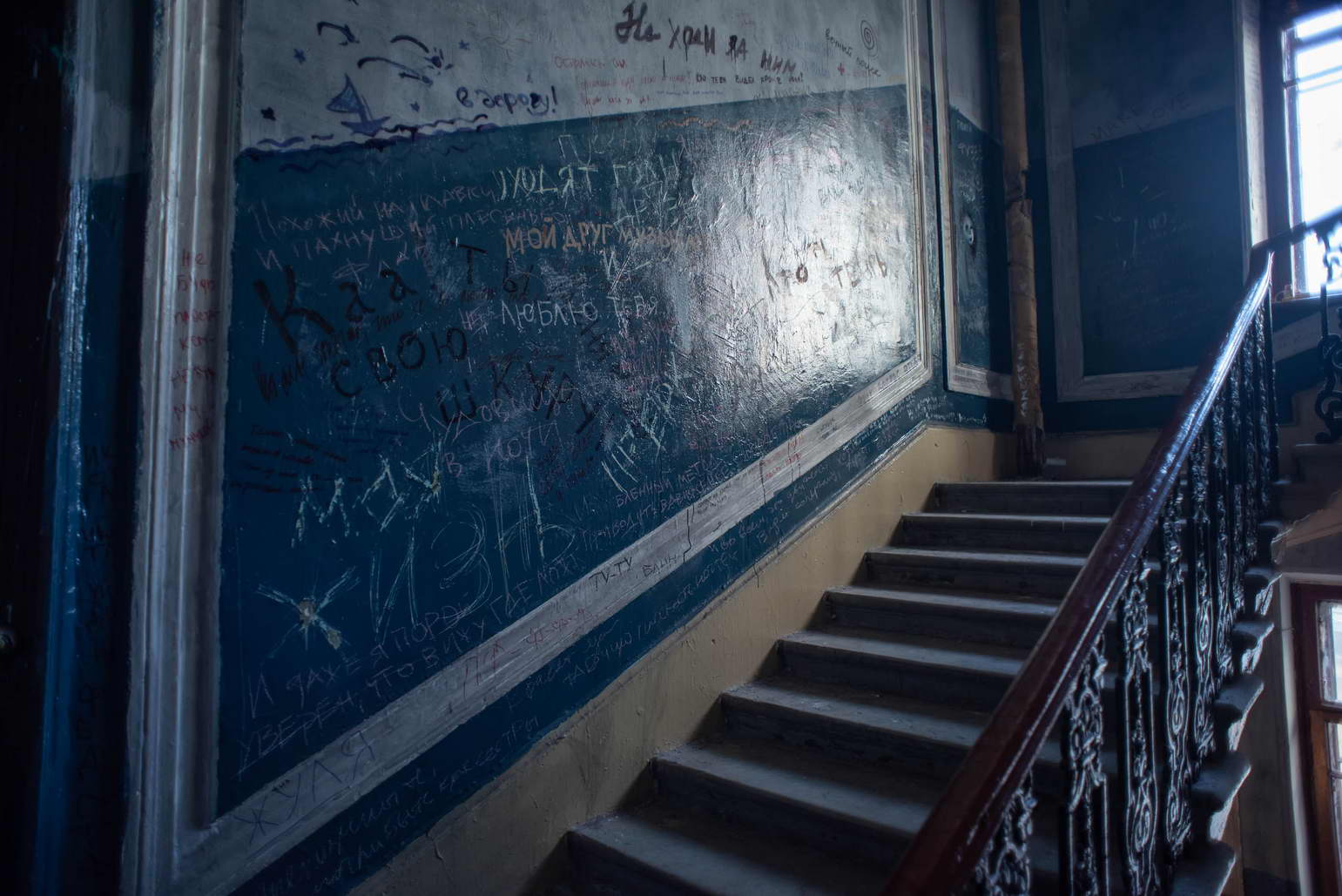
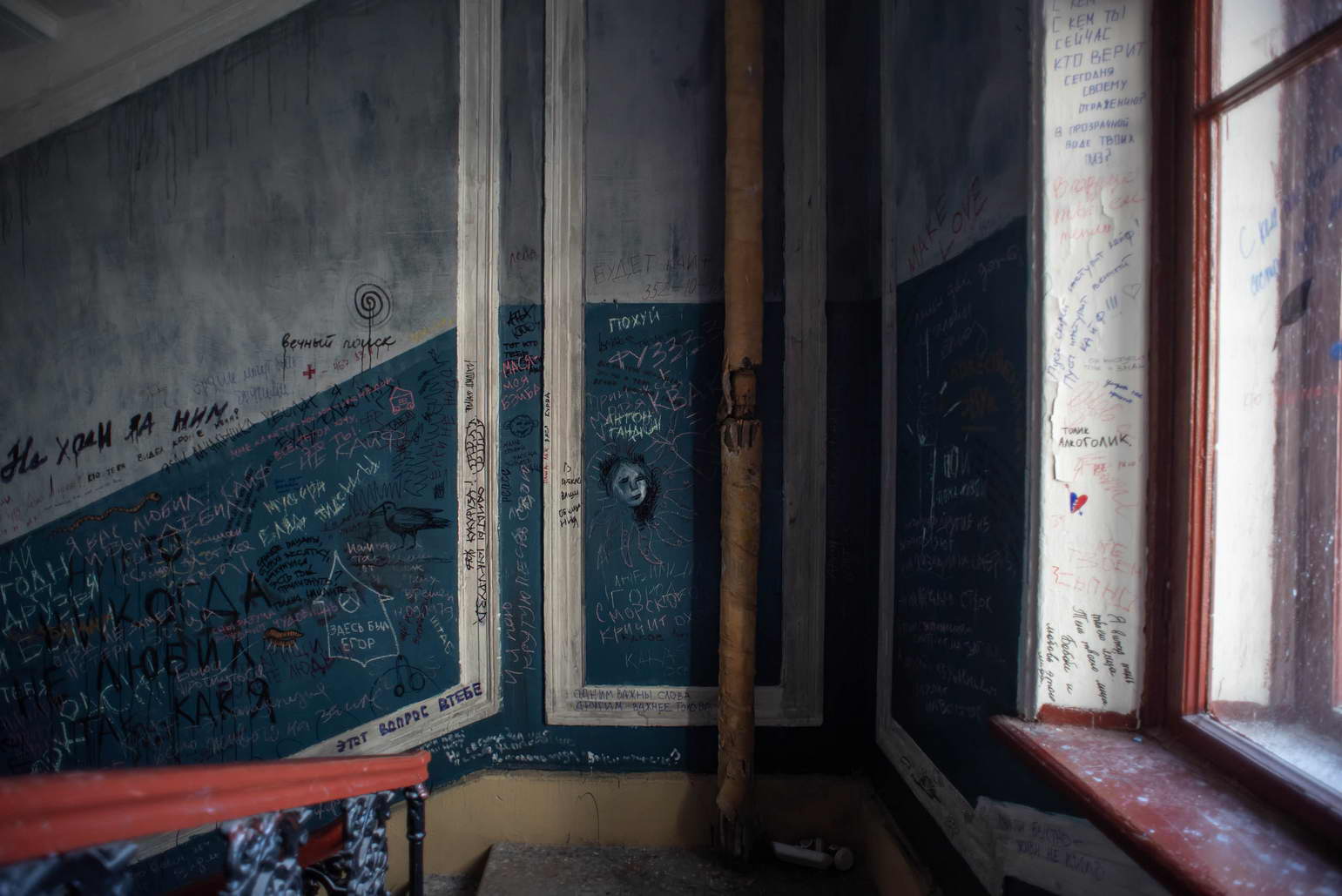
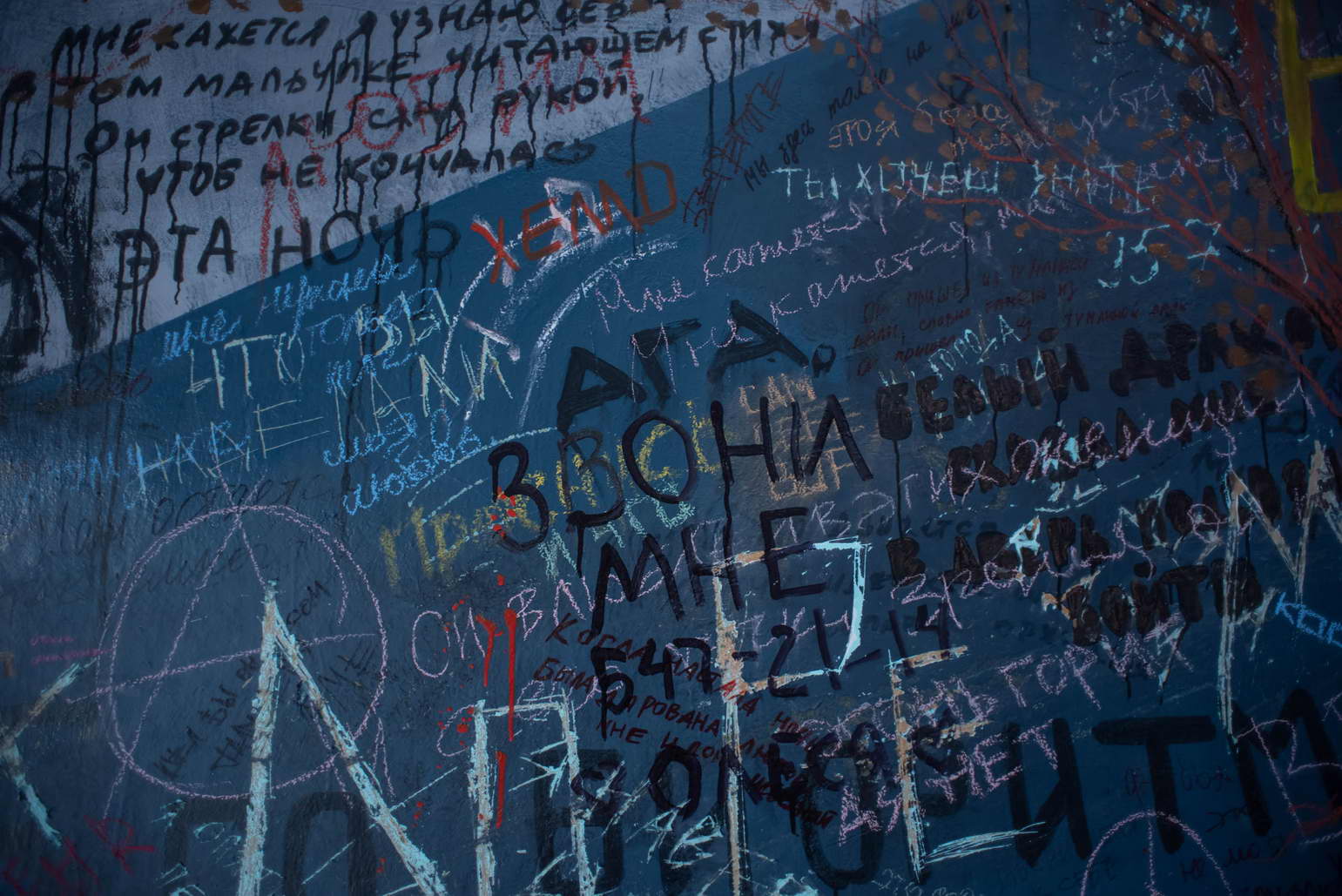
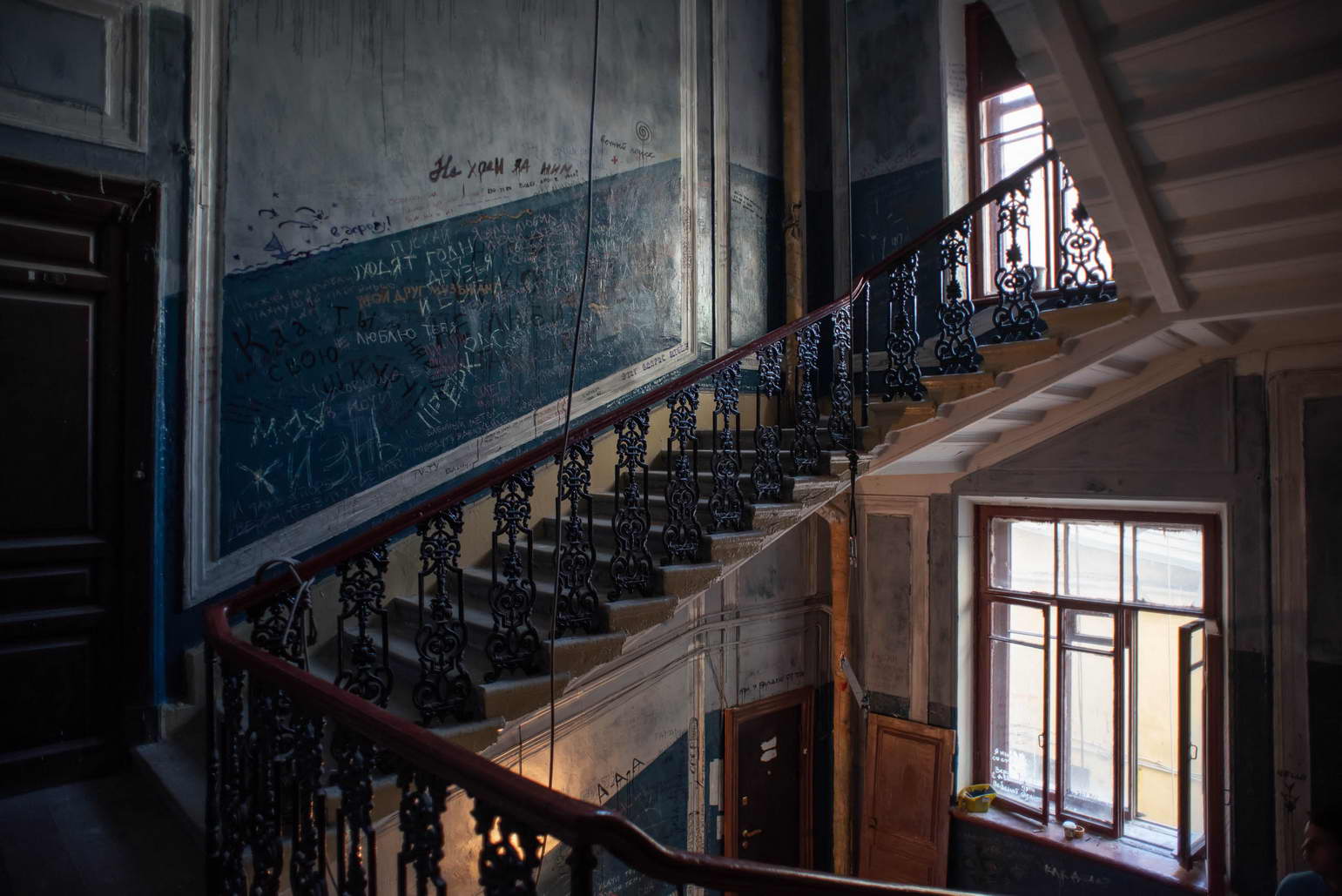
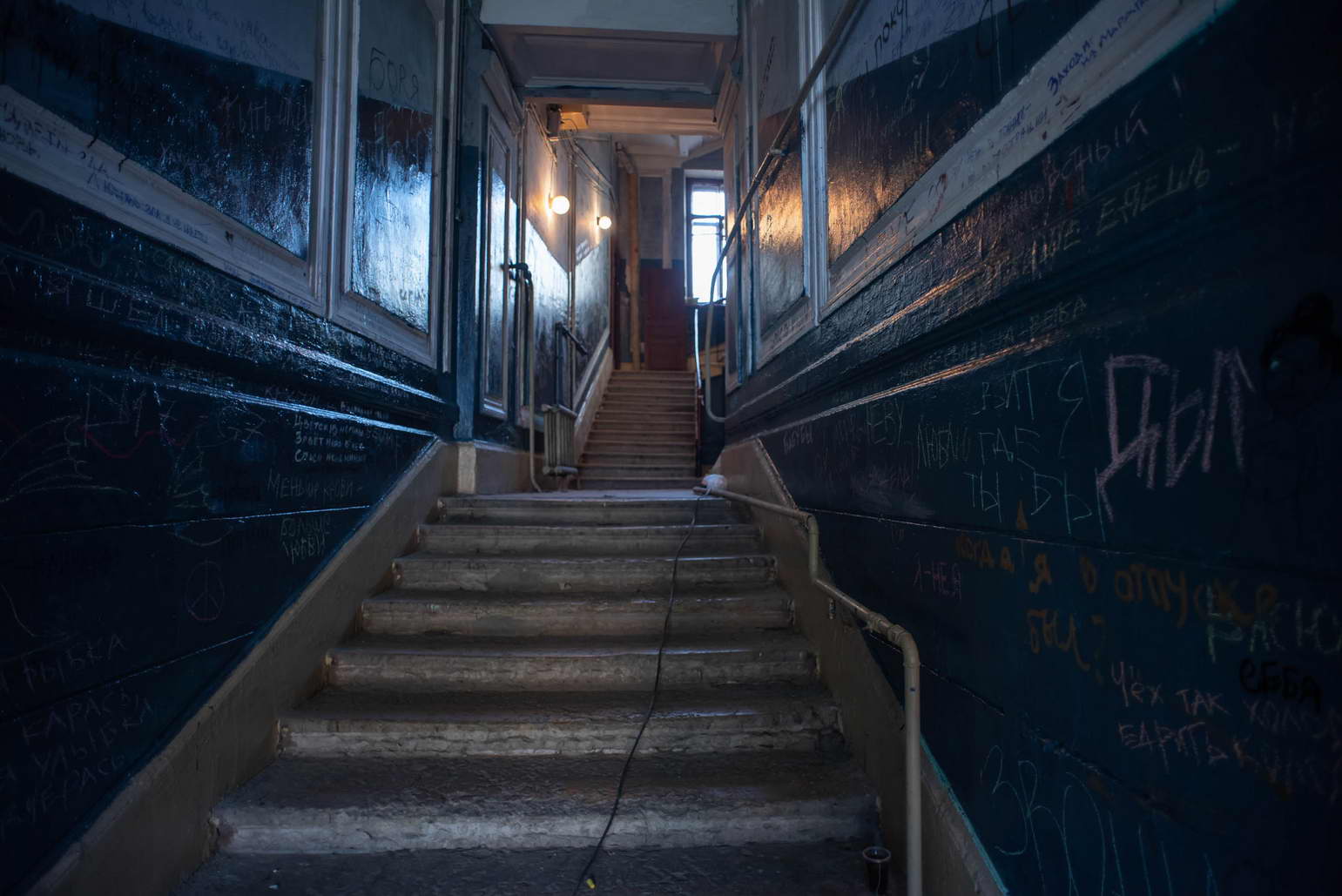
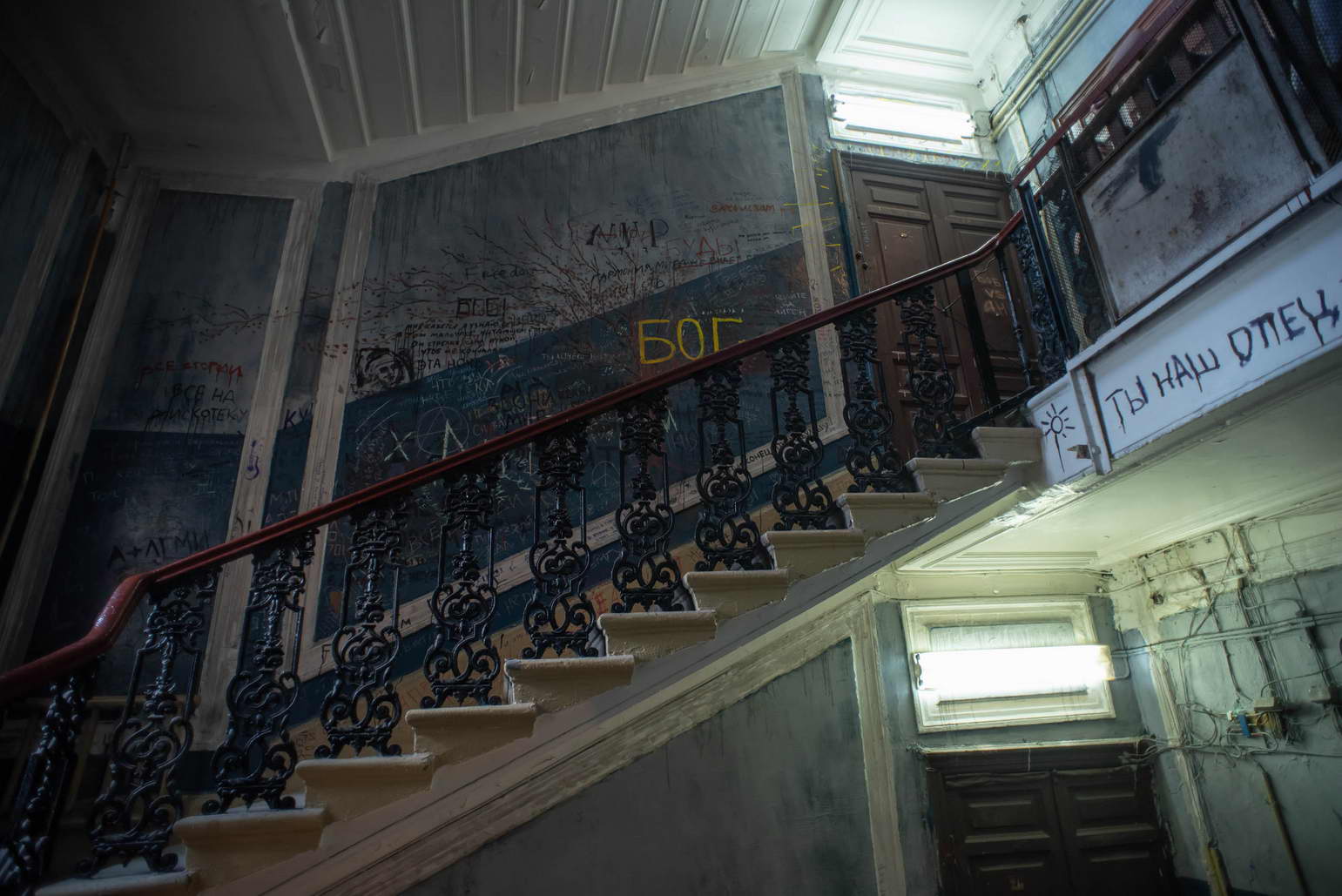

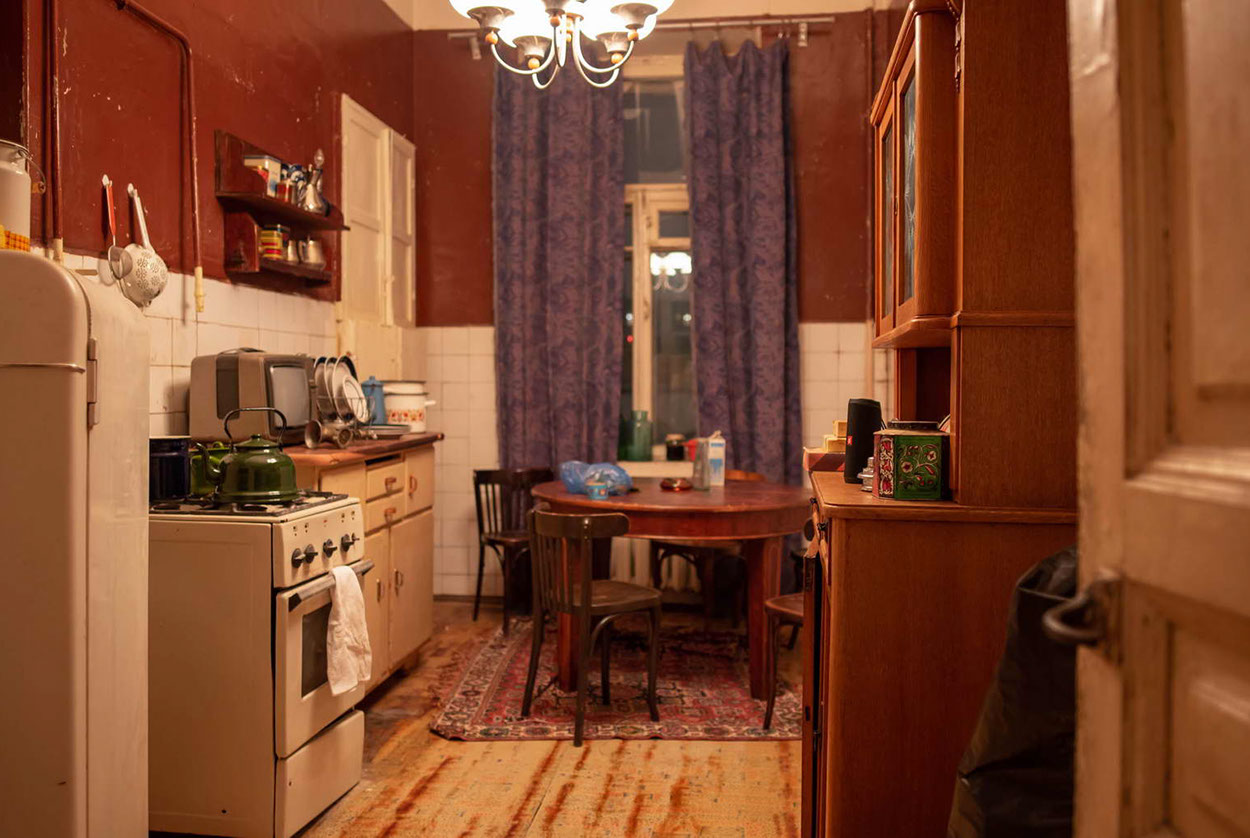
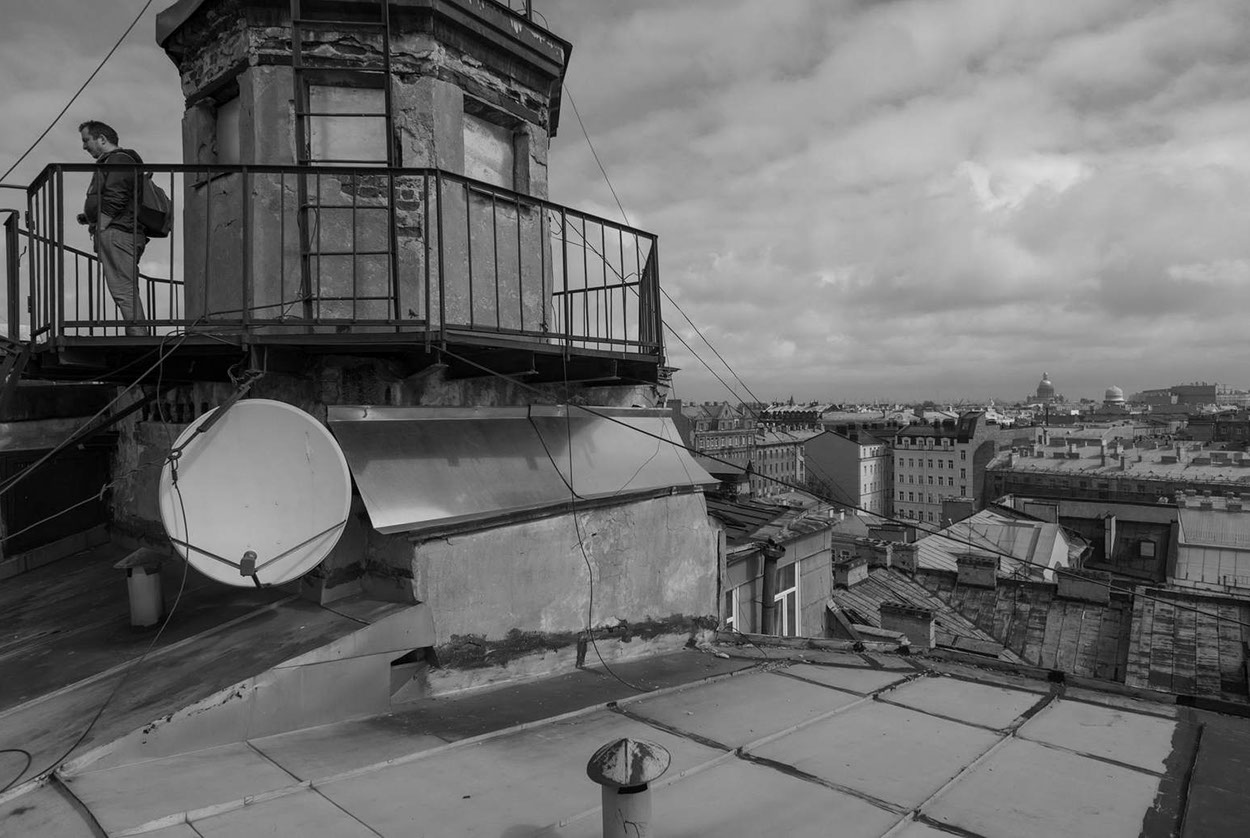
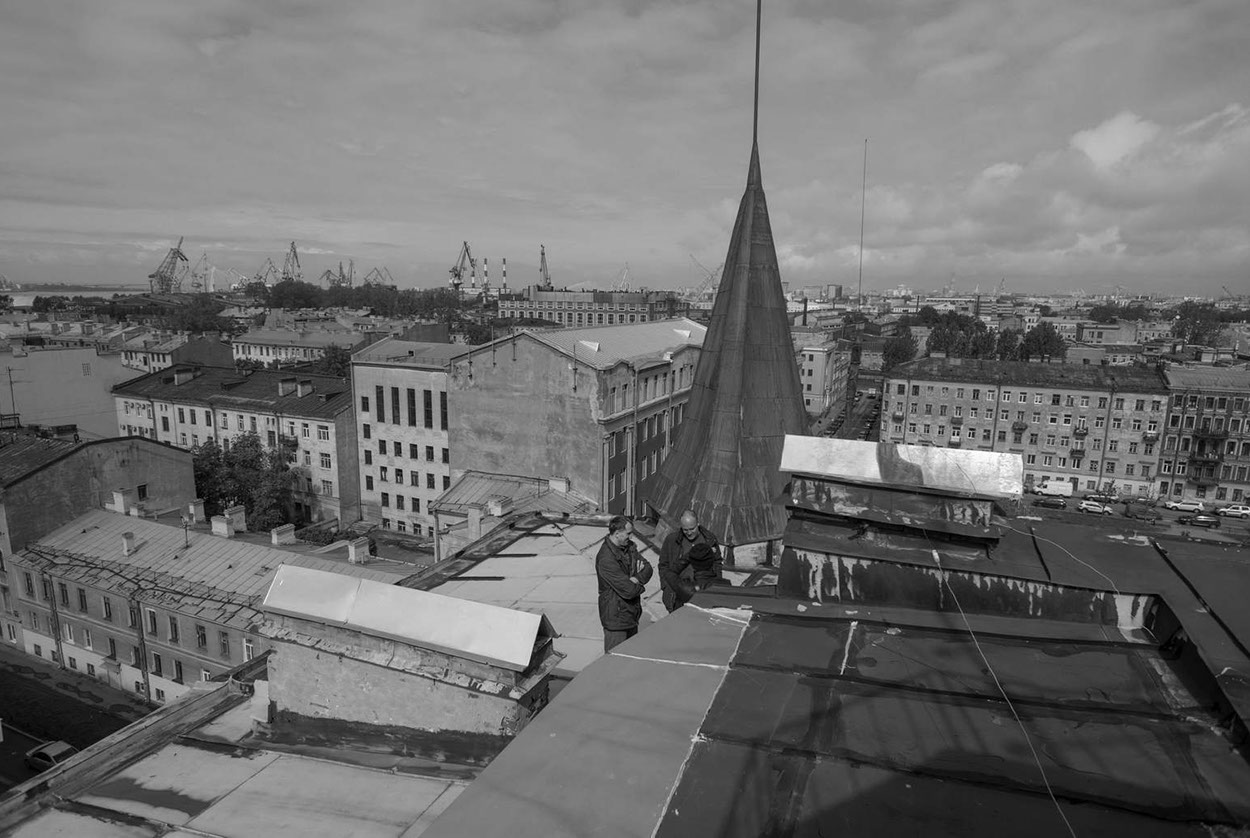
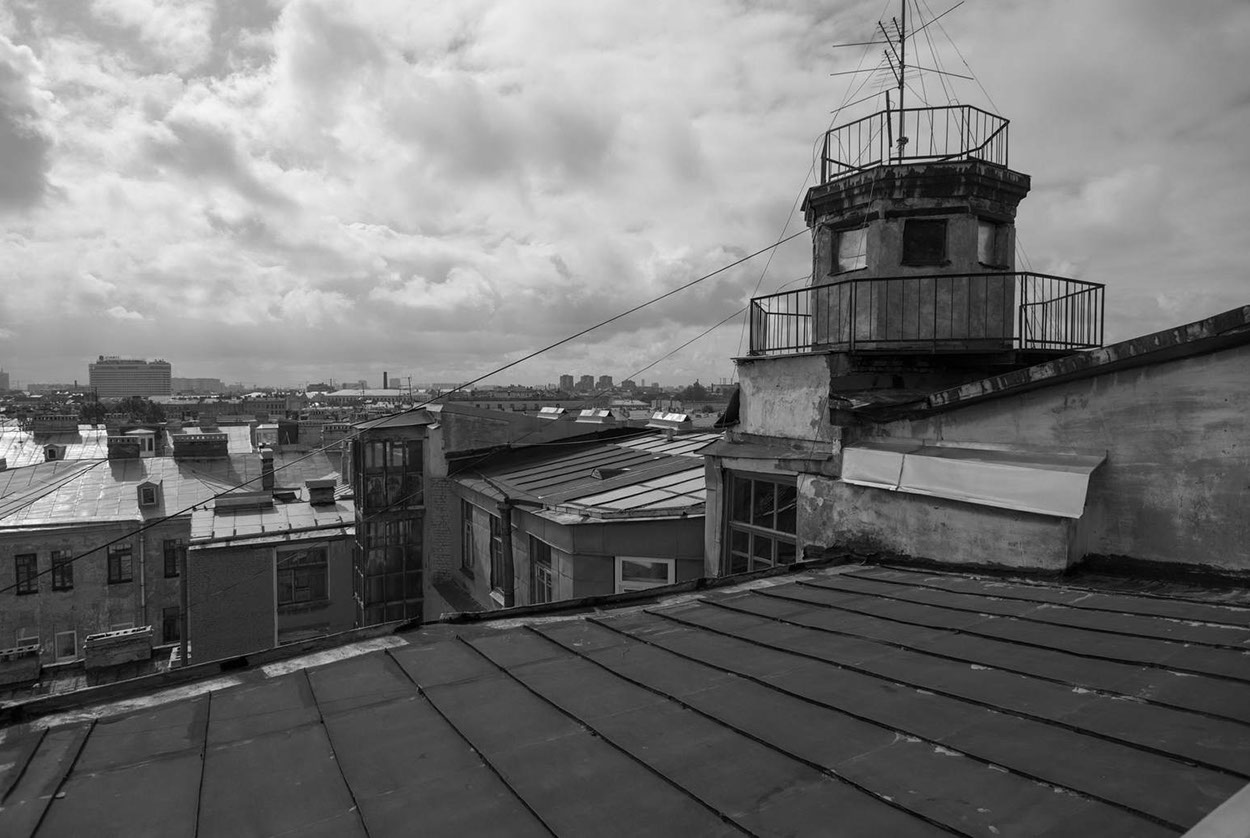
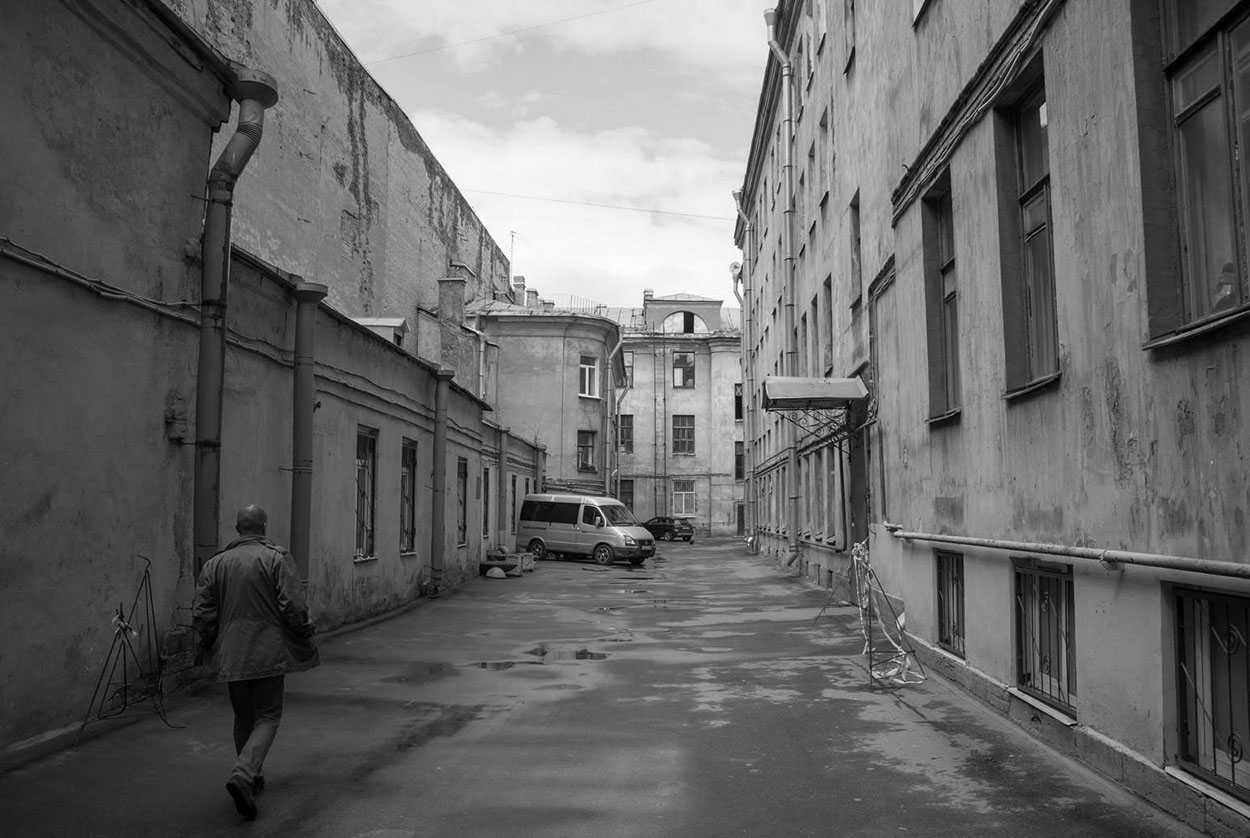
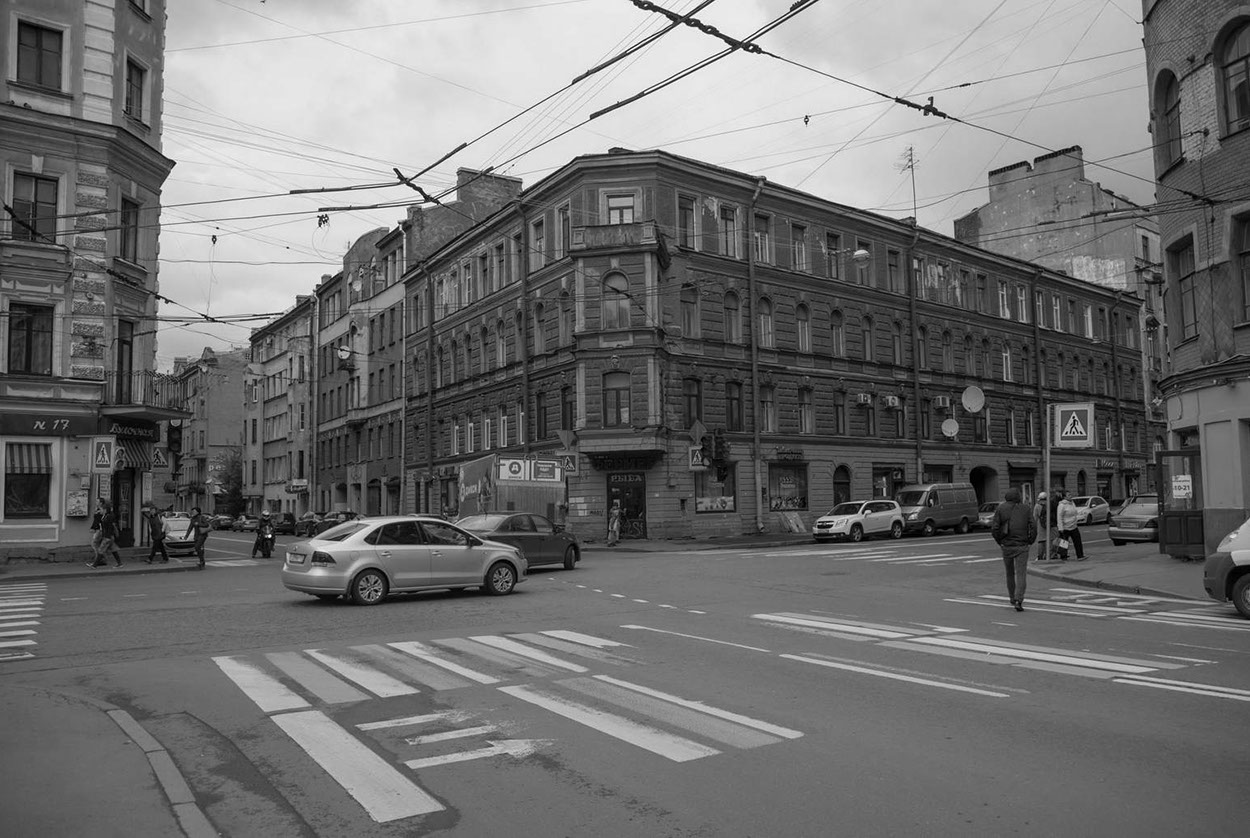
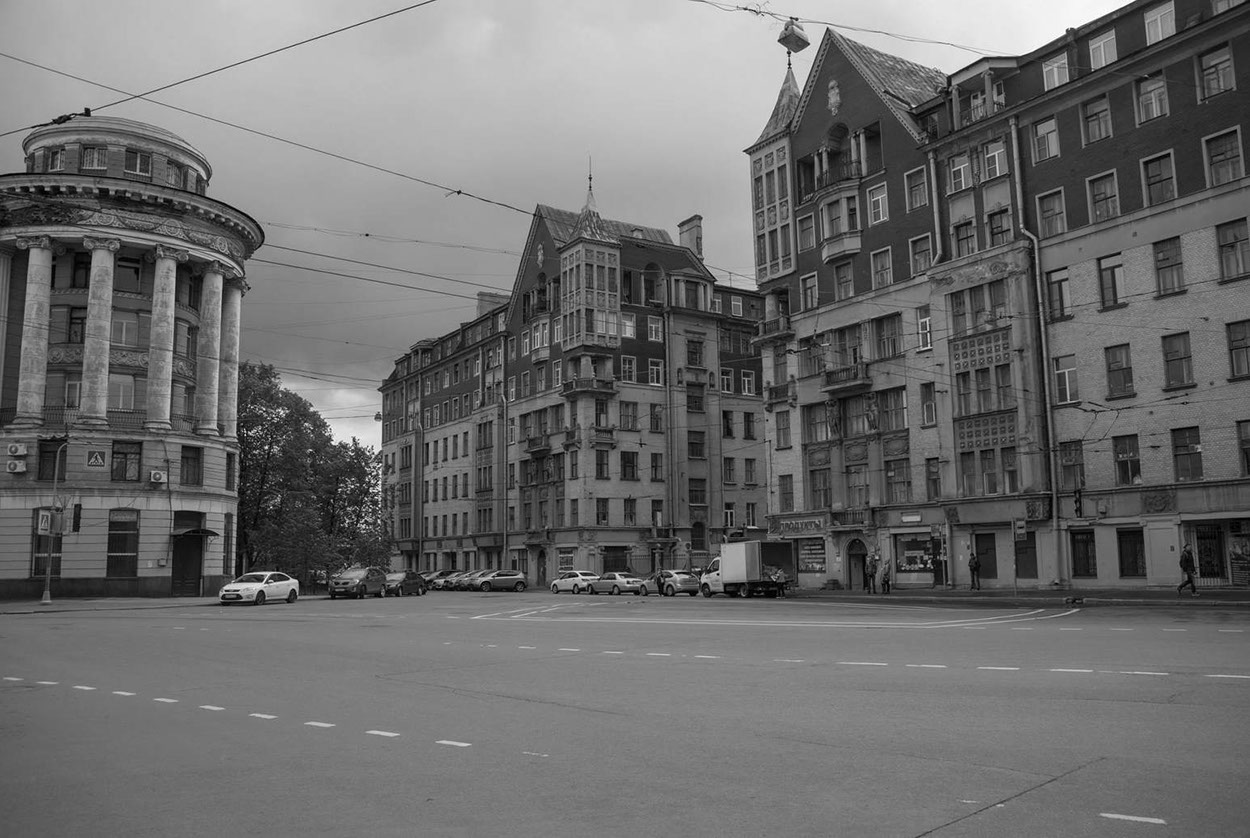
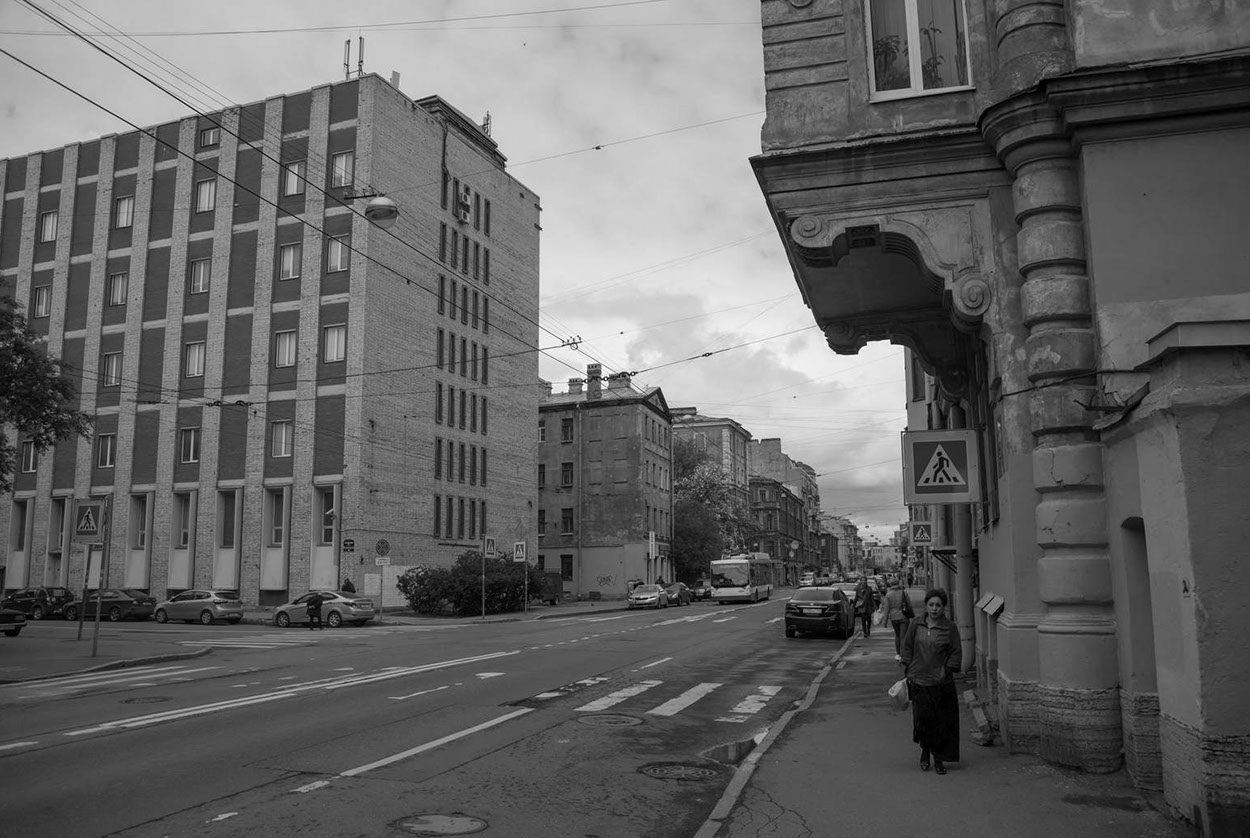
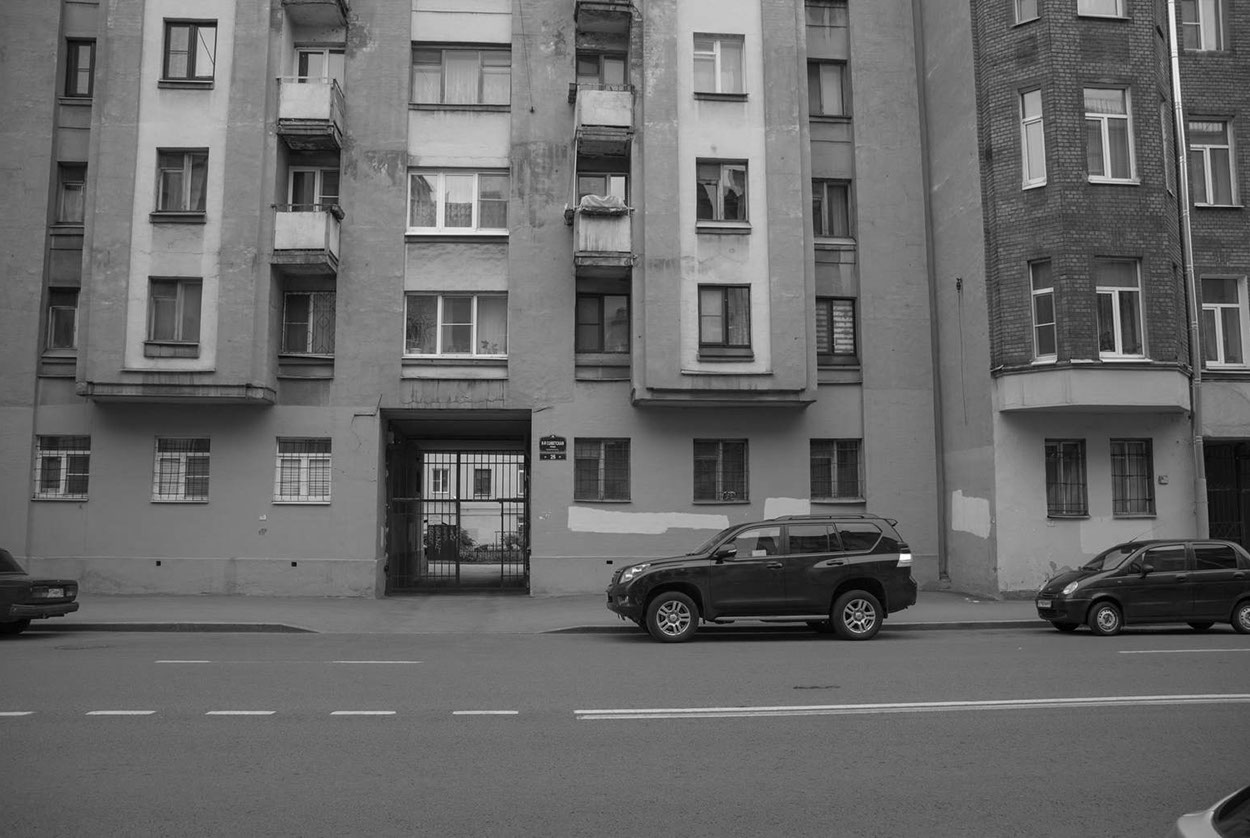
All the heroes lived in the old part of town which had remained pretty much as it had been since the time of Dostoevsky. Those layers of history created a profound backdrop for our characters. When you consider that one of these houses is one that Musogrsky visited, and one of these places is supposed to be where Raskolnokiv perpetrated his crime, you can feel the sense of previous generations, and that sensation makes the movie believable.
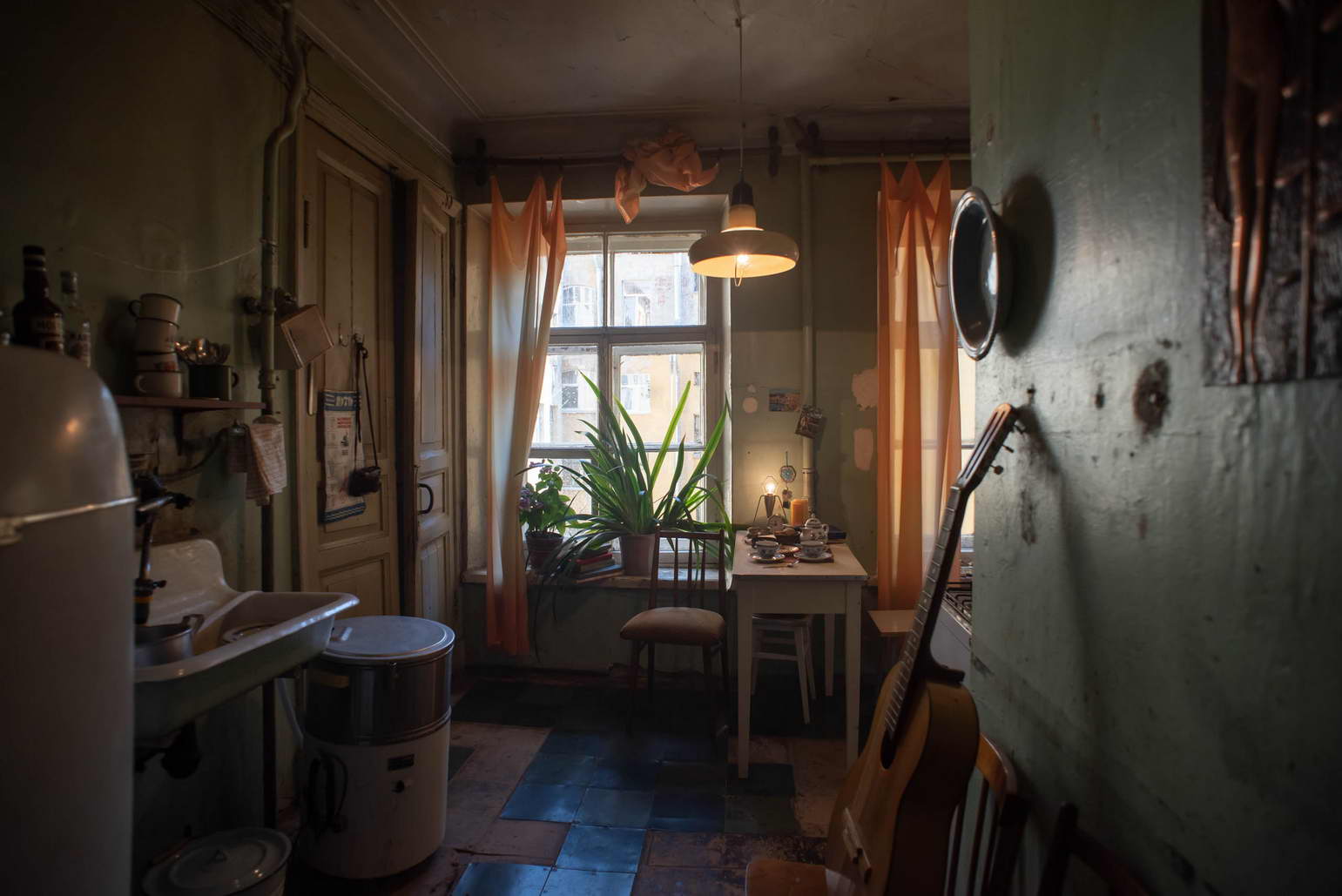
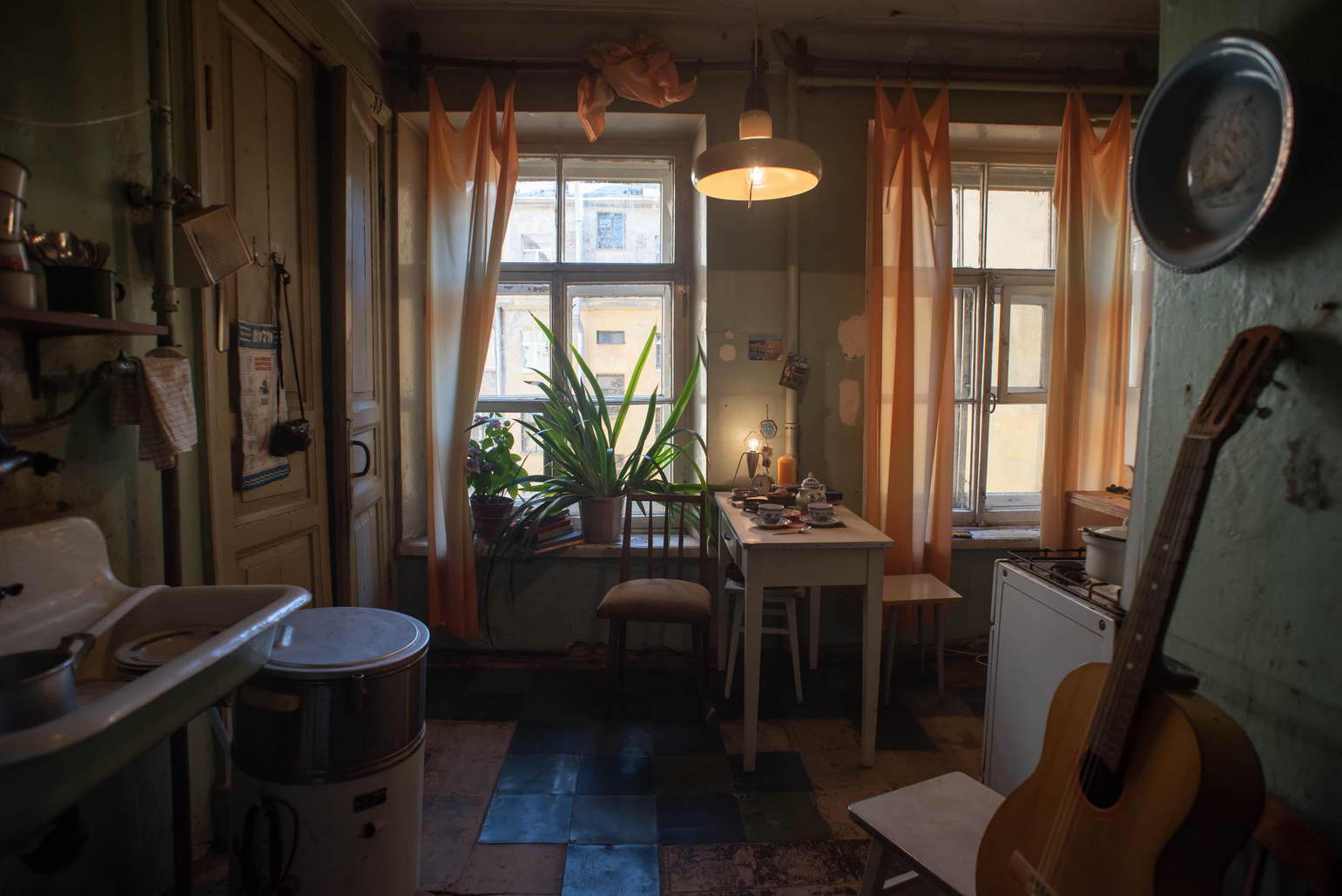

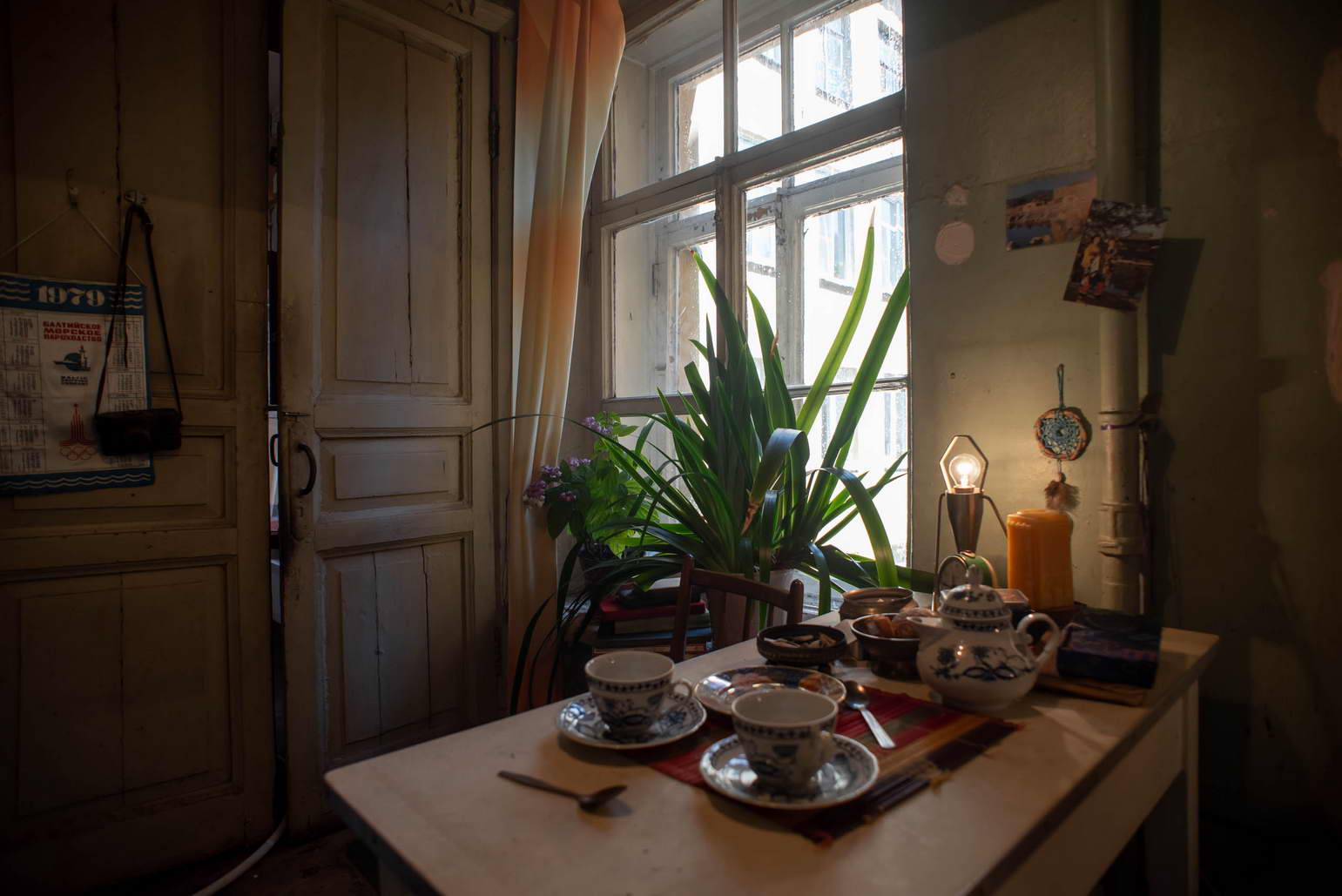
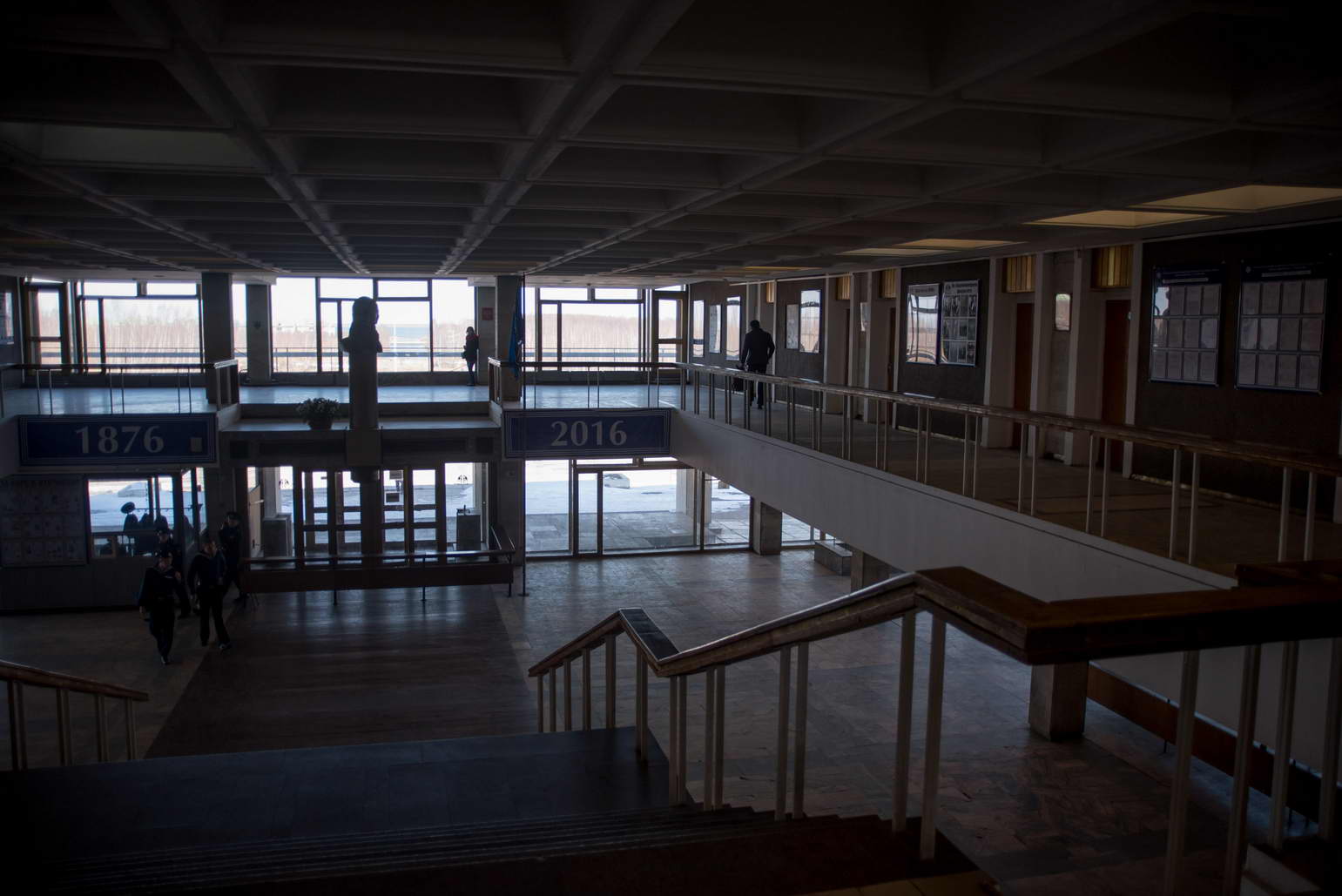
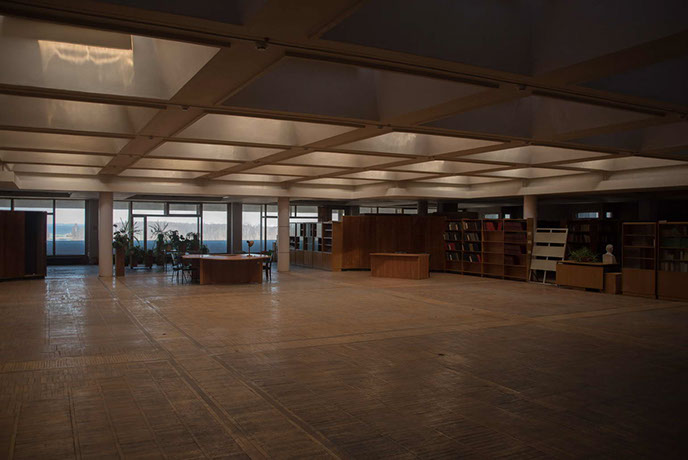
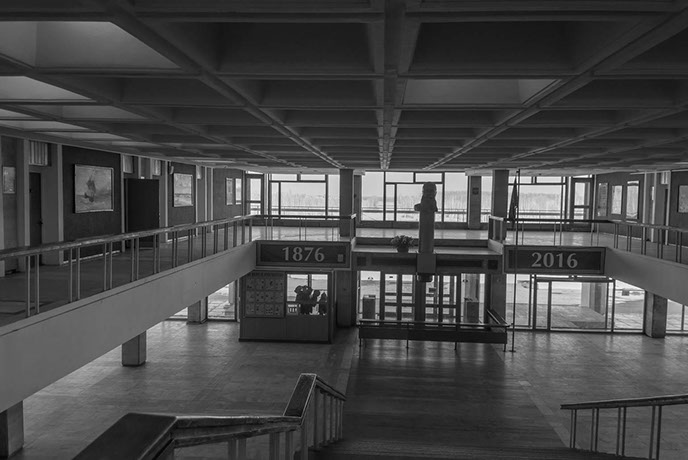
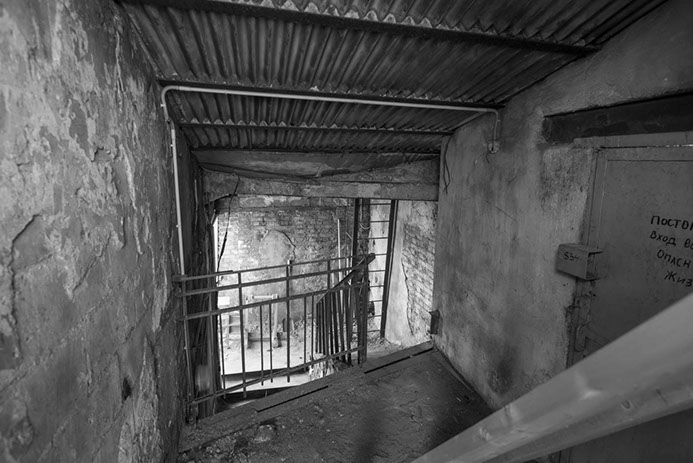
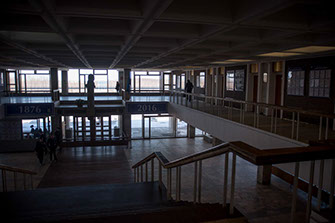
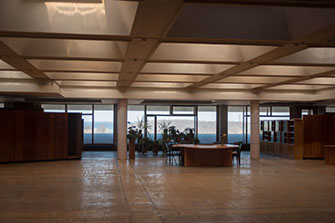
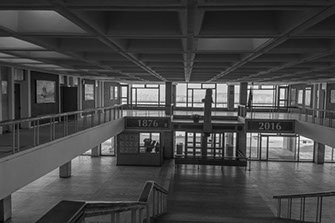
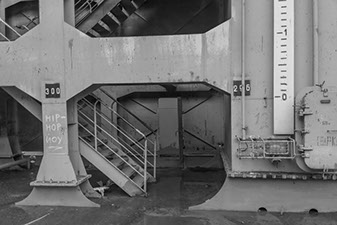
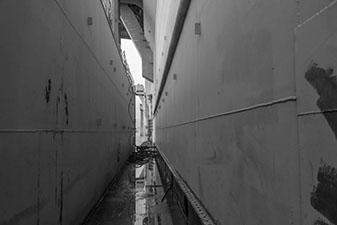
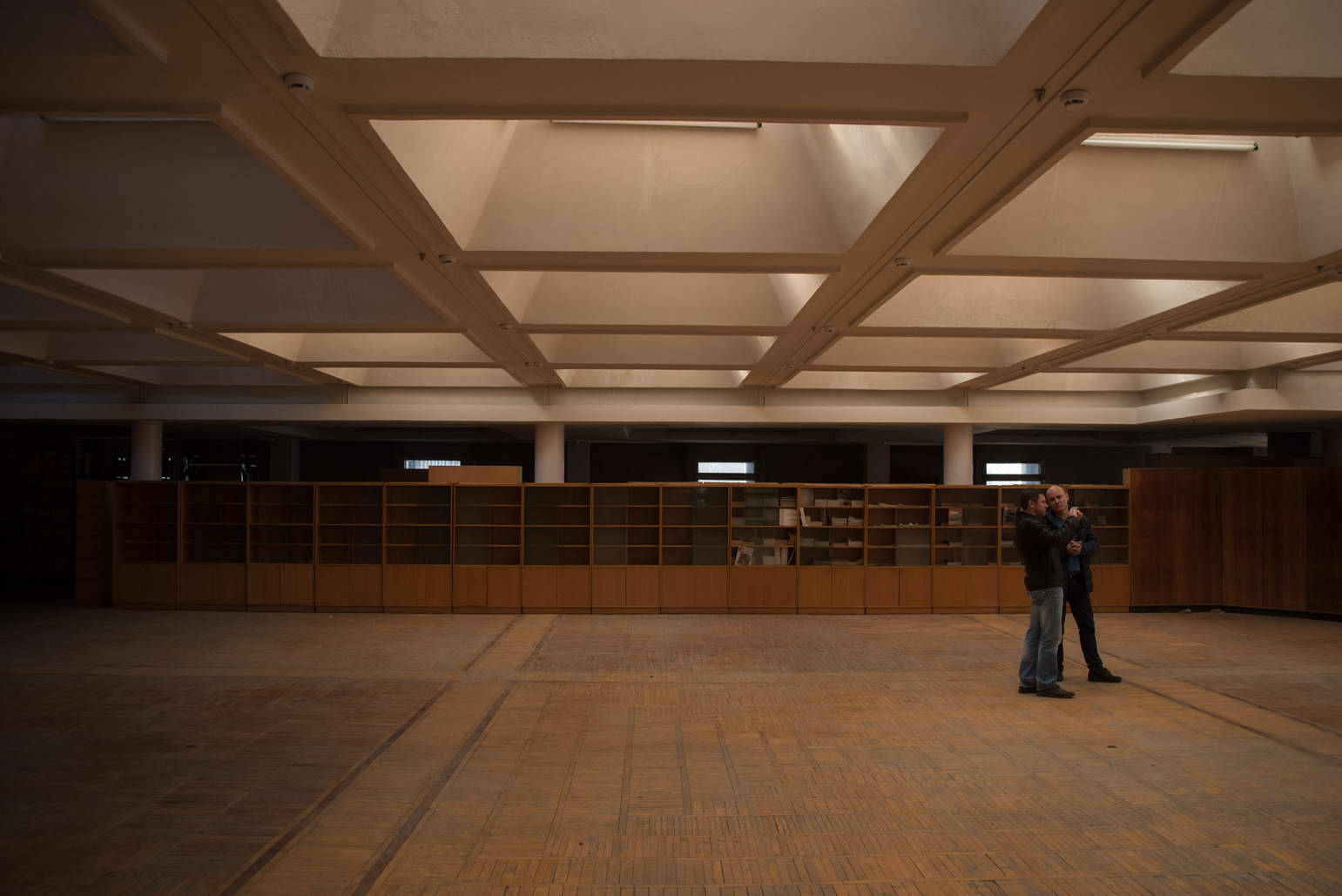
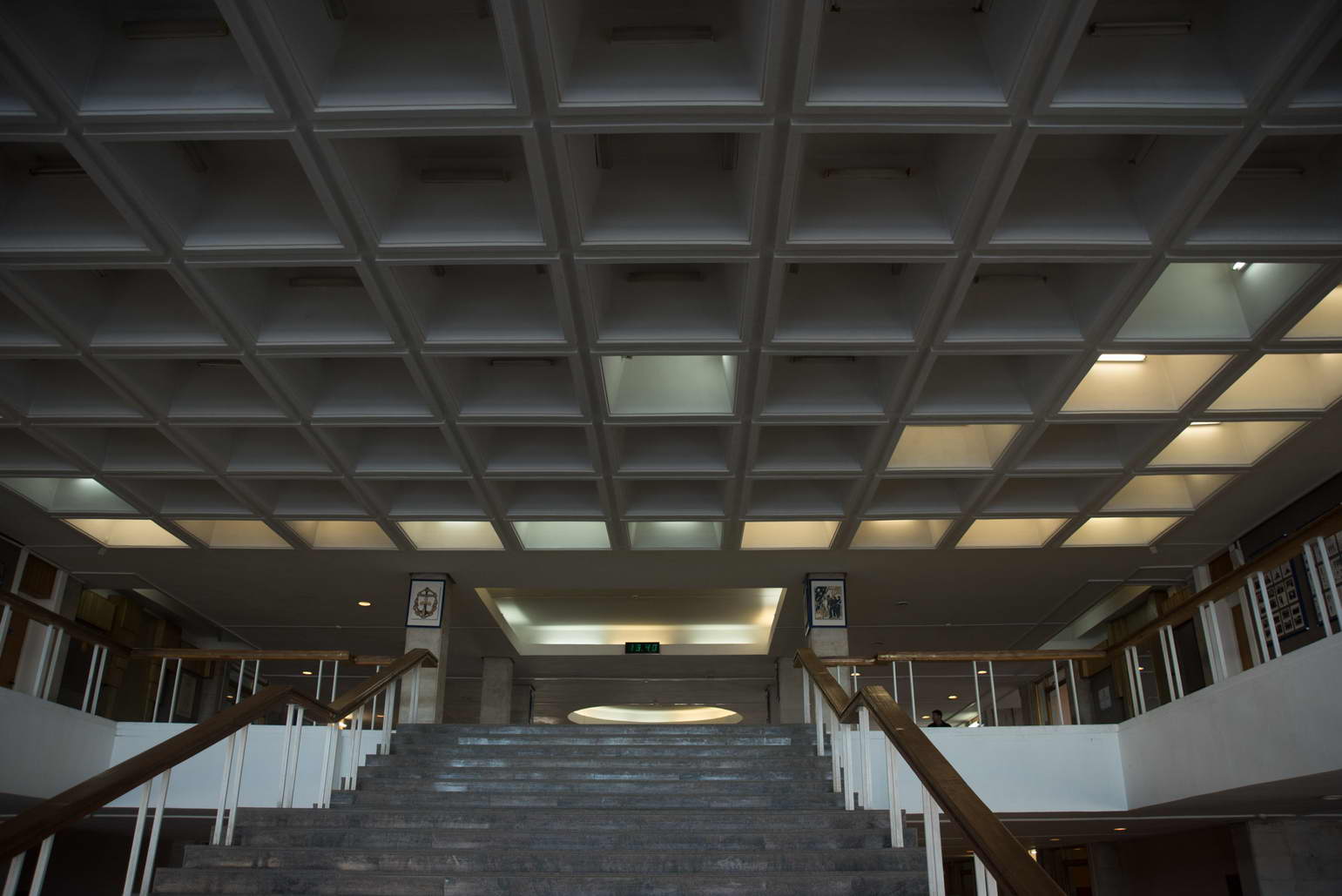
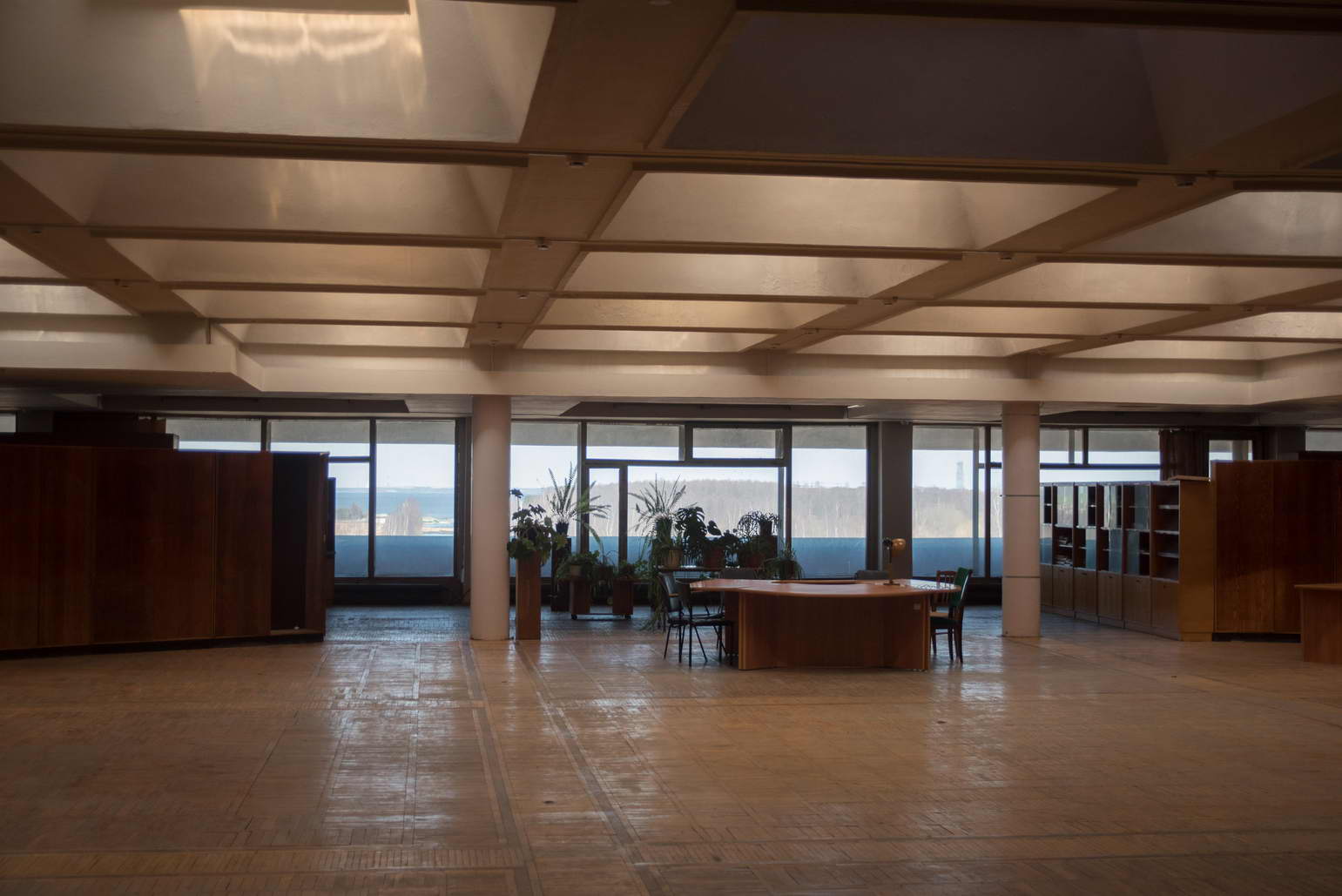
To my astonishment, I discovered that many places in St Petersburg appeared to have been untouched since the 80s. This was, of course, due to the stubborn poverty and neglect suffered by the city ever since its demotion from the status of capital in 1918. The Marine Institute, where we organized the Audiophiles Club is just such a treasure. Frozen in time, it has remained unchanged since then. It is an example of great brutalist architecture. In every brick, power is expressed. Its architecture is extremely simple, it is characterized by straight lines, based on simple geometry and a tremendous scale. It was the director’s idea to organize a small flea market inside, where the main protagonist buys a tiny antique coffee cup. The diminutive but fine antique presents a powerful contrast to the monumental structure of the institute.



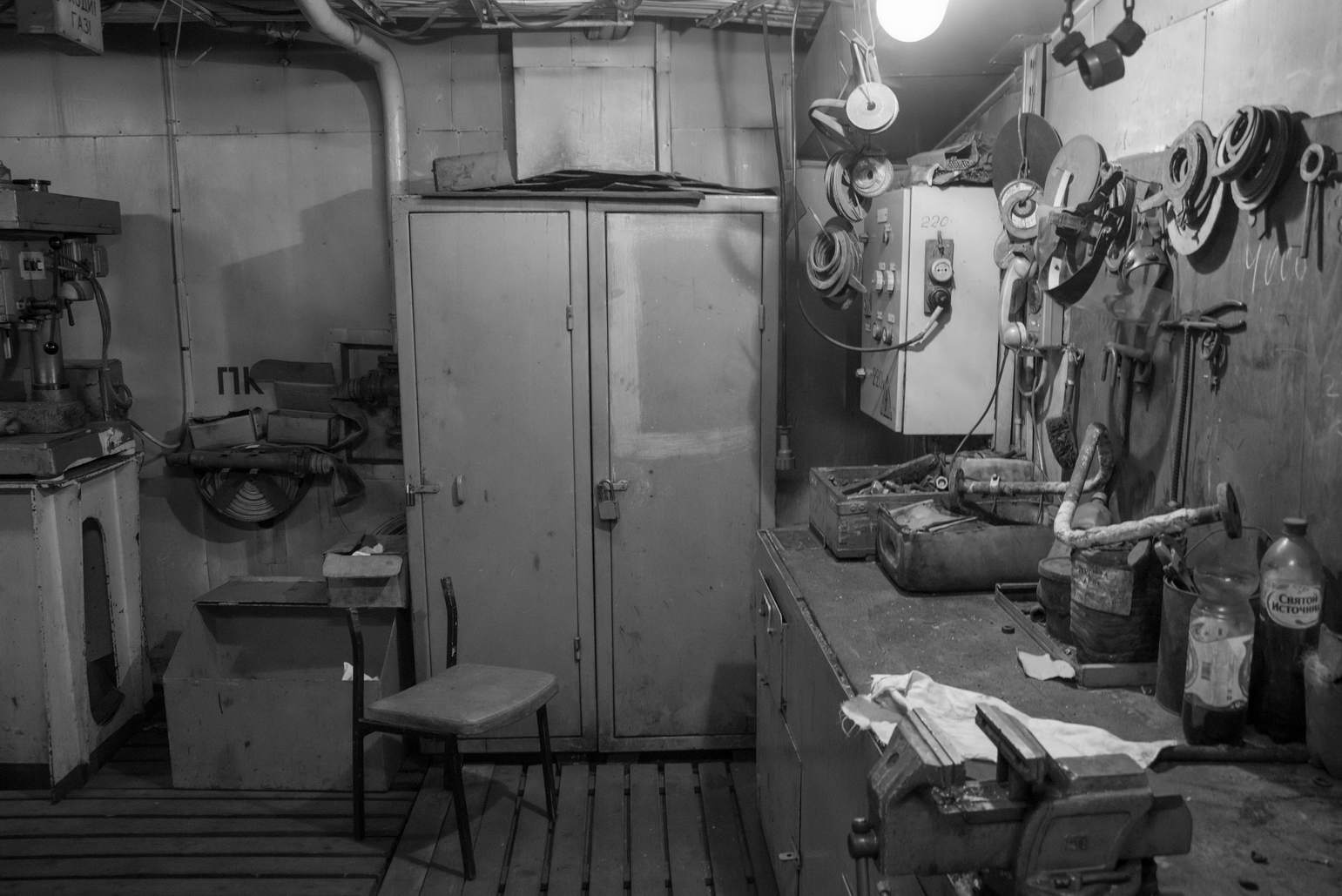
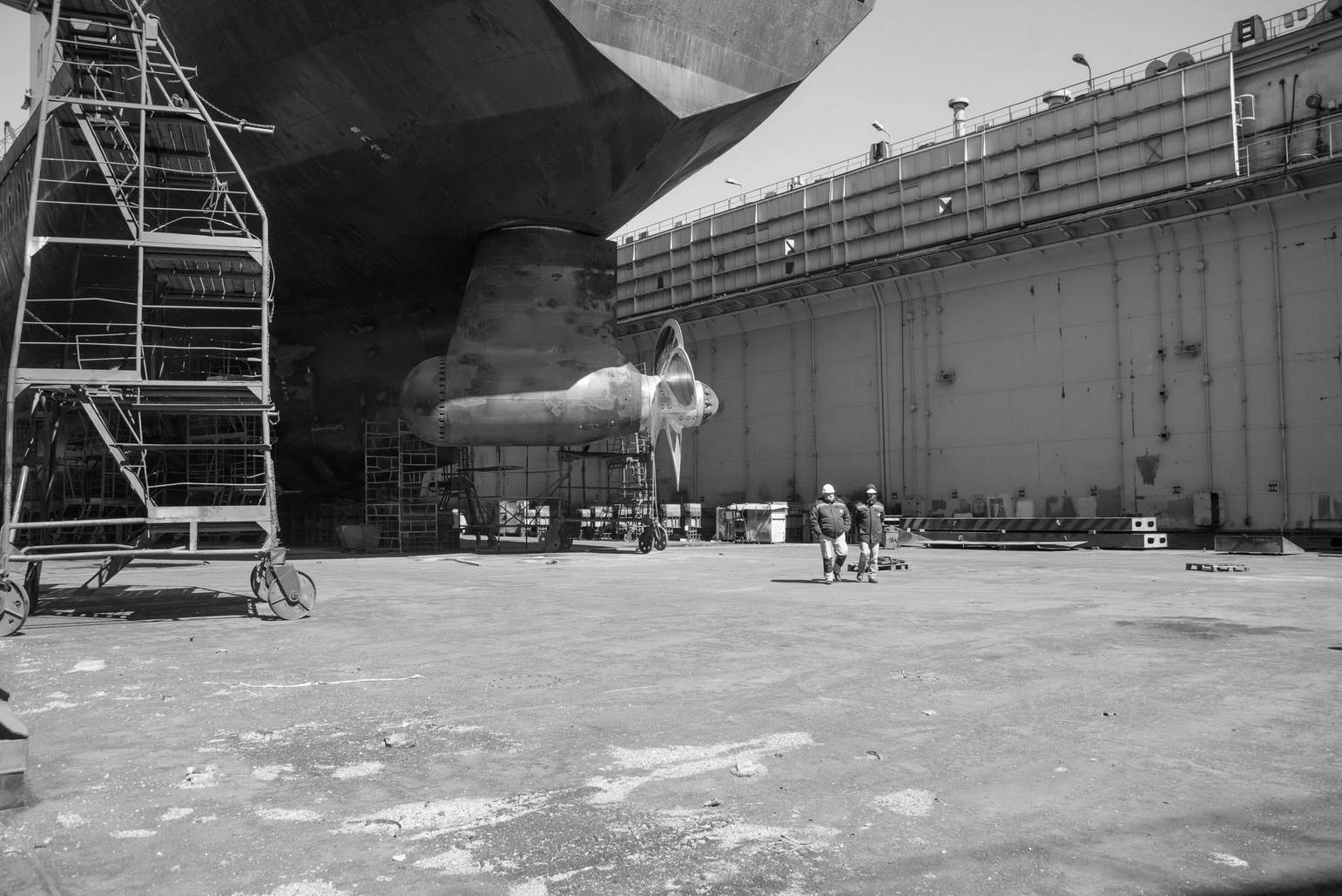
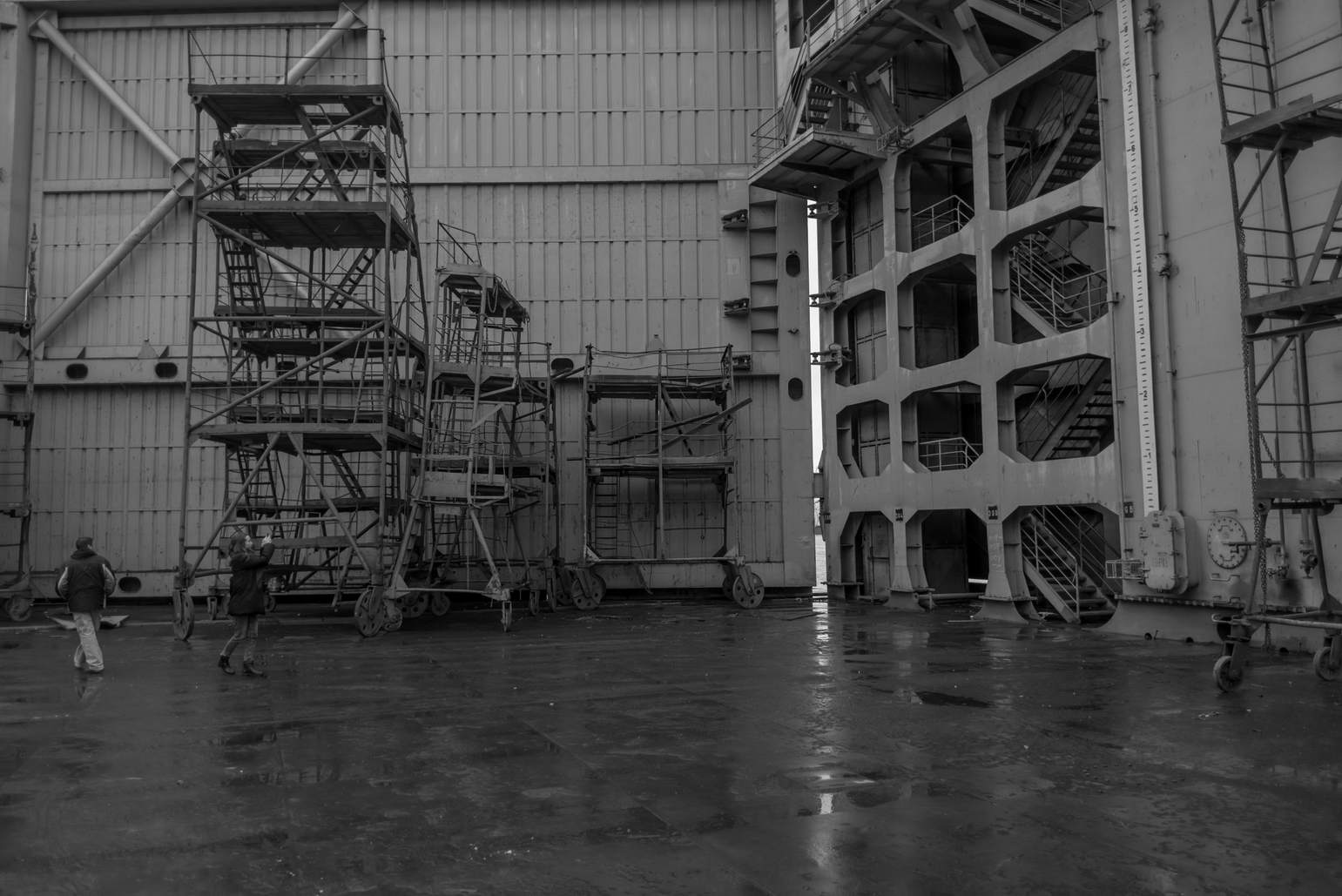
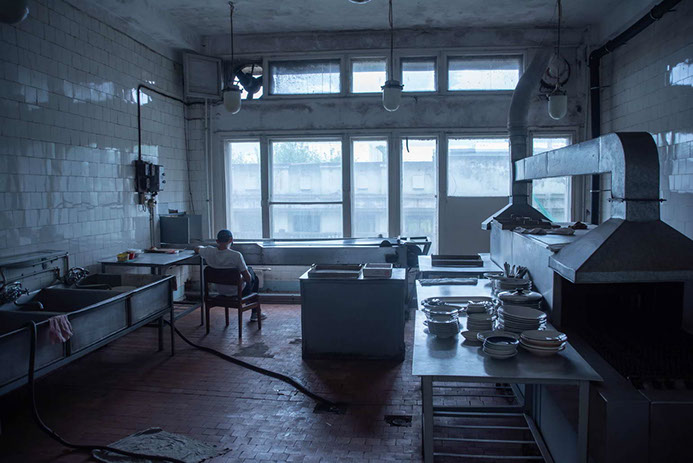
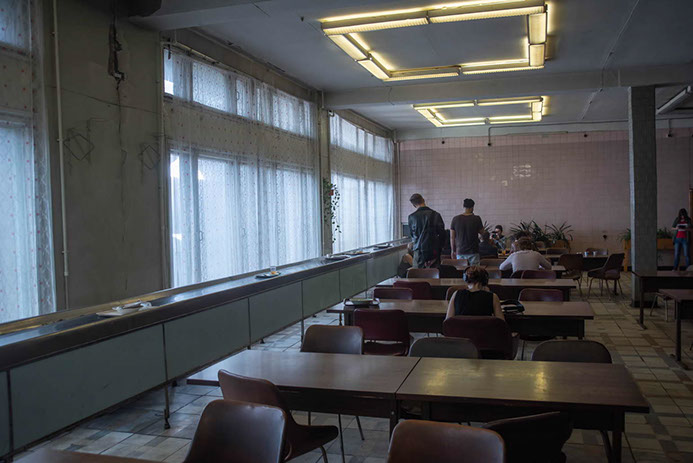
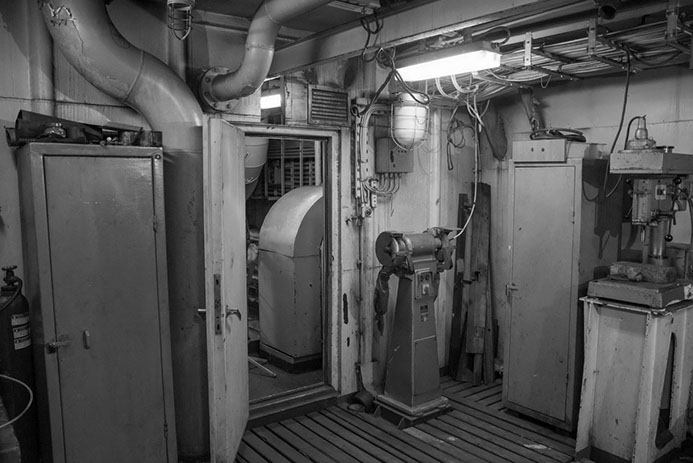
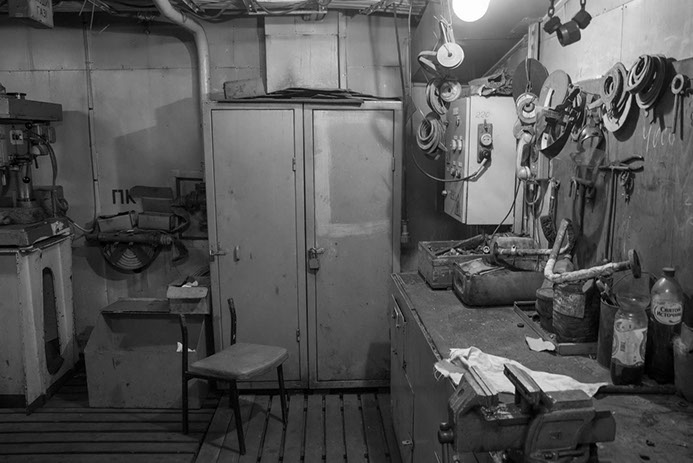
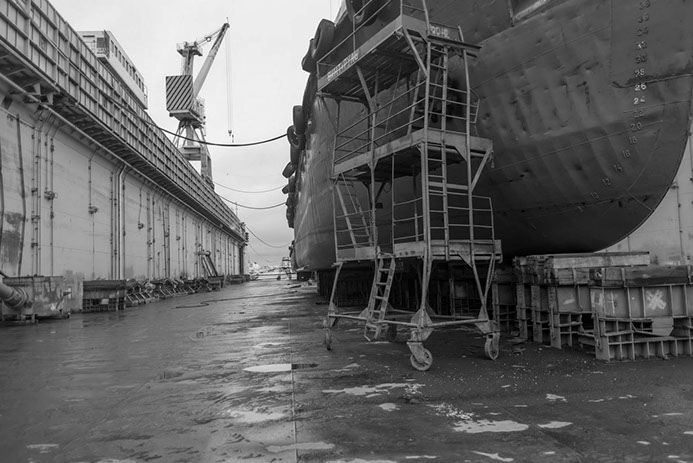
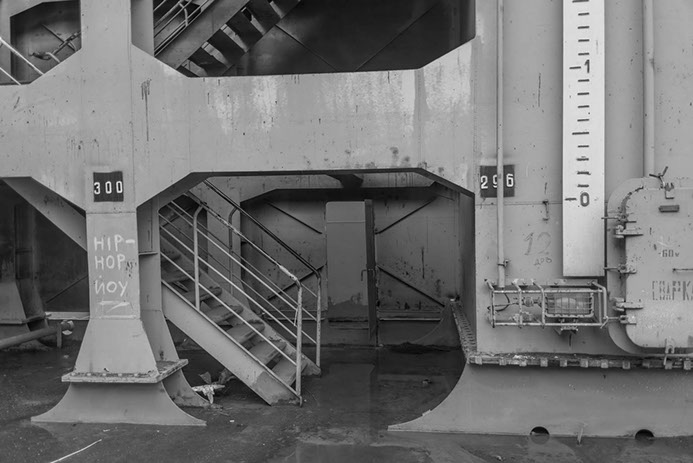
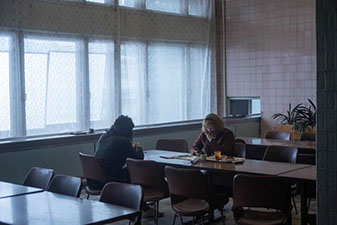
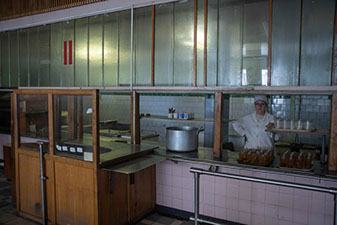
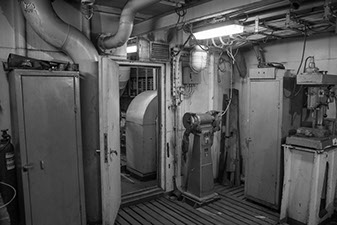
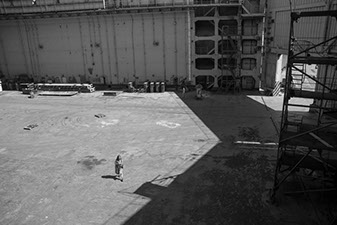
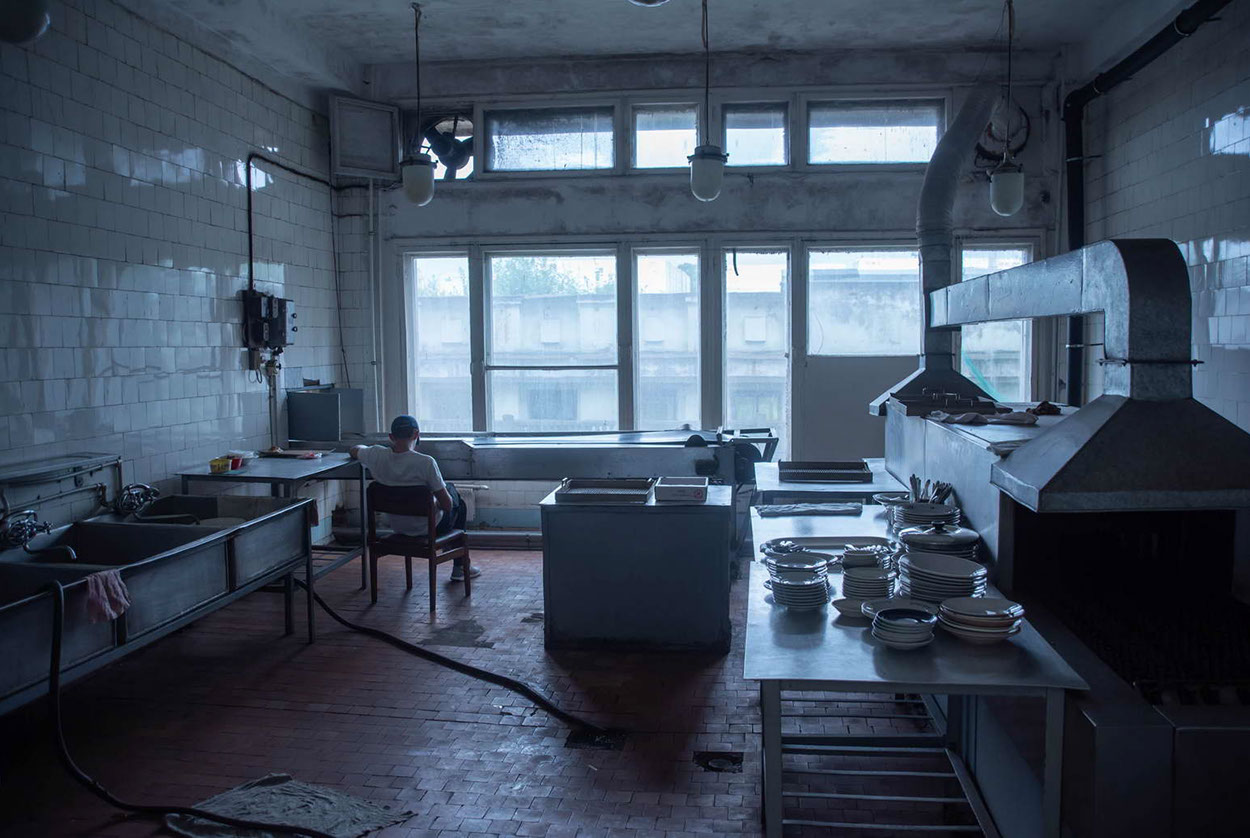
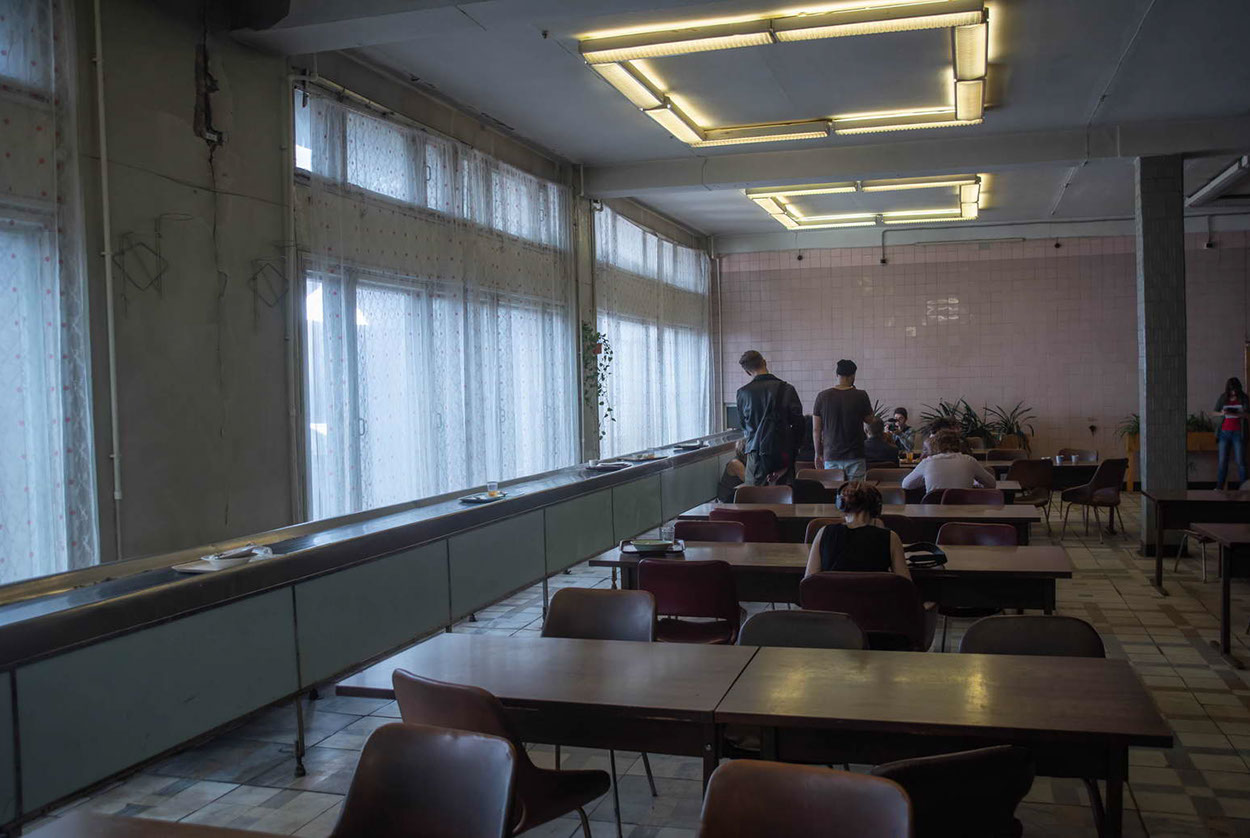
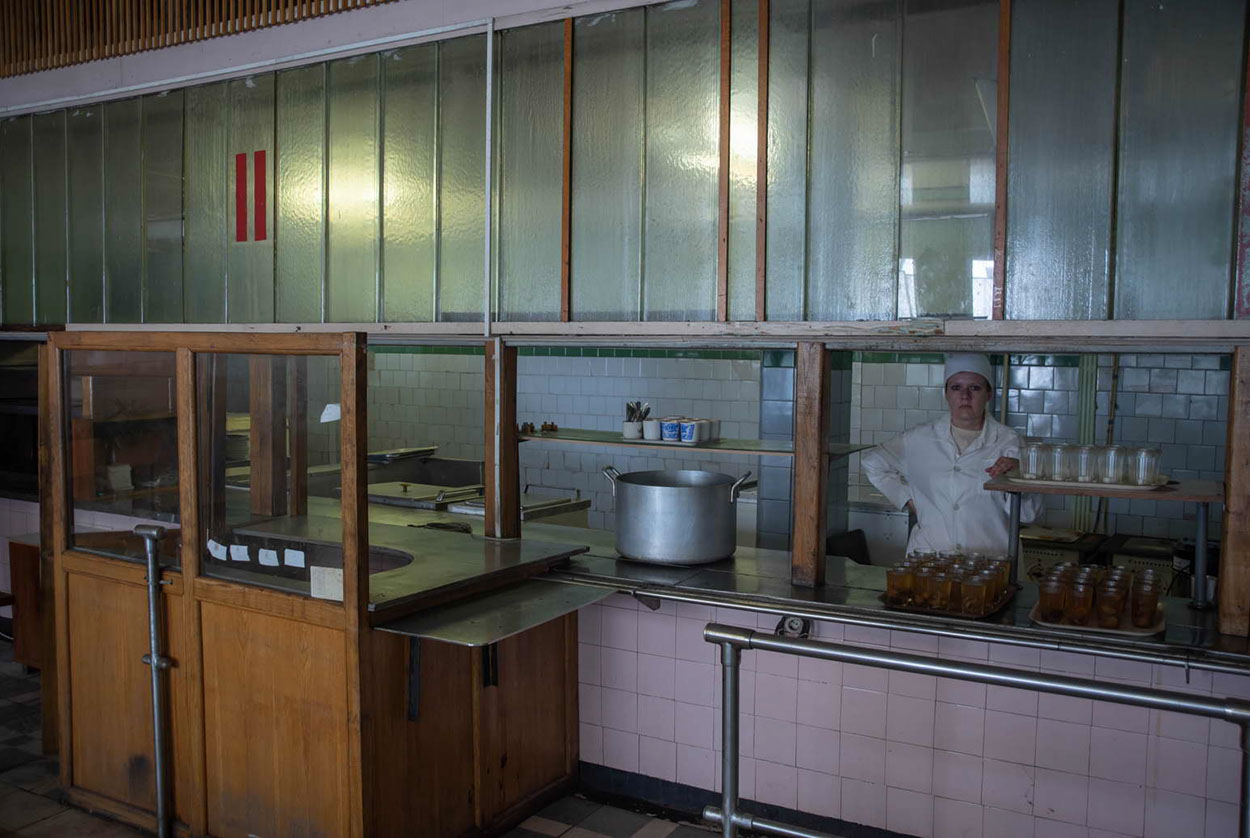
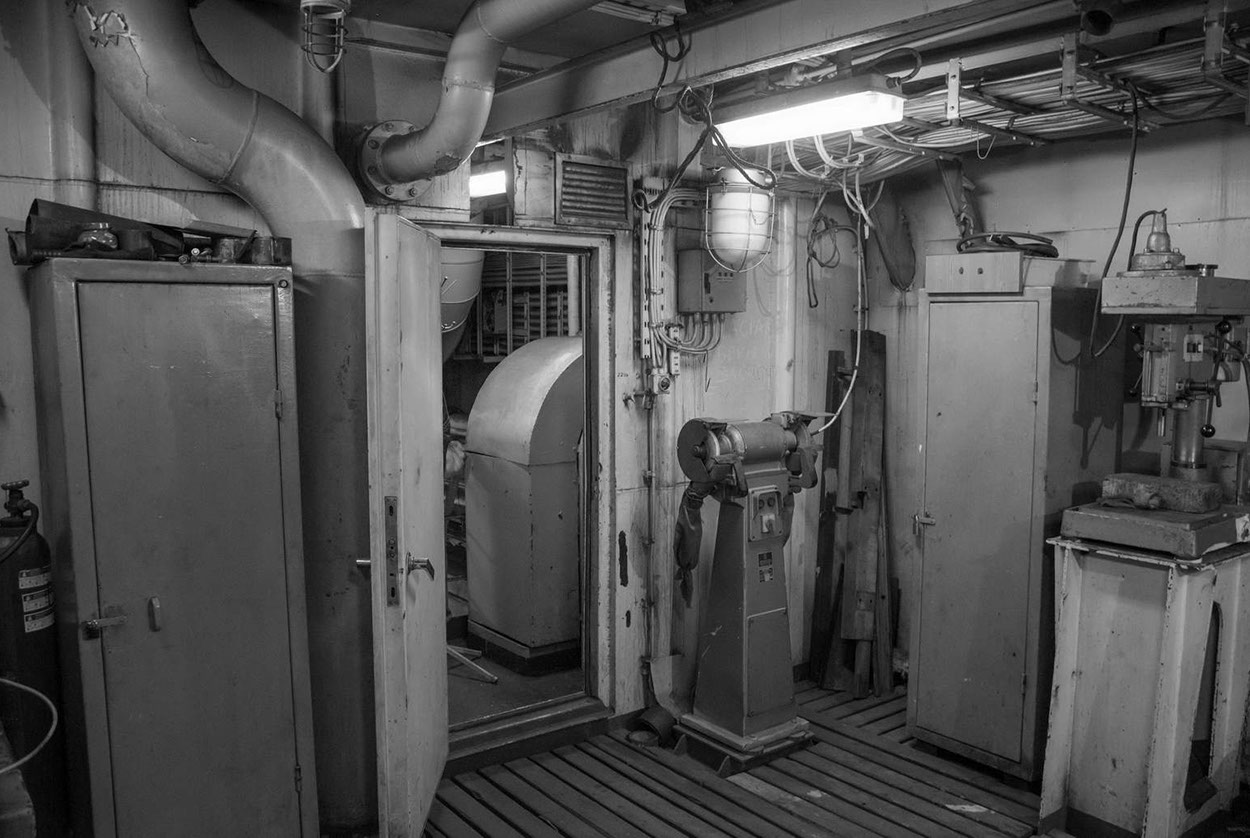
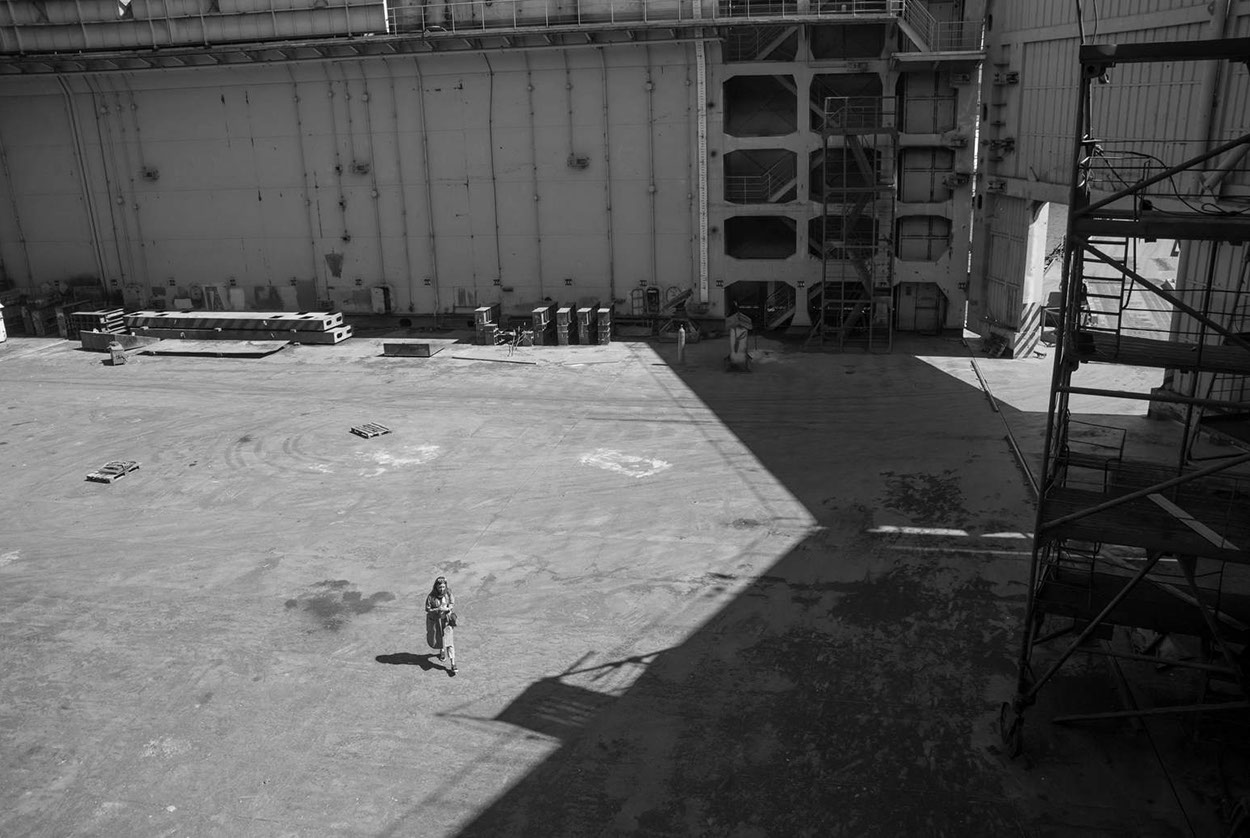
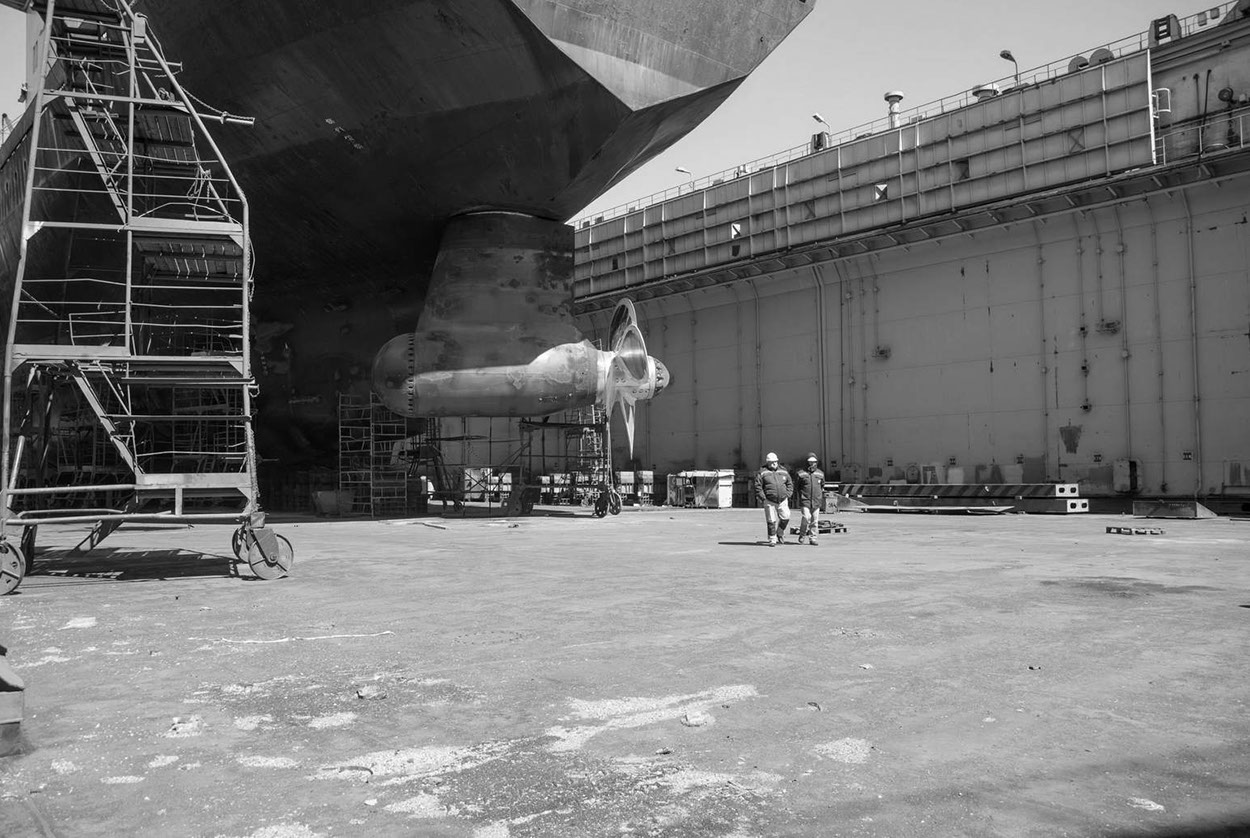
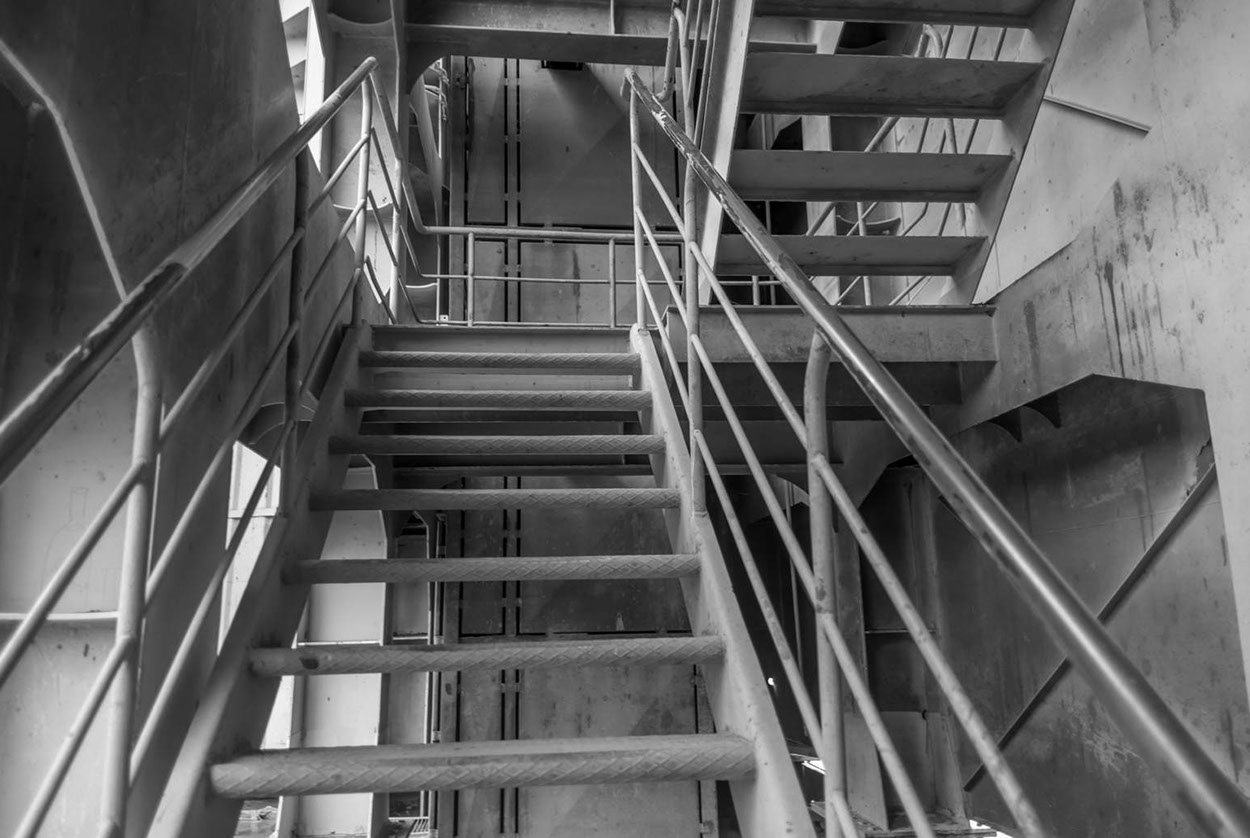
Another industrial site that we used for shooting was the shipyard. Besides its primary function as a shipbuilding and repairing environment, it serves as Mike's place of work, and we are struck by the dichotomy rendered by the huge factory in which is nestled Mike's booth, small and somehow isolated from the massive dimensions in which it exists. The rock club's dining area, which was a buffet, was also located on this site. The shipyard had been almost untouched since its original construction. When we entered it, there was a feeling that we had travelled in time. All the elements of the space, right down to moveable objects like crockery and cutlery - even the food - were exactly as they had been before.






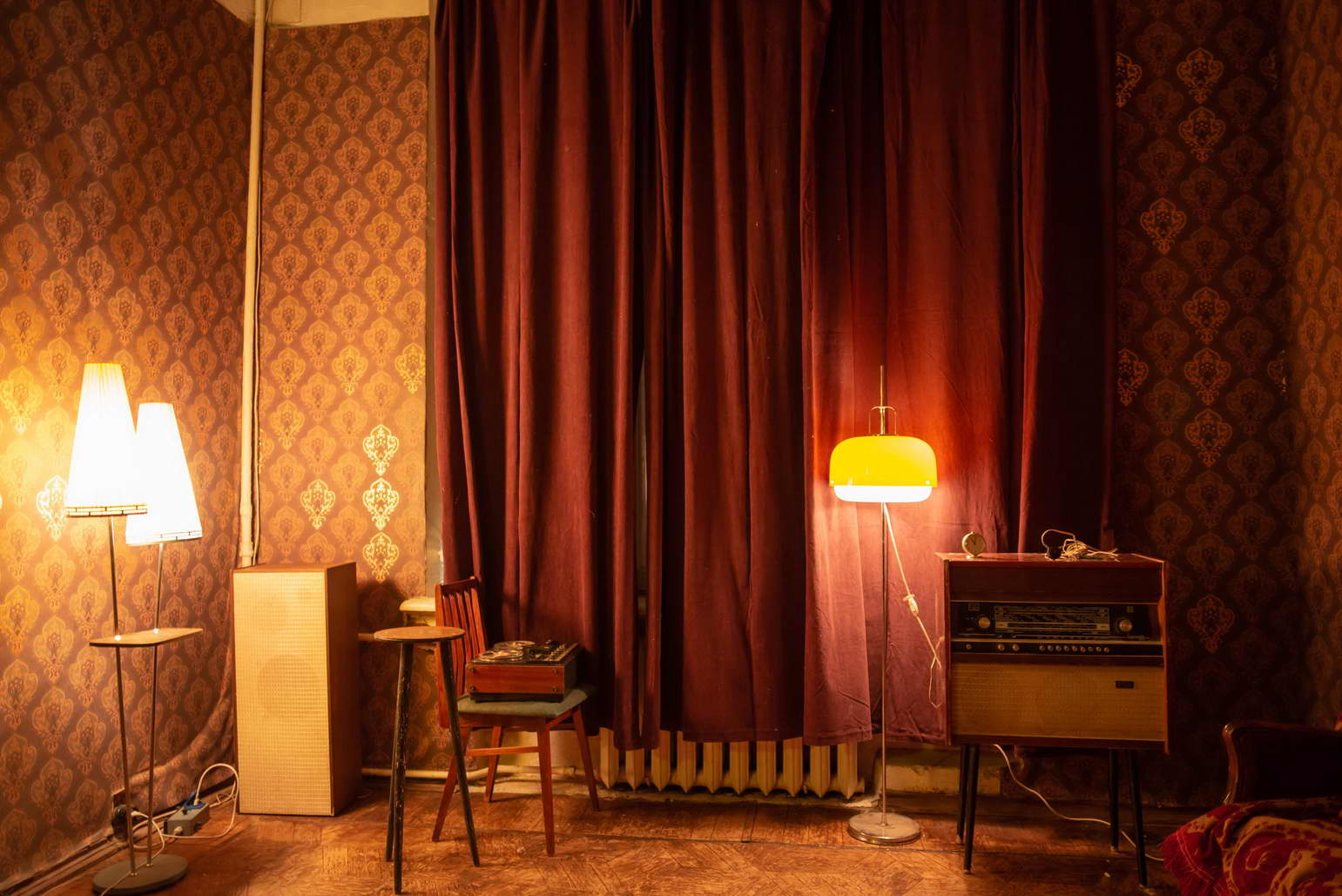
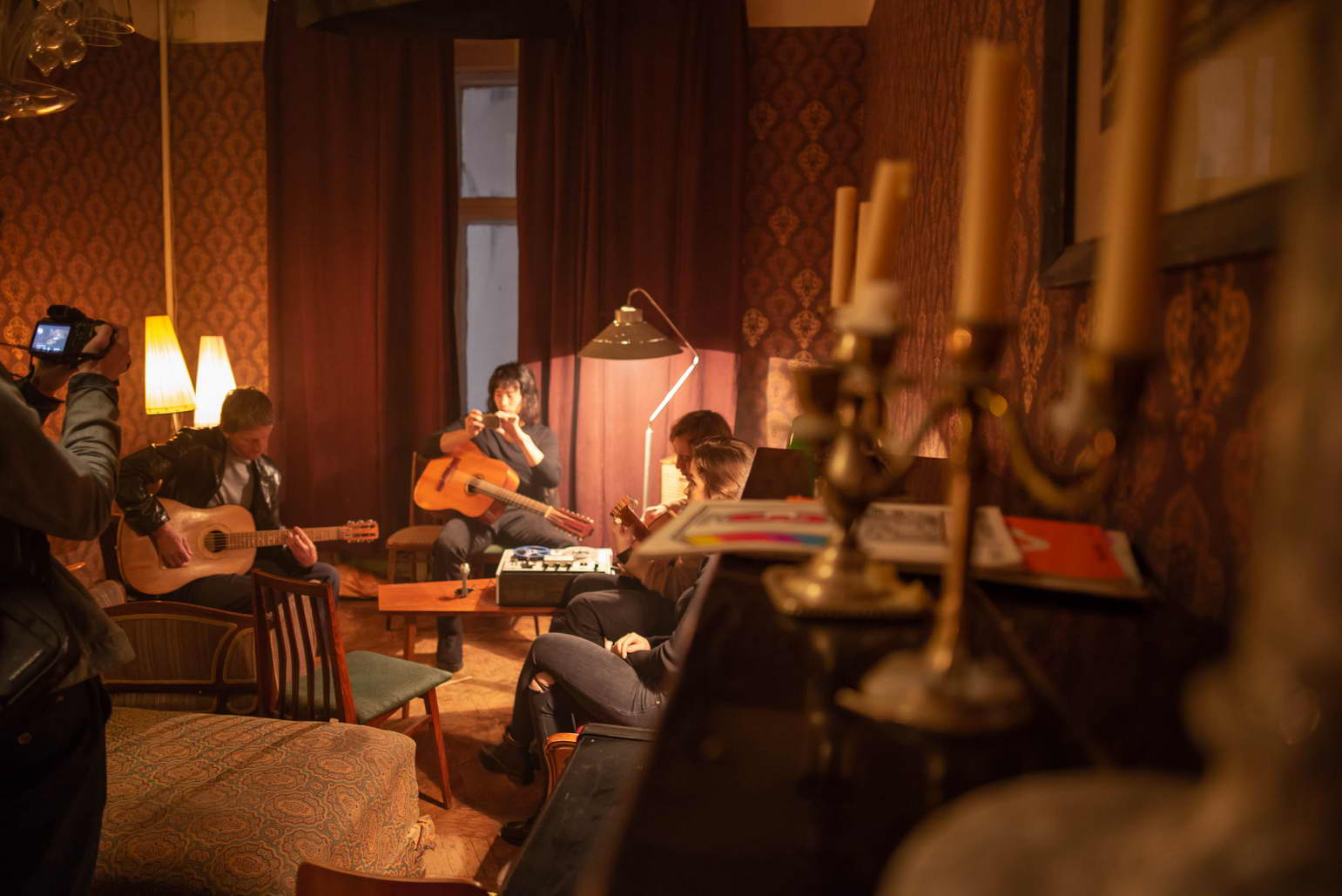
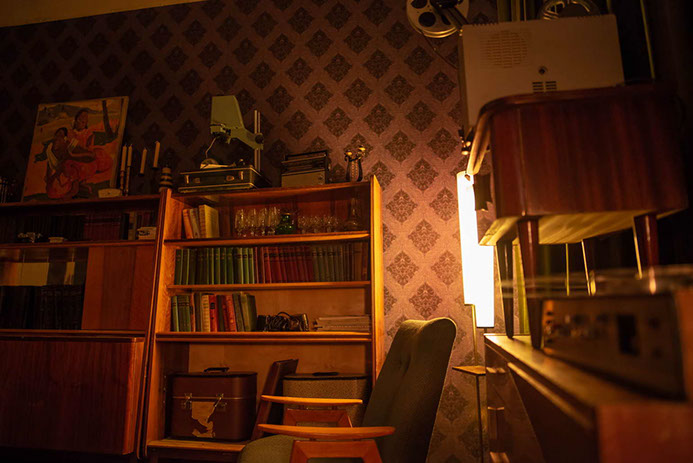
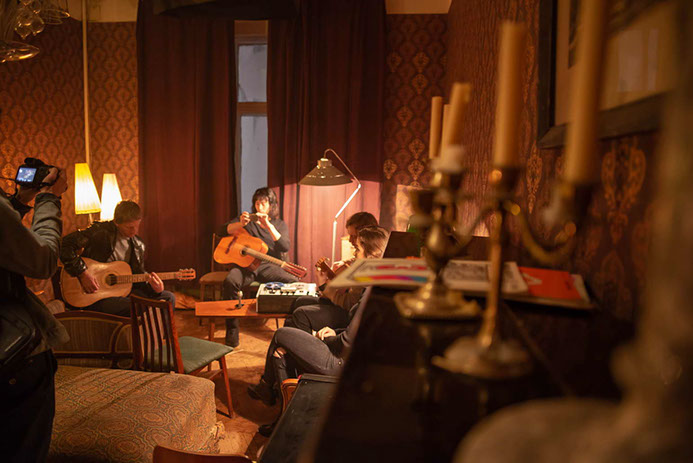
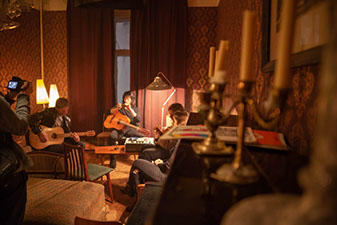
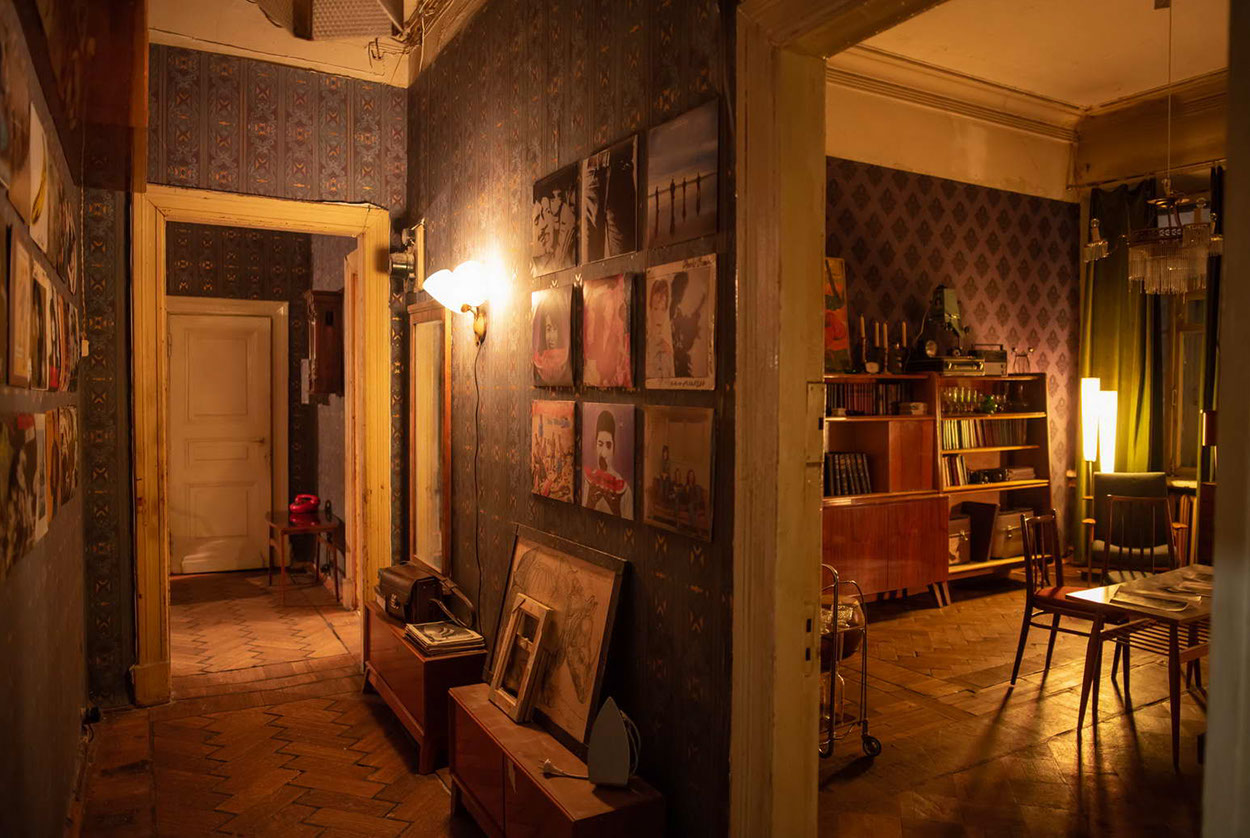
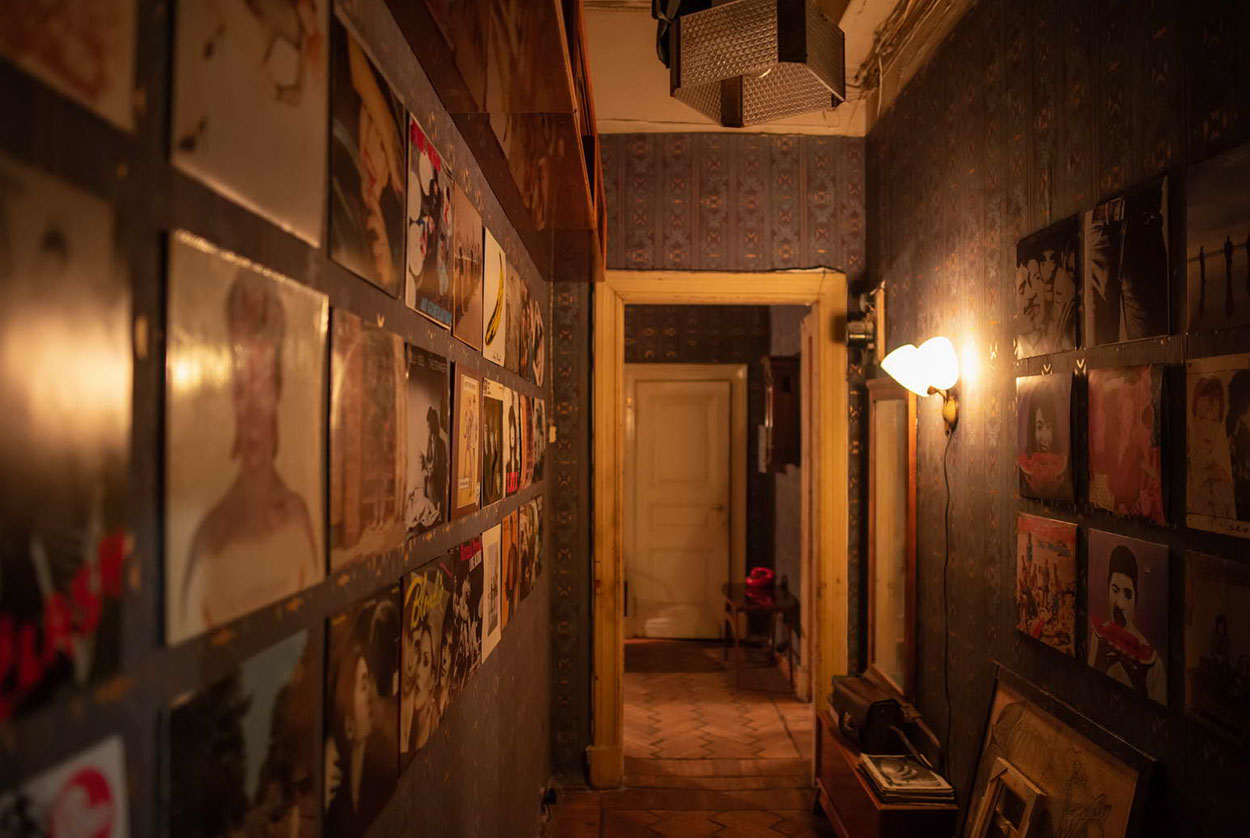
The production ran into a real snag when our director, Kirril, became the focus of a Russian government prosecution which, quite typically for modern Russia, accused him of embezzlement and corruption. He was duly arrested, and from that time on, we were faced with the challenge of having to complete the movie with our director under house arrest. It was under these circumstances that we filmed a home concert, which required the construction of one of the largest sets on location. With only 40 minutes a day to go out and stretch his legs, it became necessary to find a location near his apartment. He would spend those 40 minutes each day with us rehearsing. The script called for an intimate and relaxing environment, and to this end, we used a dark wine and cognac palette with gold decoration in the wallpaper and low lights. Our thinking was that it should be the home of a sophisticated collector of primitive Russian art and music



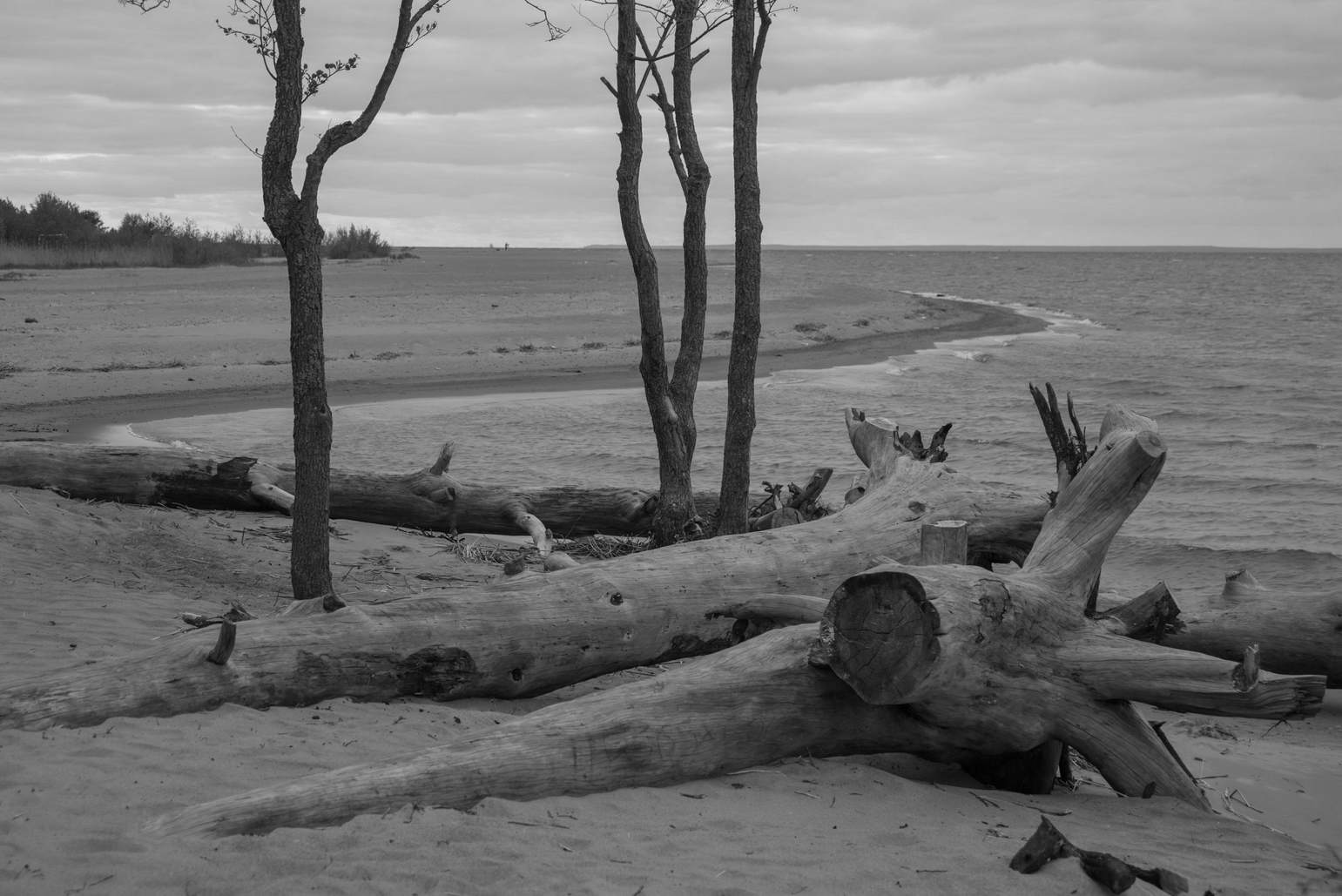
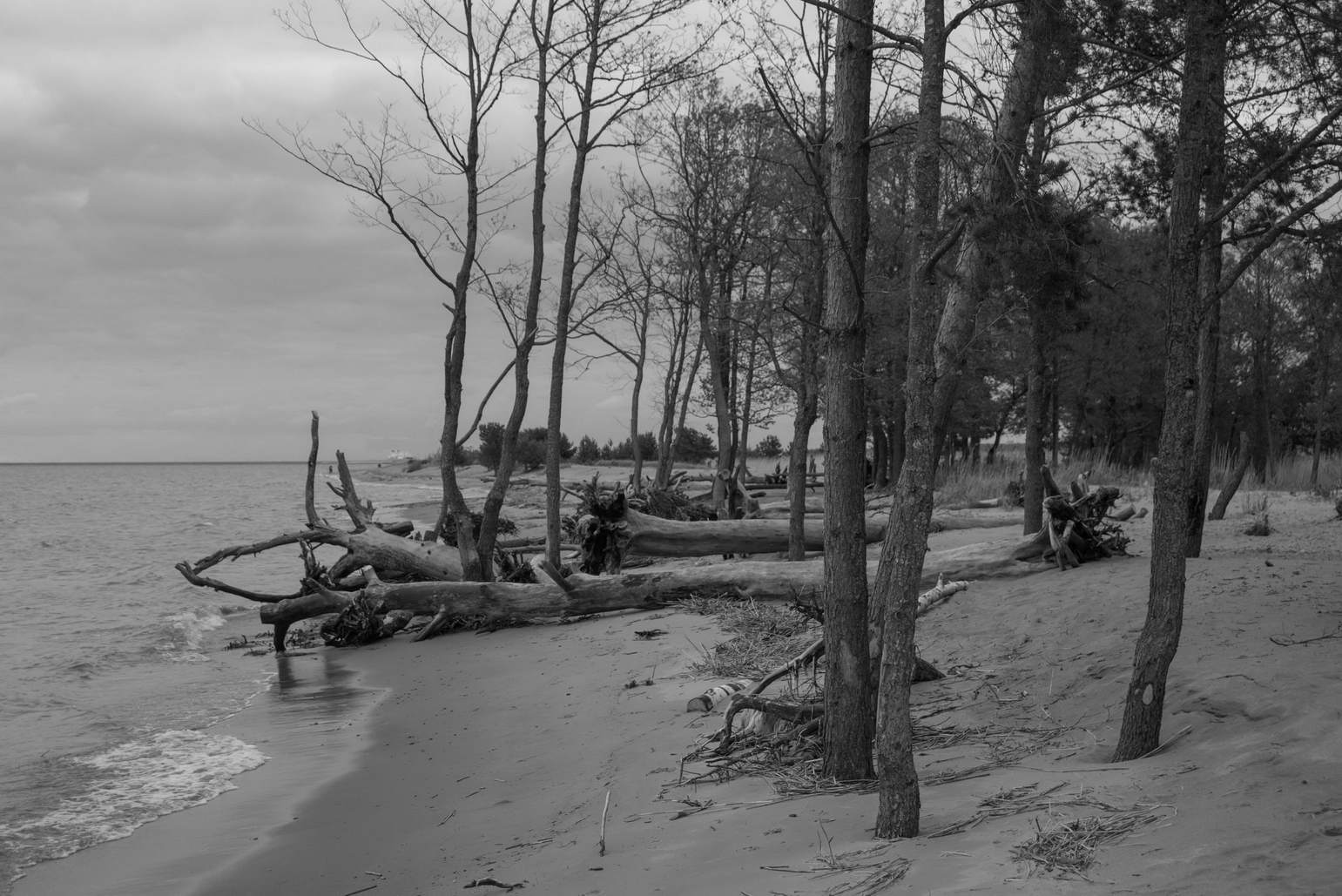
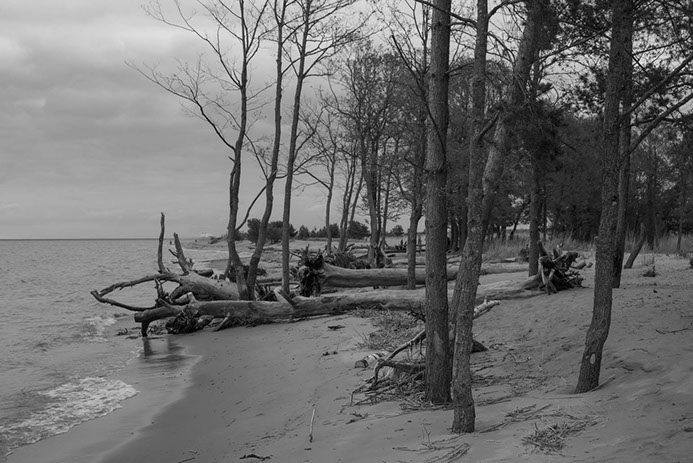
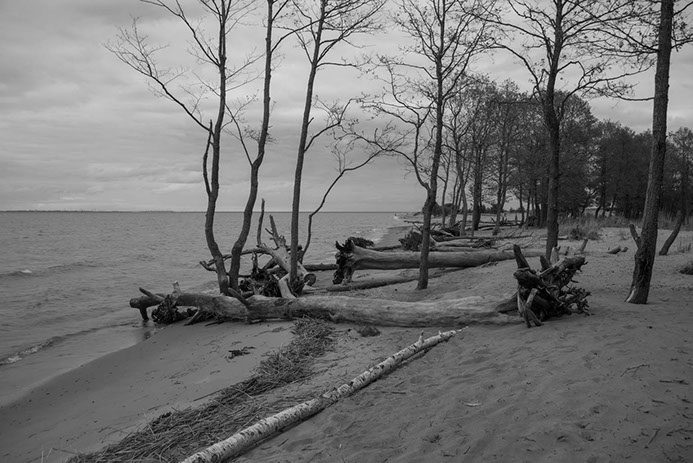
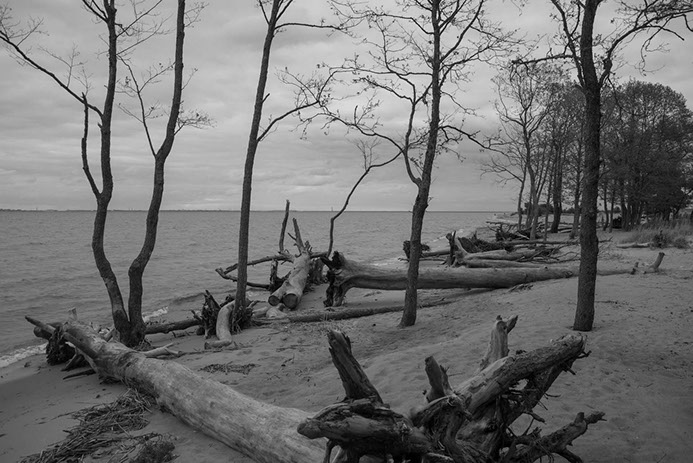
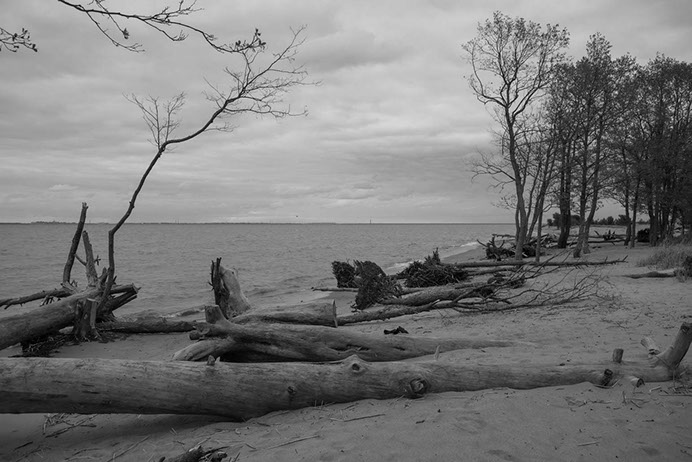
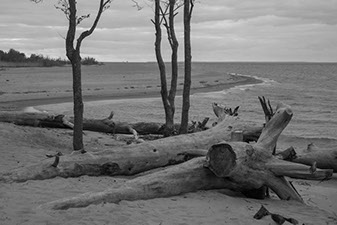
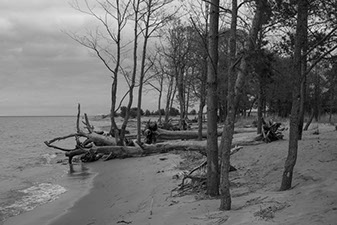
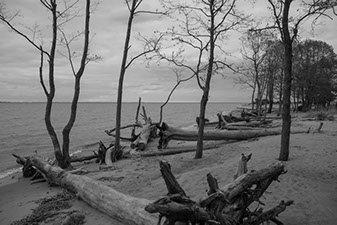
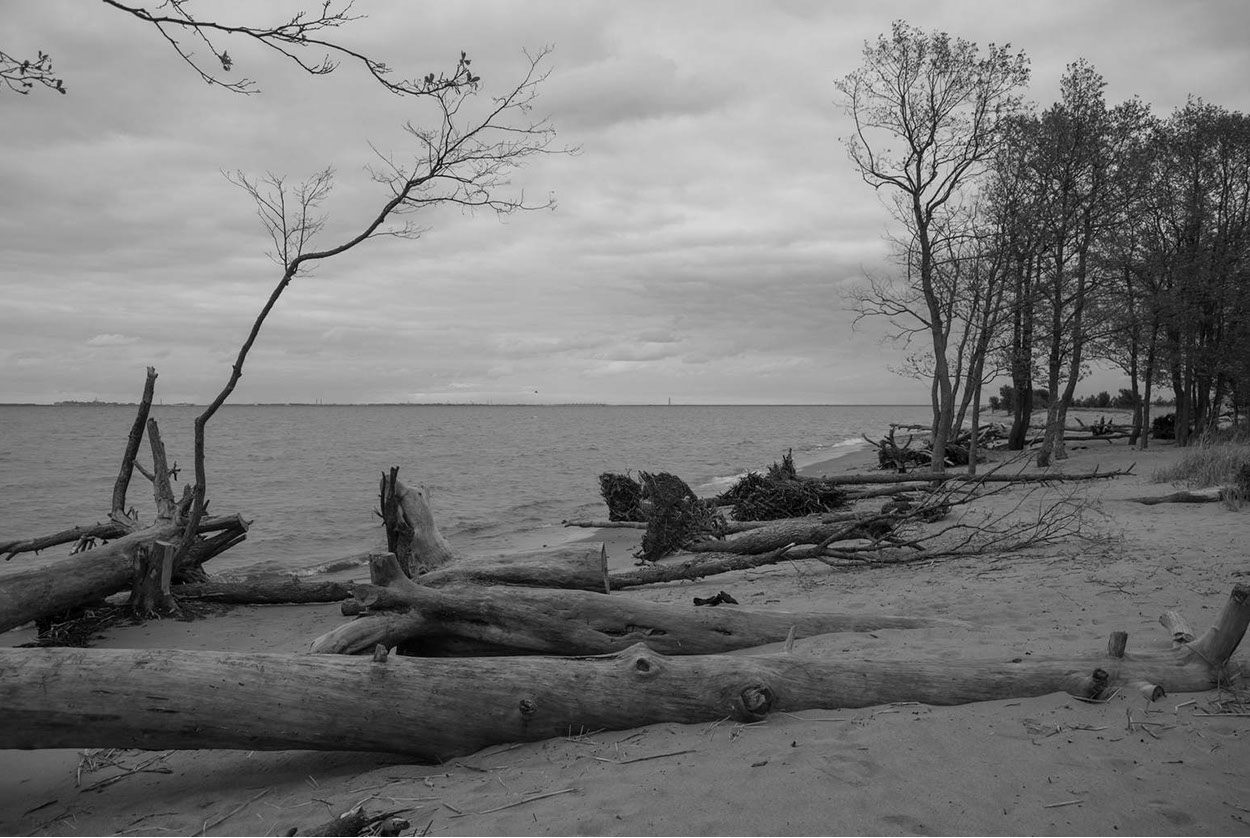
Amongst the many scenes shot in inner city environments, there is one important scene that relies on the open air. The beach is one of the key places in the film. Here the protagonists meet, it is the birthplace of their acquaintance, and here too the story ends tragically with suicide. Many conditions had to be met for shooting here. I think I probably saw all the beaches within a 100-mile radius of St Petersburg. The decisive aspects included the sun, the width (of the beach), the distance from any urban area, the terrain, and the presence of a pine forest.


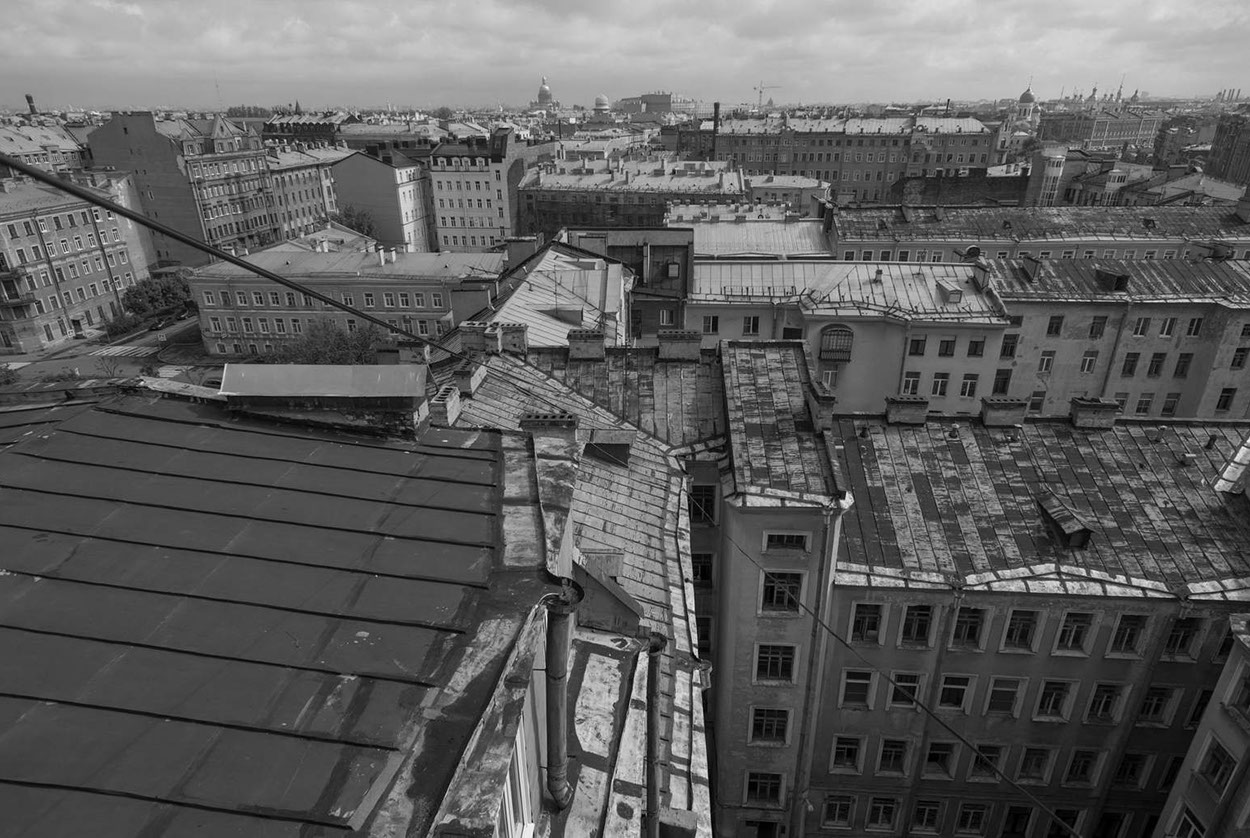
The city of St Petersburg itself became an important character in the story. There is something special about the place that brought Russian underground rock music to life. One reason for this may be the fact that St Petersburg has always been the artistic and cultural capital of Russia. Perhaps it was the deep roots, going back many generations, that brings this about.





Working on that movie was a real pleasure, as all team members were doing their best. I’m absolutely grateful to Kirill Serebrennikov and Ilya Stuart, who invited me. And of course nothing was possible without art department team, Maria Slavina and Alice Solovieva, who brought all dreams into life. That was an unforgettable experience.
Director Kirill Serebrennikov
DOP Vladislav Opelyanc
Art Department
Production designer Andrey Ponkratov
Set Decorator Maria Slavina
Props Alice Solovieva
Location scout Ruslan Romanukin
Set builders Dmitry Tatarnikov, Pavel Aksenov, Igor Alekseev, Andrey Grachev
Text edited by Robert Kursten